Turquoise Jewelry – What You Should Know
Turquoise is that beautiful blue-green stone that feels like a piece of the sky trapped in a rock. It is a copper-aluminum alloy that has been around for thousands of years. People love it because it is not just a gem; it is a style that mixes earthy roots with high-end fashion. This stone has a personality that few clear gems can match.
This guide provides the latest information as of October 2026 to help you find the perfect piece. We will walk through key facts and statistics on turquoise jewelry and introduce you to top designers making waves right now. We will also look at different types of turquoise jewelry, check out trending turquoise ring and bracelet designs, and talk about how to style a turquoise necklace for the best look.
If you want to know where to buy Native American turquoise earrings or you are searching for the best turquoise jewelry set for weddings, you will find your answers here. Plus, you will learn how to tell the difference between fakes and the real thing when identifying Native American turquoise jewelry.
Turquoise Jewelry Key Facts & Statistics
Turquoise has become more popular in recent times. While it used to be tucked away in small souvenir shops, it is now a main feature for luxury brands and independent makers alike. People are moving away from basic diamonds and toward stones with a story and a unique face. This shift toward natural, one-of-a-kind materials has turned this blue stone into a serious investment for collectors.
The following data points show exactly how much the market trends are shifting toward this gemstone.
- The global market for these blue-green pieces reached a value of 211 million dollars in 2024, showing a steady climb in popularity.
- Experts predict the industry will hit a total value of 336 million dollars by 2032, which is a significant jump for a semi-precious stone.
- Online interest is spiking, with searches for these specific gems jumping 32% year-over-year on major shopping sites.
- Ethical shopping is a huge deal now, as 68% of buyers say they only want stones that are sourced the right way.
- Be careful when shopping, because researchers estimate that 40% of the stones currently for sale might be treated or completely man-made.
- North America is the big player here, holding 35% of all global sales thanks to a deep love for Southwestern traditions.
- The Asia-Pacific region is the fastest climber, with a growth rate of 8.2% as more people in China and India start collecting.
- If you want the rarest stuff, Lander Blue stones from Nevada can sell for as much as 500 dollars for a single carat.
- Web-based shops are winning the race, with online jewelry sales growing by 15% every year compared to just 3% for physical stores.
- Custom work pays off for makers, as jewelers who offer personalized pieces see 25% higher order totals.
6 Top Turquoise Jewelry Designers
Buying real turquoise is a bit of a minefield because fakes are everywhere. You don’t want to spend your hard-earned cash on a piece of dyed plastic or a stone that’s been glued together in a factory. To get the good stuff, you need to know who is actually working the silver and picking the stones by hand.
Our team did extensive research to find makers who offer the real deal without charging a fortunefor a brand name. These designers are the real masters of the craft, often coming from families that have been silversmithing for generations.
Here are the 6 best brands and artists to keep on your radar if you want a piece that actually holds its value.
1. Tommy Jackson
Tommy Jackson is a big name in the Navajo jewelry world for a reason. He grew up in Chinle, Arizona, and learned the trade from his parents when he was just a kid. He started making simple silver rings at six years old and was polishing metal by seven. This early start gave him a level of perfectionism you just don’t see in mass-produced items.
He is known for taking old-school Navajo patterns and mixing them with a look that fits right in with modern clothes. He uses deep, rich stones—often with unique markings—and sets them in heavy silver or gold. You can find his work in high-end galleries across the Southwest or through reputable online dealers that specialize in museum-quality Native American art.
2. Sylvana Apache + Randy Secatero
This husband-and-wife team brings a unique energy to their work. Sylvana is Navajo and Mescalero Apache, while Randy is Navajo. They work out of Tohajiilee, New Mexico, and are famous for their heavy, solid pieces. If you like jewelry that has some weight to it, these are the designers for you.
They use a lot of copper mixed with silver, giving their work a warm, glowing look that stands out from the typical all-silver designs. Randy has been quoted saying he will keep silversmithing as long as his eyes and hands let him, which shows the level of heart they put into every ring and cuff. You can find their work at major Indian markets and through specialty Southwest boutiques.
3. E.M. Teller
Everett and Mary Teller are self-taught silversmiths who have been at it for over twenty years. What makes them special is how they pick their stones. They hand-select every piece of turquoise, coral, and onyx they use. Their style is very clean and quiet, using silver to frame the stone rather than cluttering it up with too much detail.
Their work has been shown at the famous Heard Museum, which is a massive deal in the art world. Mary is the one usually coming up with new looks, like massive turquoise ovals set in wide bracelets that stop people in their tracks. You can track down their pieces in fine jewelry galleries that focus on authentic Southwest imagery.
4. Ronnie Willie
Ronnie Willie is what you’d call a Renaissance man. He works with wood and rock, but he is most famous for his metalwork. He uses a style called repousse, where he hammers the silver from the back to create a 3D design on the front. It is incredibly hard to do right, but his pieces come out looking very disciplined and clean.
One of his signature looks involves silver beads and square crosses over dark, oxidized silver. He often uses “Sleeping Beauty” turquoise, which is known for its bright, clear blue. Based in Albuquerque, his jewelry is highly sought after by collectors who want something with a very specific, identifiable look.
5. Andy Marion
Andy Marion started working at the bench when he was nine years old. As the son of a silversmith, he has spent decades perfecting how to turn raw metal into art. He is known for making one-of-a-kind pieces that celebrities love to wear. He doesn’t just stick to silver; he also works with gold, brass, and copper.
One of his coolest tricks is making the ends of his cuff bracelets different widths, which gives them a custom feel. He also likes to add layers to his work to give it a three-dimensional look, often carving animals like dragonflies or bears. You can find his work at top-tier galleries and high-end art shows across the country.
6. Southwest Silver Gallery
If you want a one-stop shop for authentic tribal work, this is it. They aren’t just one designer; they are a family-owned business that connects buyers directly with artists from the Navajo, Zuni, and Hopi tribes. Every piece they sell comes with a certificate of authenticity, which tells you exactly who made it and what materials they used.
The Southwest Silver Gallery focuses on high-quality sterling silver and natural American turquoise. Because they deal directly with miners and artists, they keep their prices very fair. You can browse their full collection on their website, which is a great place to start if you are new to collecting and want to make sure you are getting the real thing.
If you would prefer jewelry that feels personal, check out this handmade opal and filigree jewelry collection.
Types of Turquoise Jewelry
Turquoise has a history that goes back at least 6,000 years. The ancient Egyptians were mining it in 6000 B.C., and it was a prized stone for the Aztecs and Persians too. Over time, it has moved from being a holy stone used in burial masks to a major fashion staple. In the late 1800s, it hit its peak in the American West, and it has stayed a symbol of the Southwest ever after.
Today, the quality of turquoise is judged on its color, texture, and whether it has a “matrix” (those dark veins running through it). Less than 3% of the turquoise on the market is totally natural and untreated, which makes high-grade stones very valuable. Whether it is set in silver for a casual look or gold for a formal one, turquoise is one of the few gems that never really goes out of style.
- White Buffalo
This is a striking stone found in Tonopah, Nevada. While everyone calls it turquoise, it is technically a dolomite stone that grows in the same areas as blue turquoise. It has a stark white background with black or dark brown veins running through it. This type is usually a hit with the 25 to 45 age bracket because it looks great with black leather jackets or clean white shirts. It is a “cool” stone rather than a “warm” one, so it works perfectly for office wear or a night out in the city. - African Turquoise
African Turquoise is actually a type of spotted jasper found in Africa. It is much harder than real turquoise, with a higher Mohs hardness, making it very durable for beads and bracelets. It has a teal or forest green color with dark splotches of iron and other minerals. Because it is more affordable and tougher than traditional turquoise, it is a staple in the “boho” jewelry scene. This stone is very popular with younger people, specifically the 18 to 35 demographic, who like the earthy, “natural” look. It is best for casual occasions, like music festivals or weekend trips. - Sleeping Beauty Turquoise
This comes from a famous mine in Globe, Arizona, that looks like a sleeping woman from a distance. The stone is famous for being a solid, bright “robin’s egg” blue with almost no veins or splotches. The mine closed in 2012, so the price of these stones has climbed steadily as the supply dries up. Because the color is so intense, you don’t need a large piece to make an impact. A simple pair of Sleeping Beauty studs or a dainty pendant can be the star of an outfit. - Kingman Turquoise
Mined in Arizona, Kingman is one of the oldest and largest sources of turquoise in the US. It has a huge range of looks, from pale blue to deep green, but it is most famous for its bright blue color and black “spiderweb” matrix. It is the most common stone used in authentic Native American jewelry, making it a great entry point for new collectors. This stone is loved by all age groups because it is so versatile. It is the “everyday” turquoise that you can wear to the grocery store or a dinner party. It looks best when paired with sterling silver. To style it, go for the “Southwest” look by wearing a Kingman pendant over a simple t-shirt or a button-down. The black veins in the stone give it a rugged look that pairs perfectly with denim.
Turquoise Jewelry Color
The most expensive color is a solid, medium blue, often called “robin’s egg blue” or “Persian blue.” This color usually comes from stones that have a lot of copper in them. If a stone has more iron, it turns a greenish-blue or even a bright lime green. While blue used to be the only color people wanted, a lot of modern designers are now hunting for avocado and lime green stones to make bold, trendy pieces.
Turquoise Jewelry Pattern
The “matrix” is the web of dark veins you see in many stones, which is actually just leftover bits of the rock the turquoise grew in. Spiderweb turquoise is the most sought-after pattern, featuring fine, thin lines that look like a web. Some stones are totally “clear,” meaning they have no matrix at all. These are very rare and expensive, especially if they are a bright blue color.
Turquoise Jewelry Cut
Most turquoise is cut into a “cabochon,” which is a smooth, rounded dome. This shape is perfect for showing off the stone’s color and the patterns in the matrix. You might also see turquoise cut into flat pieces for “inlay” work, where stones are fit together like a puzzle. Lower-quality stones are often tumbled into “nuggets,” which have a more natural, rocky look that is popular in casual jewelry.
Turquoise Jewelry Carat Weight
Turquoise is weighed in carats, just like diamonds, and five carats equal exactly one gram. While you can find turquoise in almost any size, large pieces without any cracks are incredibly rare. High-grade turquoise can cost anywhere from $50 to $500 per carat, depending on which mine it came from. For most buyers, the evenness of the color is more important than the stone’s actual size.
Trending Turquoise Ring and Bracelet Designs
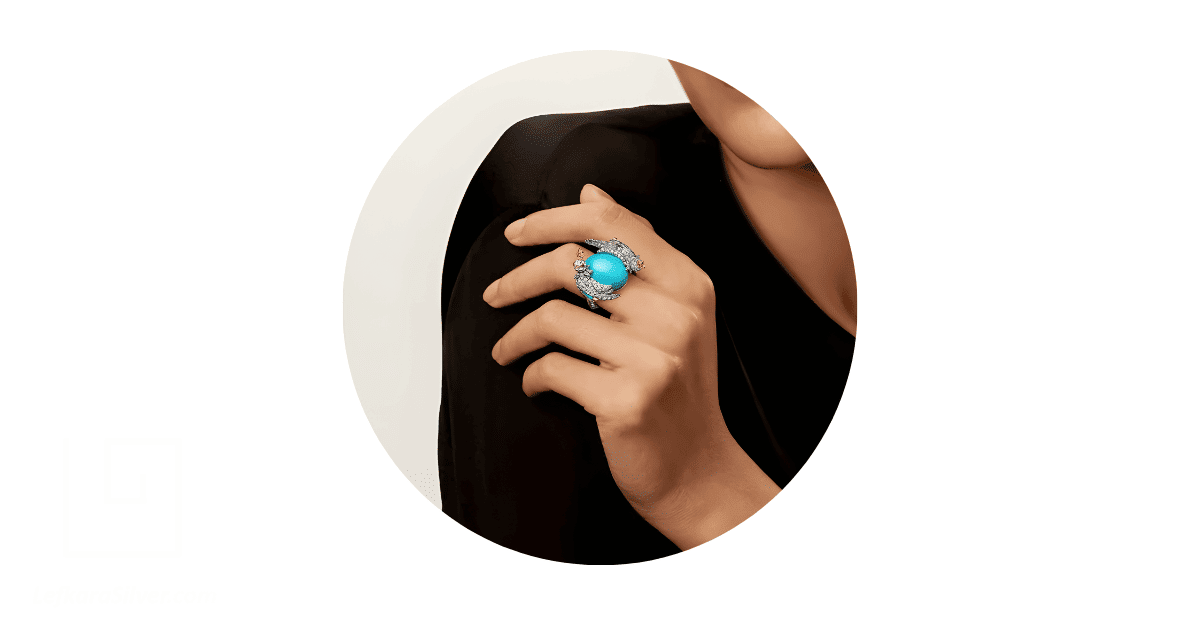
Rings take a beating compared to most other jewelry. Every time you grab a door handle, hit your hand on a desk, or reach into your pockets, your ring is on the front lines. Because of this, durability is the top factor to think about for any piece meant for daily wear. Wedding and engagement rings need to stay in one piece for a lifetime, which is why people usually look for stones that can handle a few knocks without cracking or losing their color.
The problem with many stones is that they are too soft for that kind of constant action. A ring that looks great on your wedding day might look scratched or dull by your fifth anniversary if the material isn’t strong. Turquoise ranks between a 5 and 6 on the Mohs scale of hardness, which means it is softer than a window pane and much more fragile than a diamond. If you want a ring that survives a busy life, you have to be picky about the quality of the stone you buy.
For an engagement ring, turquoise is a bold choice, but you should know the risks. Since it is a porous stone, it acts like a sponge for oils, soaps, and perfumes. Over time, these liquids can seep in and turn a bright sky-blue stone into a muddy green. Less than 3% of the turquoise on the market is natural and hard enough to be used in jewelry without some kind of treatment. If you are dead set on using it for an engagement ring, look for high-grade stones from the Bisbee or Sleeping Beauty mines, as they are known for being more solid than most.
Even with a high-quality stone, turquoise can still chip if it hits a hard surface like a granite countertop. Because of this, many experts suggest saving turquoise rings for outfits rather than wearing them 24/7. If you do want to wear one every day, go with a bezel setting. This is where the metal wraps all the way around the edge of the stone, acting as a bumper to keep it safe from side impacts.
For bracelets, the classic cuff design is the most popular choice. These thick bands of silver or gold often feature big, raw stones or intricate patterns. The most expensive turquoise ever found, Lander Blue, only produced about 100 pounds of material, making it more valuable than diamonds by weight. If you want something that feels lighter, look for Zuni-style needlepoint bracelets that use tiny, hand-cut slivers of stone. Beaded strands are also a big trend, especially when you stack three or four of them to mix different shades of blue and green.
Styling Turquoise Necklace
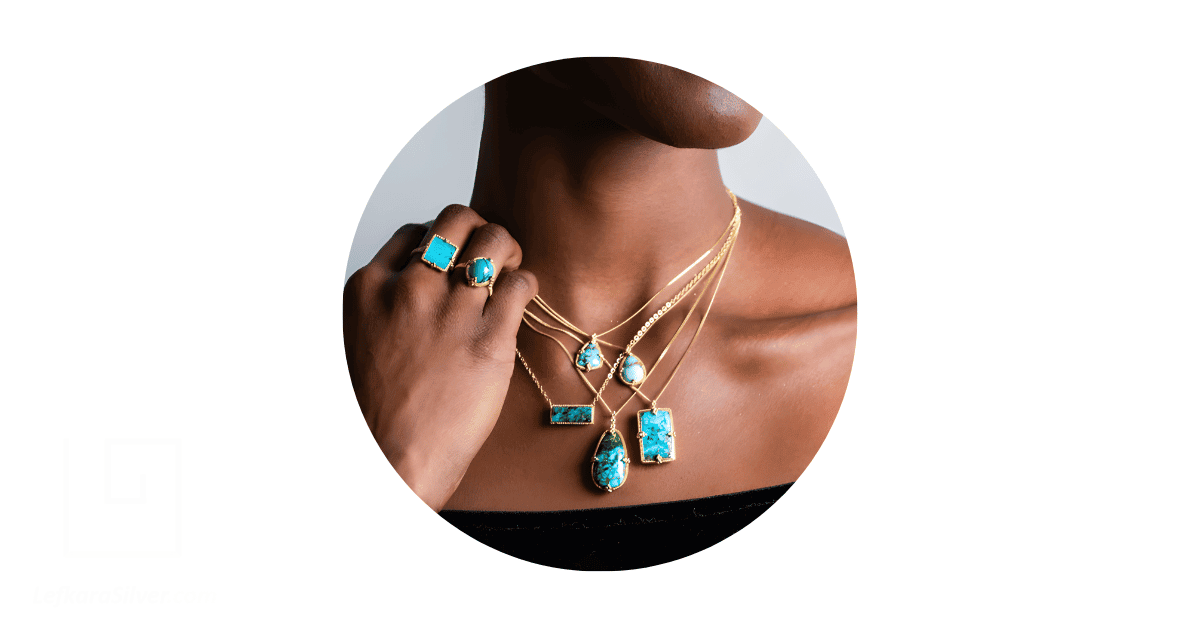
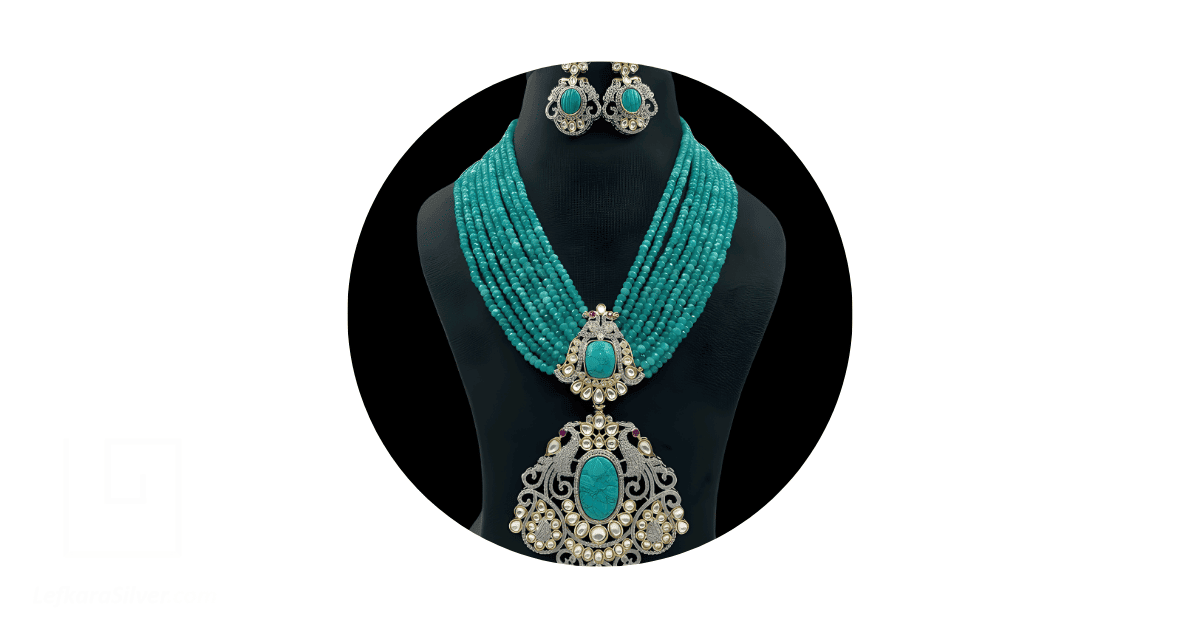
Styling these necklaces is all about contrast. For a casual lunch, try a single turquoise pendant over a plain white tee or a denim shirt to let the color do the talking. If you are heading to a formal event, a heavy multi-strand necklace over a black dress creates a sharp, expensive look. High-grade turquoise often sells for $50 to $200 per carat, so a large necklace is often a major financial investment. Many people are now mixing their turquoise strands with gold chains or pearls to give the look a modern, high-fashion twist.
Age often influences how people wear these pieces. Younger buyers often go for “barely there” styles, like a single tiny bead on a gold thread. Older collectors tend to favor large, heritage pieces that showcase complex matrix patterns and heavy silverwork. You can wear these necklaces every day, but you have to be smart about it. Direct sunlight and high heat can cause turquoise to fade or change color permanently over time. If you plan on being outside in the sun all day, it might be better to leave your best stones at home.
If you are looking for a unique design, there are a few places you should check. Southwest Silver Gallery and Turquoise Direct are great for authentic, handmade Native American pieces. If you want a luxury name, Tiffany & Co. has a long history with the stone. For more affordable Western styles, Montana Silversmiths offers a lot of variety, while TJC is a good spot for simple, everyday beads. Always ask for a certificate of authenticity to ensure you are getting the real thing, not a plastic imitation.
Where to Buy Native American Turquoise Earrings?
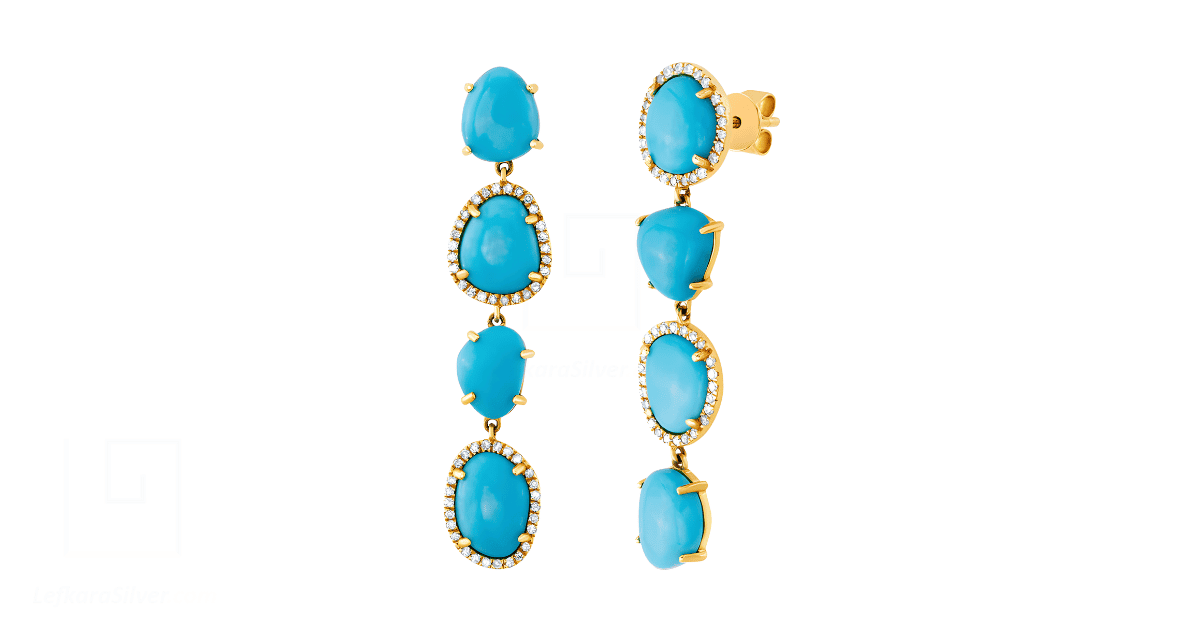
Turquoise earrings have moved far beyond the gift shop counters of the old Southwest. These pieces now sit at the center of a major style shift, where traditional handiwork meets high-fashion needs. While the core materials remain the same—sterling silver and earth-mined stone—the ways artists shape them keep changing to fit modern tastes. You are no longer stuck with just heavy, chunky pieces; today’s market offers everything from paper-thin stone slivers to bold, raw slabs that make a loud statement.
- Zuni Needlepoint Dangles
Needlepoint is a specific style where artists cut turquoise into tiny, needle-like slivers and set them into small silver bezels. This creates a fan or flower-like pattern that looks incredibly delicate. The silver work is often just as detailed as the stone cutting, resulting in a pair of earrings that move and catch the light with every turn of your head. This design usually appeals to the 40 and older age group or serious collectors who value the hours of labor required to shape each tiny stone. These earrings are a top choice for gallery openings or nice dinners where you want to look polished without trying too hard. To style them, keep your neck bare or wear a very thin silver chain; you want the intricate needlework to be the main event. - Kingman Spiderweb Studs
These studs feature stones from the Kingman mine in Arizona, known for its dark, web-like patterns running through bright blue or green stone. Unlike clear blue stones, spiderweb turquoise has a rugged, organic look. The stones are typically cut into simple rounds or ovals and wrapped in a plain or “rope” silver border. You will see Gen Z and Millennials wearing these more than anyone else. They fit the current love for “earthy” and “authentic” accessories that work for daily life. They are the perfect “everyday” earring for the office or a casual weekend outing. Because they have a busy pattern, they look best when paired with simple fabrics like denim or a plain white tee. Kingman mine is one of the oldest and largest turquoise mines in America, making these stones a piece of history you can wear. - Sleeping Beauty Teardrops
Sleeping Beauty turquoise is famous for being a solid, bright “robin’s egg” blue with almost no markings or host rock visible. When cut into a teardrop shape and hung from a simple silver hook, the result is clean and classic. These earrings provide a punch of color that looks expensive and tidy. This style is a favorite for brides and professionals in their 30s. It offers a “safe” way to wear turquoise that still feels high-end. They are best for formal events, weddings, or big work presentations. For the best look, pair them with a navy blue dress or a charcoal suit. The blue will pop against dark colors, making you look awake and put together. The Sleeping Beauty mine closed in 2012, so the price for these clear stones goes up every year. - Navajo Stamped Hoops
Navajo artists often use heavy-gauge silver and hand-made steel stamps to create patterns in the metal before setting a single turquoise stone at the top or bottom of the hoop. These are not your average thin wire hoops; they have weight, texture, and a lot of silver presence. These are popular across the 30 to 50 age bracket, especially among those who love a “modern Western” look. They are the go-to accessory for outdoor festivals, rodeos, or country concerts. To style them, pull your hair back into a sleek ponytail so the silver stamping is visible. They work great with leather jackets or denim shirts. - Multi-Stone Inlay Discs
Inlay involves fitting stones perfectly into a silver frame so the surface is completely smooth to the touch. Artists often mix turquoise with other stones like coral, mother of pearl, or lapis lazuli to create a mosaic. These discs are usually flat and sit close to the ear or hang as small, colorful pendants. The 20s and 30s crowd tends to grab these for their vibrant, multi-colored look. They are excellent for summer parties or vacation wear. Because they contain multiple colors, you can wear them with almost any outfit. To style them, pick one of the secondary colors in the stone—like the red of the coral—and wear a top in that same shade to tie the look together.
If you are looking for high-quality turquoise earrings that won’t break the bank, several designers and shops are known for fair pricing and real stones. Southwest Silver Gallery is a great place to start for verified tribal pieces. Alltribes offers a massive selection that fits almost any budget. For a more “Western fashion” take, Montana Silversmiths provides silver-plated options that look great for a fraction of the cost of solid gold. TJC and Stauer also carry affordable turquoise lines that use genuine stones in simpler settings.
The Best Turquoise Jewelry Set for Weddings
Turquoise is becoming the ultimate “something blue” for modern weddings. A full set—usually a necklace, earrings, and a matching bracelet—creates a look that feels both grounded and royal. While diamonds are the standard, they can sometimes feel cold; turquoise adds a warmth and personality that tells a story about the bride’s style. In a wedding setting, the stone works best when it is high-grade and set in either bright sterling silver or high-karat yellow gold.
The best wedding sets usually feature Sleeping Beauty turquoise because its clear, consistent blue doesn’t compete with the intricate lace or beadwork on a bridal gown. If you want a more “Boho” or “Western” wedding, you might look for Golden Hills turquoise, which has a unique lavender-blue tint and a brown matrix that looks stunning against cream or off-white silk.
You can find these sets at specialty boutiques like Turquoise Direct or through independent artists like David Rosales, who is known for contemporary inlay sets that look like fine art. Less than 5% of turquoise mined is considered “gem grade,” which is the quality you should aim for when picking a wedding set.
| Designer/Shop | Estimated Set Price (Necklace, Earrings, Bracelet) | Primary Style |
|---|---|---|
| Southwest Silver Gallery | $450 – $1,200 | Traditional Native American / Hand-stamped |
| Alltribes | $300 – $900 | High-volume Southwest / Classic Silver |
| Stauer | $150 – $400 | Affordable / Mass-market Genuine Stone |
| JamesViana | $400 – $1,500 | Modern Luxury / Gold-set Options |
| Montana Silversmiths | $120 – $350 | Western Fashion / Silver-plated |
North America currently makes up about 35% of all turquoise jewelry sales worldwide, largely because of the deep roots of this stone in American culture. When shopping for a wedding, always ask for a certificate of authenticity to ensure you are getting natural or stabilized stone rather than dyed plastic.
A high-quality set is an investment that will likely grow in value, as many of the top US mines are now closed and the remaining supply is shrinking fast. For a wedding, aim for a TQI (Turquoise Quality Index) score of 80 or higher to ensure the stones have the hardness and color depth to last as an heirloom.
Picking the right metal for your turquoise jewelry isn’t just about looks; it’s about how long your piece stays in one piece and how much time you want to spend rubbing it with a polishing cloth.
Turquoise Jewelry Metals – Gold vs Silver
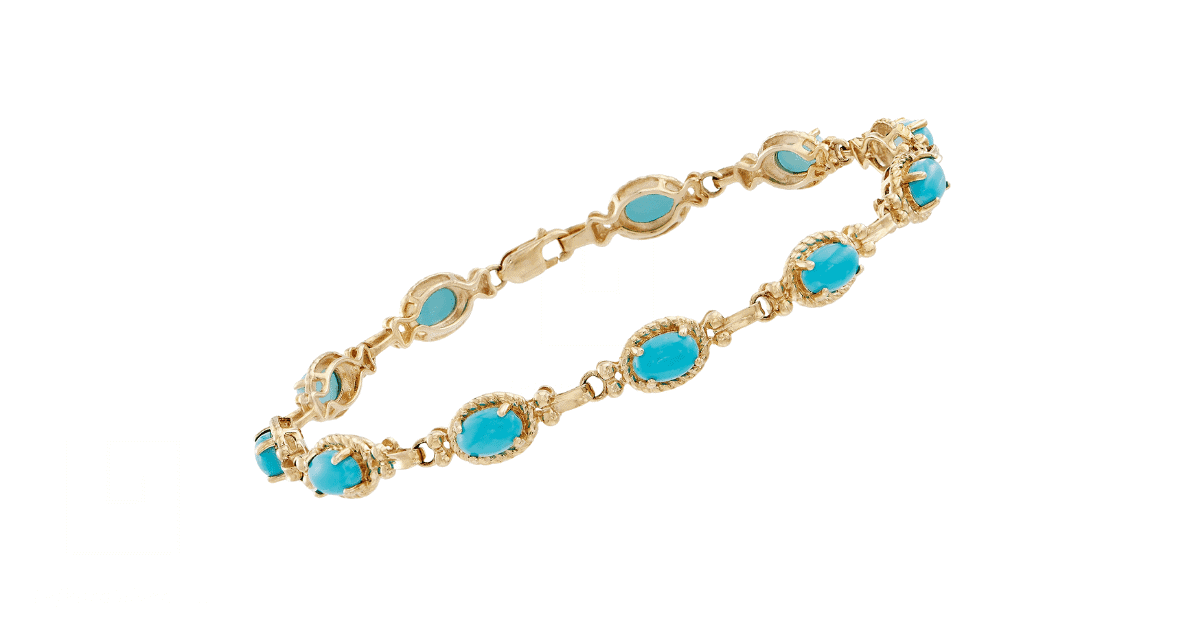
Setting your stone in the right metal is the difference between a piece you can pass down to your kids and one that ends up in a junk drawer.
Turquoise Jewelry with Gold
Gold is the heavy hitter in the jewelry world, and the price tag shows it. The big win with gold is that it does not tarnish or rust. You can wear it every day without worrying about it turning black or leaving a green mark on your skin. This makes it a top choice for people who want high-value pieces that don’t require constant cleaning.
However, gold has its weak spots. Pure gold is very soft, so most rings and bracelets use 14k or 18k mixes to stay tough. Even then, it can pick up scratches if you work with your hands a lot. There is also the cost to think about. Because turquoise is often seen as a more casual, earthy stone, not everyone wants to pay the high price for a gold frame
Turquoise Jewelry with Silver
Silver is the traditional partner for turquoise, especially in the American Southwest. Most of the legendary Native American artists work almost entirely in sterling silver because its cool tone makes the blue and green of the stone pop.
The main headache with silver is tarnish. It reacts with the sulfur in the air and turns dark over time, meaning you have to be ready to polish it if you want it to stay bright. Some people actually prefer the dark look that builds up in the cracks of the metal—often called patina—because it gives the piece a vintage feel. Because silver is cheaper than gold, it is more common, but you have to watch out for cheap “silver-plated” fakes. If a magnet sticks to your jewelry, it isn’t real silver.
You aren’t stuck with just these two options, either. Copper is a low-cost choice that gives off a warm, rustic vibe, while platinum is a top-shelf pick for someone who wants the heaviest and most durable white metal available. If you are looking for authentic handmade turquoise jewelry, silver is almost always the standard for traditional designs.
Turquoise Jewelry Value – What is it Worth?
The price of a turquoise piece changes based on where it came from and how much people have messed with the stone. You might see a simple bead for five dollars at a gift shop, while a rare nugget in a signed setting can go for thousands at an auction.
- Mine Source: Rare stones from closed mines like Lander Blue or Number 8 are worth way more because the supply is officially gone.
- Color Profile: While “robin’s egg” blue is the top prize for most, bright lime green stones are becoming a huge hit with modern designers.
- Matrix Pattern: A clean stone is hard to find, but a tight “spiderweb” pattern of dark veins can actually push the price up.
- Hardness: Harder stones take a better polish and last longer. Natural, gem-grade turquoise makes up less than 5% of all the turquoise pulled from the ground.
- Authenticity: About 90% of the turquoise on the market is stabilized or treated, and these stones are always worth much less than natural ones.
To find out what your jewelry is worth, start with the weight. If you have a massive stone that hasn’t been cut into tiny pieces, it will naturally be worth more, but only if the quality is high. Look for a hallmark or artist’s signature on the back of the metal. A piece made by a known Navajo or Zuni artist is a collector’s item that holds its value much better than something made in a factory.
Next, look at the stone’s surface. Real, high-quality turquoise feels cool and dense. If it feels like warm plastic or looks too perfect, it might be “reconstituted,” which is basically turquoise dust mixed with glue. Top-tier turquoise can sell for $500 to $1,000 per carat, making it more valuable than gold or even some diamonds in certain markets. Paying attention to these small details is the best way to make sure you’re spending your money on a real asset rather than a cheap fake.
Identifying the Real Native American Turquoise Jewelry
Fakes are everywhere. Some look so good they can trick folks who have been buying for decades. You want the stones pulled from the earth and metal worked by hand. If you are looking for real turquoise jewelry, you need to know what to look for before you hand over your cash.
Here is a list of ways to tell if a piece is legit:
Check the price tag. Real Native American jewelry takes time and high-end materials, so if a giant cuff costs less than a steak dinner, it is likely plastic. Artisans deserve to get paid for their skill.
Look for the Hallmark. Many artists stamp their initials or a symbol on the back of the silver. While some older or smaller pieces do not have one, a clear stamp helps you find the artist’s history.
Try the Magnet Test. Pure sterling silver does not stick to magnets. If your “silver” ring jumps toward a magnet, it is likely just plated base metal like nickel or steel.
Run the Fingernail Test. Real turquoise is a 5 or 6 on the hardness scale. If you can scratch the stone with your fingernail, it is likely soft “chalk” turquoise that has been dyed.
Use the Acetone Test. Put a tiny bit of nail polish remover on a cotton swab and rub a hidden spot on the stone. If blue dye comes off on the swab, you are looking at dyed howlite or plastic, not a natural stone.
Read the fine print. Law says only pieces made by members of a tribe can be called “Native American” or “Indian” made. If the tag says “Indian-style” or “Southwestern-inspired,” it likely came from a factory overseas.
Look at the matrix. In nature, the “webbing” in turquoise is often recessed or uneven. If the black lines look painted on or feel perfectly smooth like the rest of the stone, it is a red flag.
Turquoise Jewelry – Key Takeaways
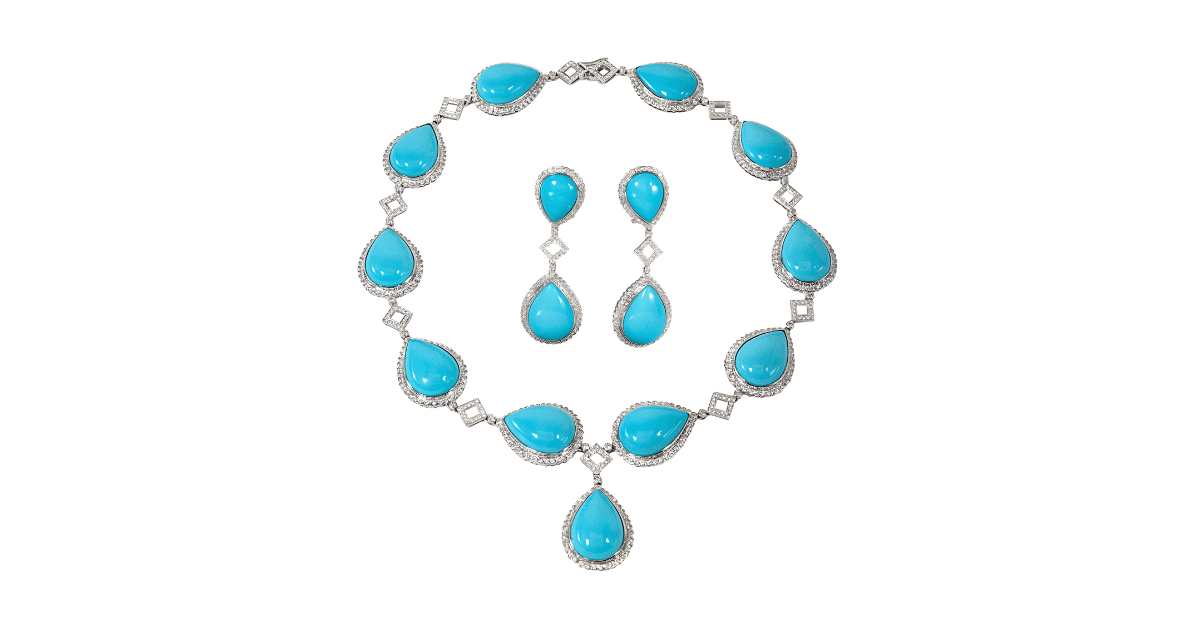
To keep your jewelry in top shape, never put it on until after you have finished with your hairspray and perfume. The chemicals in those products can soak into the stone and ruin it. Also, avoid ultrasonic cleaners or steam machines, as they can damage the stone.
From heavy bracelets to light wedding sets, the choices are huge. Whether you want gold for a warm look or silver for that classic style, knowing your designers makes you a smarter buyer. Buying from trusted spots ensures you get real Native American turquoise jewelry that hold their value over time.
Here are some key takeaways for you:
- The global turquoise jewelry market is growing at a rate of 7% every year.
- Less than 3% of all turquoise sold is natural and totally untreated.
- Sleeping Beauty turquoise is famous for having zero matrix, making it look like a clear blue sky.
- Lander Blue turquoise is so rare it can cost more per carat than diamonds.
- Turquoise is the birthstone for December.
- High-grade turquoise can be worth three times more than gold by weight.
- Some stones turn green over time because they absorb oils from your skin.
This content was last updated in October 2026. Follow our website, LefkaraSilver.com, to stay informed about new jewelry offers, news, and buying guides.
Turquoise Jewelry FAQs
Here are answers to some frequently asked questions about turquoise jewelry in 2026:
What is the Spiritual Meaning of Turquoise?
Many cultures use this stone to ward off bad energy. It has served as a symbol of protection for over 5,000 years, starting with the ancient Egyptians. As the official December birthstone, it also marks the 11th wedding anniversary for many couples. It acts as a link between the sky and water.
Who is the Famous Turquoise Jewelry Maker?
Charles Loloma is the father of modern Native American jewelry because of his bold stone inlays. Masters like Tommy Jackson began smithing at just six years old to learn traditional Navajo stamps. Other greats include Jesse Monongya and Al Joe, both of whom make art for museums. Their work keeps its value for decades.
What Does Wearing Turquoise Jewelry Mean?
Wearing this gem stands for prosperity and inner calm. Market analysis reveals 68% of jewelry buyers now prioritize ethically sourced natural stones over other options. It acts as a charm for good luck and clear speech. Many people wear it to stay balanced during busy work days.
Which Tribe Makes Turquoise Jewelry?
The Navajo, Zuni, and Hopi tribes are the primary makers of these famous styles. Navajo artists started working with silver in 1850, making the heavy metal look we know today. You can find real turquoise jewelry from Zuni masters who focus on fine stone-to-stone inlay.