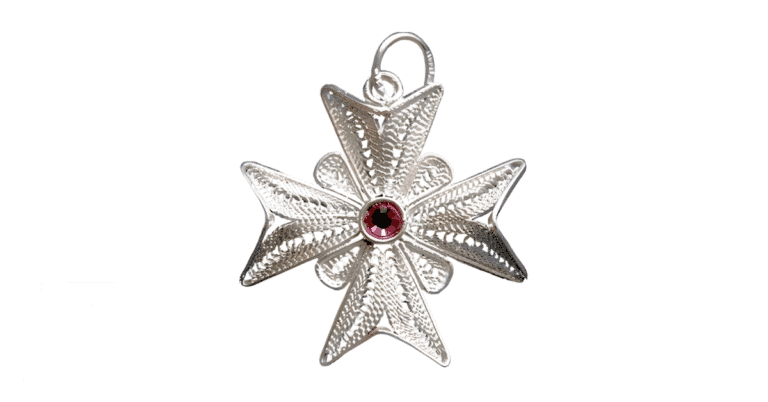
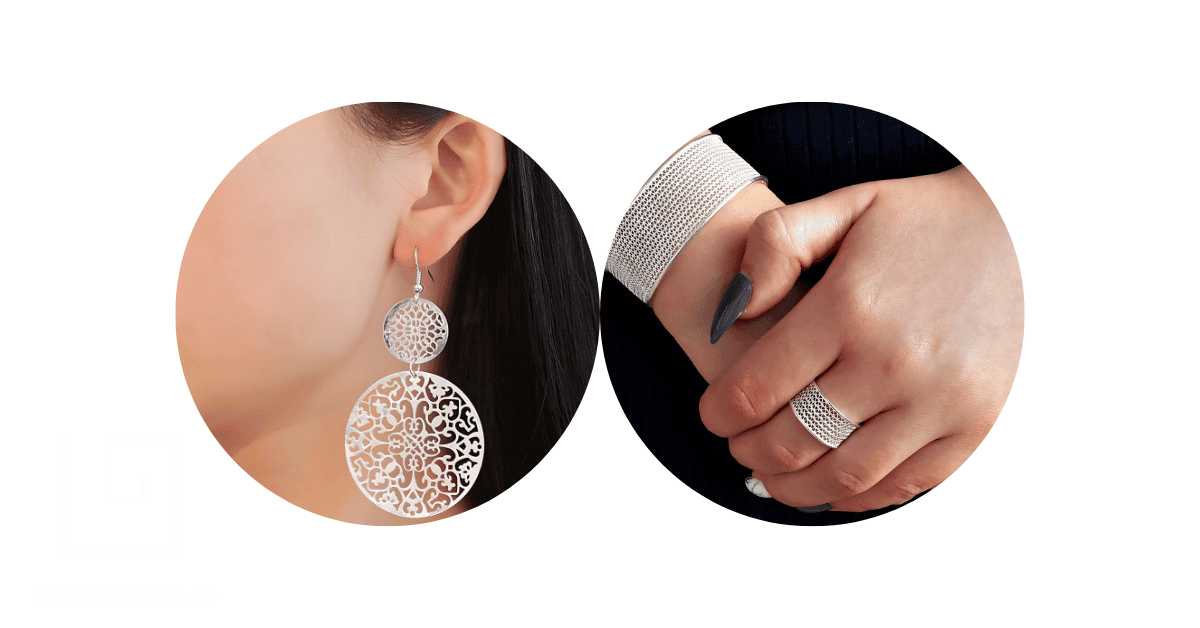
What is Filigree?
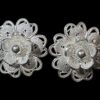
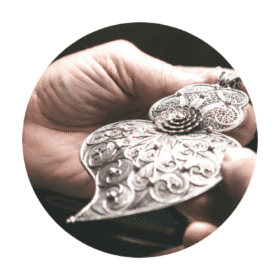
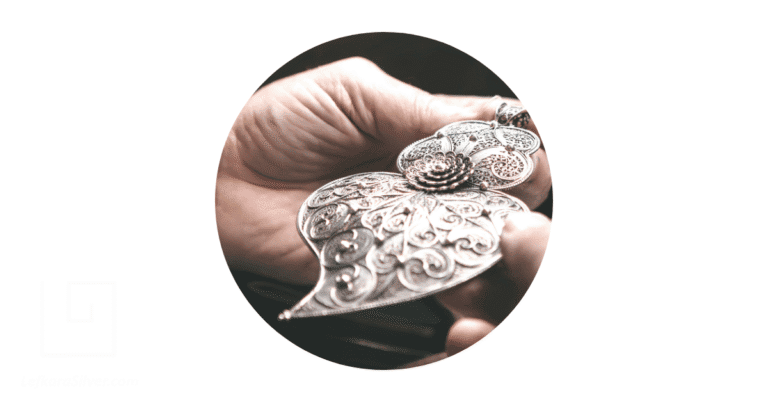
Filigree is a highly detailed metalworking technique in which jewelers twist, curl, and solder ultra-fine metal threads to create delicate, lace-like patterns. The word itself comes from the Latin terms filum, meaning thread, and granum, meaning grain. Historically, artisans used these fine metal strips alongside tiny metal beads to form floral, geometric, and scroll motifs. Because the threads are often thinner than a standard paperclip, the process requires extreme precision and patience.
The resulting designs feel light and airy, yet they hold a firm structural shape when crafted correctly by an experienced jeweler. One helpful tip for buyers is to look closely at the solder joints; genuine handmade filigree will have neat, discreet connections rather than thick, messy clumps of metal.
This article contains the latest information as of October 2026. We will examine several core areas to help you fully understand this art form. Specifically, you will read about the latest key facts & statistics on filigree jewelry, as well as its history and origin. We will also outline 6 bold and simple modern filigree designs to explore, and list the top stores for antique filigree jewelry.
We will also review common examples of filigree jewelry, share tips for identifying real filigree wirework, and explain filigree vs granulation – the similarities and differences. For the best pieces, check out our filigree jewelry catalog.
Filigree Jewelry Key Facts & Statistics as of October 2026
These are the data points defining the market this year, from the sharp rise in consumer demand to the exact spending habits of today’s buyers.
- The earliest known examples of filigree metalwork appeared in ancient Mesopotamia and Greece over 5,000 years ago.
- Over the last five years, consumer demand for vintage-style jewelry featuring intricate wire patterns grew by 15%.
- When buyers choose materials for these lace-like rings, white gold and platinum dominate the market, making up 65% of total selections.
- Across the entire engagement ring sector, traditional gold bands still account for 60% of all global sales.
- Retailers report a 25% rise in requests for Art Deco-inspired rings over the past ten years.
- Today’s buyers care heavily about sourcing, with 66% stating that sustainable and ethical material practices are critical to their buying decisions.
- While the average American shopper currently spends $5,000 on an engagement ring, many handmade silver filigree designs offer a much more budget-friendly price point.
- Lab-grown diamonds, which are highly popular center stones for vintage settings, saw a 35% increase in sales during recent market tracking periods.
History and Origin of Filigree Jewelry
The craft of twisting fine metal threads into delicate, lace-like patterns started over 5,000 years ago. Archaeologists found the earliest filigree in Mardin, Mesopotamia, dating to 3000 BC. The technique quickly caught on across ancient Egypt and Greece, where metalsmiths realized they could form stunning, lightweight decorations by stretching metal into thin strips.
From its origins in the Mediterranean, the technique spread rapidly across Asia and Europe. The Romans loved the delicate wirework and spread it throughout their empire. As trade routes opened, the method reached India and eventually the Far East, where artisans adapted it to their own local tastes. In China, this art form reached an incredible peak of precision during the Ming and Qing dynasties. The famous Wanli Golden Wing Shanguan crown contains exactly 518 gold wires, with each wire measuring a mere 0.2 millimeters in diameter.
The modern history of this metalwork took shape in France during the late 1600s, becoming a staple of high fashion. The real boom happened later during the Edwardian and Art Deco periods. King Edward VII popularized the pairing of bright platinum with diamonds.
5 Bold and Simple Modern Filigree Designs to Explore
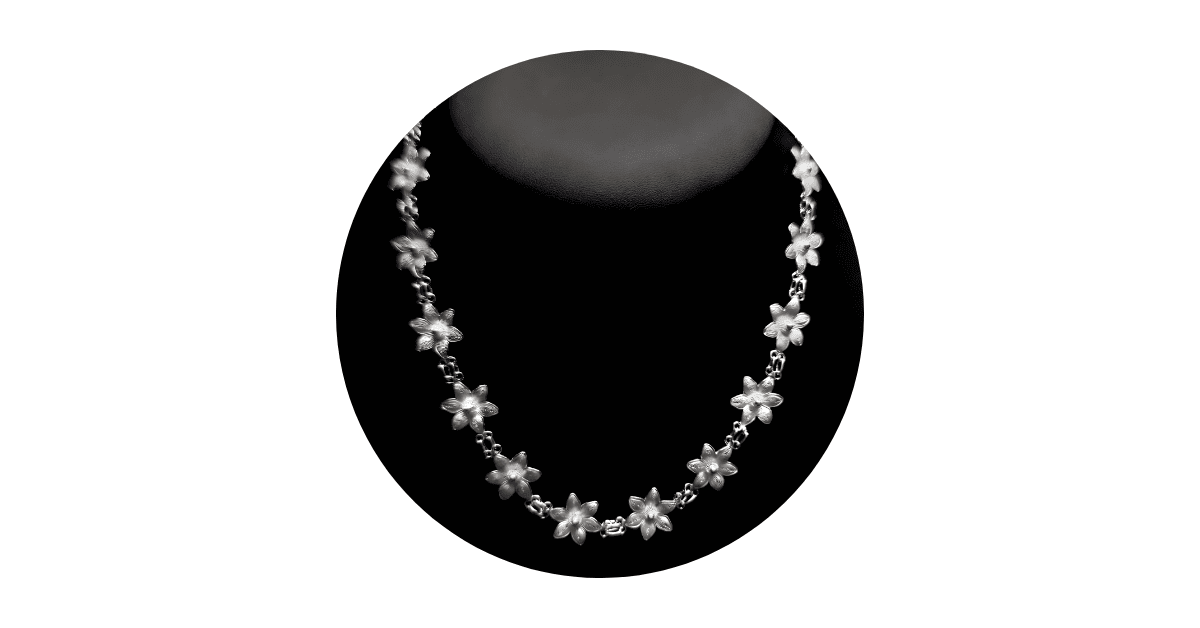
Jewelers create a wide range of filigree jewelry designs to suit any personal style. If you are looking for bold and simple designs, here are some options you can explore:
1. Geometric Art Deco
This style relies on clean, structured shapes like triangles, hexagons, and stepped outlines instead of soft, looping curves. The sharp angles give the jewelry a very organized, symmetrical look that feels bold and highly modern. The design stands out for its heavy focus on precise lines and geometric repetition.
Jewelers make this by drawing thicker wires of platinum or white gold and folding them into exact angles. They arrange these sharp shapes side by side and solder the touchpoints. Because precision is so important here, makers frequently use computer-aided design tools and laser cutters to ensure every angle matches perfectly before doing the final hand soldering.
2. Scrollwork
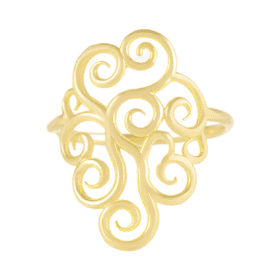
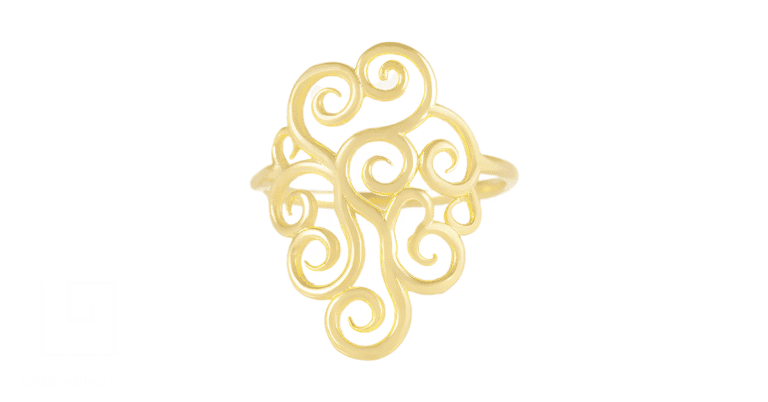
Scrollwork focuses entirely on graceful, rounded curves that look like rolled parchment or gentle vines. This is a very traditional approach, but keeping the scrolls large and simple gives it a bold, updated feel. The open, sweeping curves create a sense of movement across the surface of the metal.
Makers create scrollwork by rolling fine threads of metal, usually silver or gold, and carefully curling them with fine-tipped tweezers. They then use a combination of borax and metal powder to solder these curls inside a heavier, prepared metal frame. The frame keeps the delicate inner scrolls protected from daily wear and tear.
3. Celtic Knots
This design contains loops and twists that overlap to form endless, unbroken patterns. A simple Celtic knot stands out because it mixes delicate wirework with strong, mathematical shapes. The continuous lines symbolize eternity, making it a very popular choice for wedding bands.
Crafters achieve this look by weaving wires over and under each other in a highly specific sequence. They must solder each touchpoint precisely so the continuous knot holds its shape without looking messy or bulky.
4. Minimalist Openwork
Minimalist openwork focuses on negative space, using just a few well-placed wires instead of packing the frame with tight, dense curls. This gives the jewelry an airy, lightweight feel that is very clean and easy to read from a distance. The skin shows through the gaps, making the metal pattern pop.
To make openwork filigree, the jeweler solders heavier wires directly to each other without any solid metal backing. This requires a very steady hand and careful temperature control during the soldering process. If the torch gets too hot, the thin wires will melt, but if it stays too cool, the joints will easily snap.
5. Two-Tone Contrast
Two-tone designs mix different metal colors together, such as setting warm rose gold threads inside a bright white platinum frame. This simple color contrast draws the eye straight to the detailed metalwork. It makes the piece look highly complex without needing extra diamonds or colored gemstones.
Artisans craft this by treating the inner wires and the outer frame as completely separate pieces until the very final step. They twist, shape, and solder the softer gold wires first to form the core pattern. Finally, they solder that completed gold section securely into the harder, more durable platinum base.
Top Stores for Antique Filigree Jewelry in 2026
When buying these filigree pieces, try to stick with the best makers who offer only original handmade filigree jewelry. Machine-cast replicas rarely capture the sharp details, structural tension, and delicate weight of genuine wirework. True artisans shape and solder each tiny metal thread by hand. This level of craftsmanship ensures the jewelry holds together over decades of wear.
Handmade filigree jewelry can retain up to 80% more of its resale value compared to mass-produced equivalents. Plus, investing in original work guarantees your ring or pendant is a one-of-a-kind creation.
Our team has sourced the best of these stores for the quality and affordability of their pieces. We searched for jewelers who prioritize authentic craftsmanship, fair pricing, and excellent customer service.
Here are some of the top places to find incredible pieces:
Estate Diamond Jewelry
Located in New York, NY, this store specializes in rare Art Deco and Edwardian rings. They carry an impressive inventory of openwork designs crafted from platinum and European-cut diamonds. Their price ranges from $2,000 to $15,000+. Buyers consistently praise their honest grading and museum-quality inventory. Many reviews mention that the staff takes the time to explain the historical context of each piece without any sales pressure.
Walton’s Antique and Estate Jewelry
This is a trusted, family-owned shop specializing in Victorian and early 20th-century jewelry. Their collection includes a wide range of gold and platinum filigree pins, pendants, and rings. They’re located at Location Franklin, TN, with the price of their pieces ranging from $500 to $10,000
Customer Reviews: Shoppers love the welcoming atmosphere. Reviewers frequently note the fair pricing and the team’s deep knowledge of antique metalwork.
Ken & Dana Design
This store is located in New York. While they craft new pieces, they specialize in handmade, vintage-inspired filigree made with ethical metals. They are a great option if you want an antique look but prefer to pick your own modern or lab-grown center stone. The price range of their pieces goes from $1,500 to $8,000.
Customers rate their custom design process highly. Reviews highlight the design team’s patience and the exceptional quality of the final hand-finished details.
Antique Jewelry Mall
Located in Carlsbad, CA, but primarily online, this retailer offers a massive selection of restored antique items alongside exact reproductions made from original vintage molds. You can easily find antique filigree rings that fit tighter budgets here
Their prices range between $200 to $4,000. Their customers praise the fast shipping, detailed product photographs, and the accessible prices for solid gold and silver pieces.
The Techniques Used in Making Filigree Art
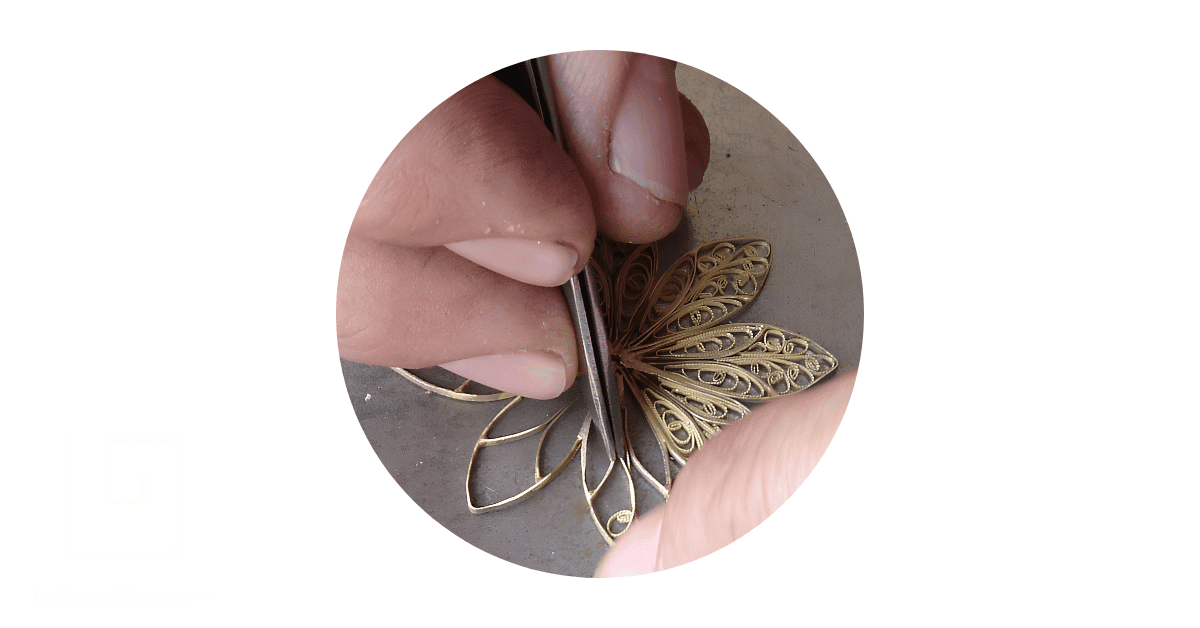
There are distinct techniques used in making filigree jewelry. Jewelers do not just pour hot metal into a mold; they physically build the design piece by piece using different structural methods.
The primary methods include:
- Openwork Filigree: With this technique, the wires are soldered only to each other and the outer frame, leaving empty space behind the design so light passes straight through.
- Ground-Supported Filigree: The twisted wires are soldered directly onto a solid sheet of metal for maximum durability.
- Combination Filigree: A mix of both, where open wirework is attached to a base at specific anchor points.
- Cannetille: A related technique using tightly coiled metal tubes and spirals to create a three-dimensional, spring-like effect.
Here is a detailed step-by-step guide to the techniques used in making filigree:
Step 1: Alloying and Pouring the Metal
The process starts by melting raw precious metal. Pure 24-karat gold is too soft for filigree, so jewelers mix it with copper or silver to create a harder 14k or 18k alloy. The molten metal is poured into a block or rod shape.
Step 2: Drawing the Wire
The metal rod is drawn through a drawplate, a steel tool with a series of progressively smaller holes. The jeweler pulls the metal through one hole at a time to stretch it. Master artisans can draw gold and silver wires down to 0.2 millimeters thick, making them thinner than a human hair.
Step 3: Twisting and Flattening
Two incredibly thin wires are twisted tightly together to form a tiny rope. The twisted wire is then passed through a rolling mill to flatten it slightly. This flattening creates a serrated, gear-like edge along the wire. This textured edge catches the light, giving filigree its signature sparkling effect even without gemstones.
Step 4: Shaping the Motifs
Using fine-tipped tweezers and small pliers, the jeweler cuts the flattened wire into small sections. They bend each section into specific shapes like tight coils, loose scrolls, leaves, or geometric zigzags. This step requires extreme precision to ensure symmetry.
Step 5: Building the Frame
A heavier gauge of wire is bent and soldered together to outline the shape of the jewelry piece. This outer frame acts as the structural boundary.
Step 6: Packing the Design
The tiny, shaped wires are carefully placed inside the outer frame. They are packed in tightly so that the tension holds them in place. The jeweler arranges them into the final desired pattern.
Step 7: Soldering the Work
The jeweler sprinkles a mixture of powdered solder and flux over the packed wires. The piece is then heated with a fine torch. The solder melts at a lower temperature than the filigree wires. Heating the metal requires perfect timing; leaving the flame on for a second too long will melt the entire intricate design into a solid puddle.
Step 8: Finishing and Polishing
Once cooled, the piece is cleaned in a mild acid bath to remove oxidation. The jeweler then carefully polishes the metal. Because the wirework is fragile, they must use soft brushes and gentle polishing compounds to make the final piece shine.
Different Types of Filigree Settings
When jewelers add filigree to a setting, they solder tiny, twisted metal threads into the structure to form decorative patterns. Modern and vintage jewelry have several distinct filigree settings, each offering a different look and structural approach.
Openwork filigree is the most traditional and recognizable style. In this setting, the jeweler forms the entire design from interconnected metal wires, with no solid backing to hold it together. Light passes freely through the empty spaces, giving the ring a lace-like appearance. Openwork filigree requires thicker wire gauges to ensure the piece remains structurally sound without a solid metal base. Because of the exposed gaps, this setting is incredibly delicate and catches on clothing easily.
Metal-supported filigree, sometimes called ground-supported filigree, uses a solid sheet of precious metal as its base. The jeweler solders the twisted wires directly onto this backing. This added layer of metal provides extra strength and allows the jeweler to craft much more complex and fragile patterns. By attaching the threads to a solid surface, metal-supported filigree reduces the risk of the wirework snapping by over 60% during daily wear.
Prong filigree settings combine standard prongs with detailed wirework in the ring’s gallery or basket. The prongs hold the center stone firmly at the top, while the sides of the ring feature scrolled wire patterns. This keeps the top view of the ring clean and classic, reserving the intricate details for the side profile.
Bezel filigree settings wrap a continuous rim of metal entirely around the center stone, offering maximum security. The filigree wirework then sits on the shoulders of the band or around the bezel’s outer edges. A bezel setting paired with filigree is highly recommended for people who work with their hands, as it protects the gemstone from chipping while maintaining a highly decorative style.
Halo filigree settings surround the center stone, either with a circle of smaller diamonds or with wire loops. This approach draws the eye directly to the middle of the ring. Adding a filigree halo can make a center gemstone appear up to half a carat larger, providing a cost-effective way to maximize the visual size of a smaller diamond.
Gold vs Silver Filigree – Choosing the Best Metal
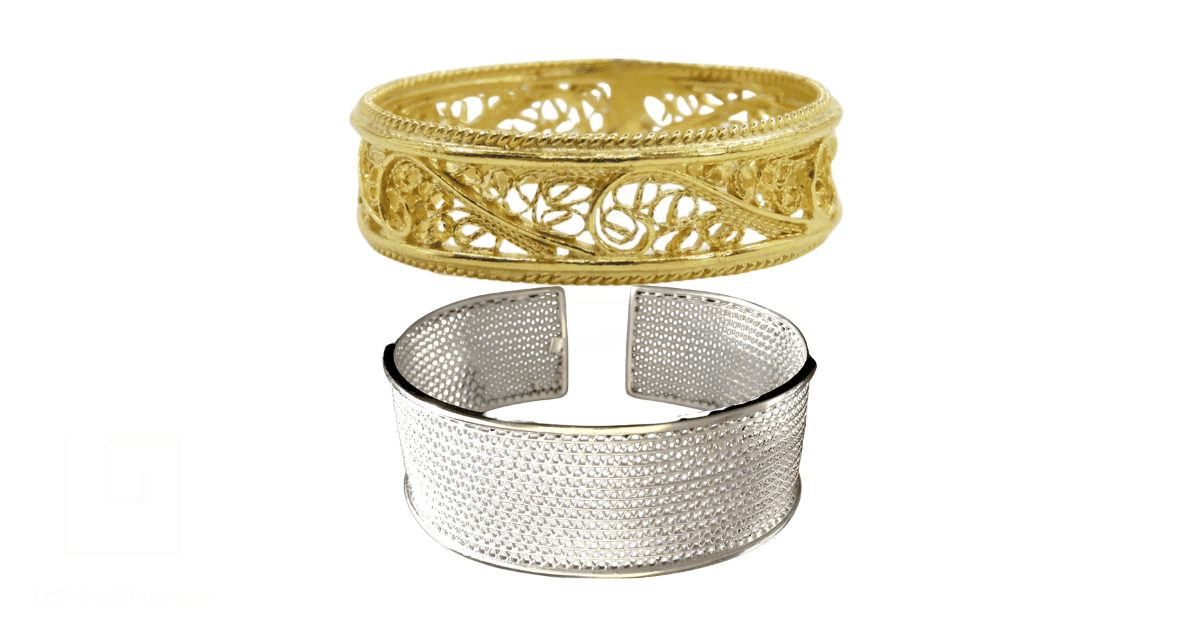
Silver is the most popular historical metal used for crafting filigree jewelry. For thousands of years, jewelers have favored silver because it is highly malleable and easy to stretch into fine threads. Silver makes up the vast majority of antique filigree jewelry simply because its extreme softness allows artisans to shape complex lacework without the wire snapping.
However, when comparing gold and silver for modern jewelry, you must weigh several practical differences.
Silver is highly malleable and inexpensive, so it is a great option for budget-conscious buyers. Jewelers typically use 925 sterling silver, which mixes 92.5% pure silver with 7.5% copper to add a bit of strength. Even with the added copper, silver remains a very soft metal. It bends easily under pressure and tarnishes over time when exposed to oxygen, moisture, and skin oils.
Gold offers a much stronger alternative, provided you choose the right karat. Pure 24k gold is entirely too soft for fine wirework and will crush easily. Jewelers rely on 14k or 18k gold for filigree because these alloys combine pure gold with stronger metals such as zinc, copper, or nickel. A solid 14k gold ring is highly resistant to bending and warping, making it a much safer choice for a filigree engagement ring worn daily. Gold also resists tarnishing, meaning it requires far less maintenance than sterling silver.
When picking out a metal for your filigree jewelry, you should consider these specific factors:
Wear Frequency: If you plan to wear the piece every day, like a wedding band, 14k gold or platinum is strictly necessary. The constant friction and impact of daily wear will quickly bend or break silver wirework. Save silver for occasional pieces like earrings or pendants.
Budget Requirements: Silver costs significantly less than gold. If you want a large, heavily detailed cocktail ring but have a strict budget, sterling silver gives you the best return on your investment.
Maintenance Commitment: Silver requires regular polishing to remove tarnish and keep the metal bright. If you want a low-maintenance piece that you can put on and forget about, gold is the far better option.
Skin Sensitivities: If you have metal allergies, you must pay attention to the alloys. Some white gold mixtures contain nickel, which causes skin reactions for many people. Hypoallergenic 14k yellow gold or rhodium-plated sterling silver are the safest choices if you suffer from sensitive skin.
Common Examples of Filigree Jewelry
You can find this delicate wirework in almost every jewelry category available today. Because the technique involves shaping fine metal threads, artisans mold them into everything from bold statement accessories to tiny everyday wear.
The sheer variety of styles means there is a piece for every taste and budget.
Rings: Arguably the most popular category. Vintage-inspired filigree rings currently make up nearly 30% of the antique bridal market. You will spot endless variations, from openwork bands to heavily detailed settings that frame a center diamond. I
Earrings: Because the technique relies on open space, the resulting pieces are extremely lightweight. This makes the style perfect for large drop earrings or chandelier styles that would otherwise pull heavily on the earlobe.
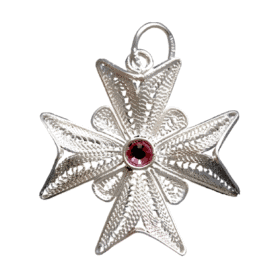
Necklaces and Pendants: Artisans shape the metal wires into ornate crosses, floral drops, and heart lockets. These pieces lay flat against the chest, allowing the intricate lace patterns to stand out clearly.
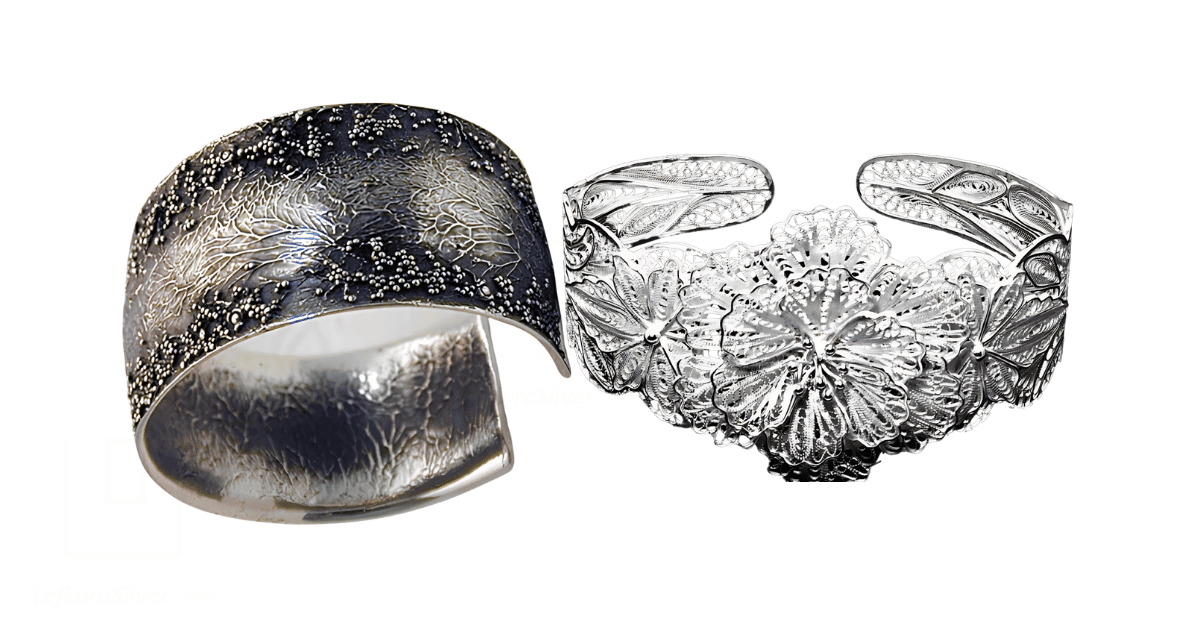
Bracelets: You will see filigree in both rigid bangle styles and flexible, linked cuffs. The continuous patterns wrap around the wrist, creating a seamless band of metal lace.
Pricing varies wildly based on the materials and the level of handcrafting involved. Handmade sterling silver filigree pieces often start around $50 and peak near $300, while high-end platinum or 18k gold filigree rings easily range from $1,500 to over $10,000, depending on the center gemstone.
Tips for Identifying Real Filigree Wirework
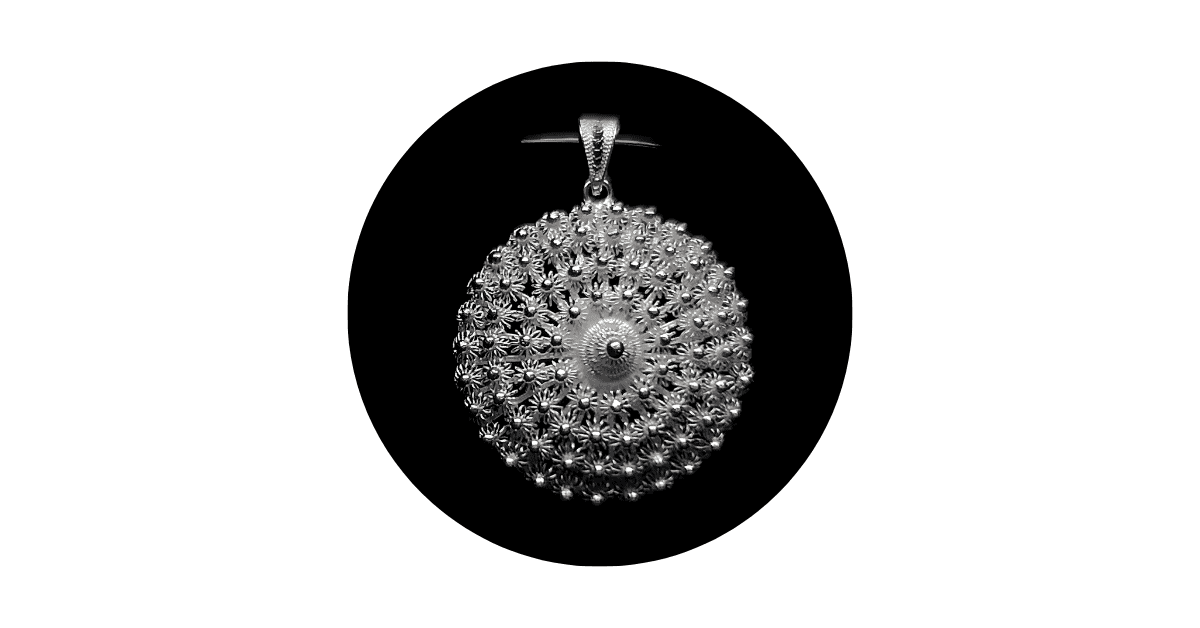
Just like everything else in the jewelry industry, there are plenty of fakes and mass-produced copies masquerading as the real deal. It is very common for manufacturers to cast solid pieces of metal that merely look like twisted wire.
Fortunately, there are specific tips that help you identify real handmade pieces before you spend your money.
- Look for minor imperfections. True handmade wirework is crafted by a human being, not a factory machine. You will often see slight variations in the symmetry of the wire loops, which is the single most reliable sign of authentic handcrafting.
- Check the solder joints under a loupe. In a genuine piece, the artisan must weld the tiny metal threads together. If you look closely through a 10x magnification jeweler’s loupe, you can spot the tiny, clean solder marks where the individual wires meet.
- Feel the edges of the metal. Machine-made knockoffs are usually stamped out of a single flat sheet of metal. This leaves the edges feeling flat, sharp, or rigid. Real wirework feels smooth and rounded to the touch because the maker uses actual round metal threads.
- Examine the back of the jewelry. Authentic openwork has no solid backing holding it together. The structural integrity comes from the tension and the welded joints of the wires. If the piece looks like a flat, solid plate with a pattern simply carved or stamped into the front, it is a cast copy.
- Assess the overall weight. Real wirework is mostly empty space. Because it is made of fine threads with plenty of gaps, the finished jewelry is remarkably lightweight. If the piece feels heavy, dense, and clunky, you are likely holding a solid cast mold instead of real braided wire.
Filigree vs Granulation – The Similarities and Differences
Granulation is basically the cousin of filigree. While filigree uses thin metal threads to build a design, granulation uses tiny metal balls or “grains” to create texture. A jeweler makes these small beads by heating tiny bits of metal until they pull into perfect spheres. Then they stick these beads onto the surface of a piece of jewelry. It is a slow, steady job that requires precise heat control.
Both of these styles are old. Jewelers in ancient Mesopotamia and Greece were using these tricks over 5,000 years ago. They both need high-karat metals like gold or silver because these are soft enough to work with but strong enough to hold their shape. Archaeologists found gold beads from 3000 BC that used both twisted wire and tiny grains to tell a story.
You will often see these two used on the same piece of jewelry. The filigree wire might mark out the border or the main shape, while the granulation fills in the gaps or adds a bit of sparkle. Both rely on a tricky soldering method where the jeweler heats the metal just enough to join the pieces without melting the whole thing into a blob.
| Feature | Filigree | Granulation |
|---|---|---|
| Main Material | Thin, twisted metal threads | Tiny metal balls or beads |
| Design Style | Lacy and see-through | Solid and textured |
| Support | Often stands alone as openwork | Needs a metal plate or base |
| Overall Look | Light and airy | Rich and pebbled |
| Common Metal | Gold, silver, and platinum | Mostly high-karat gold |
What is Filigree? Concluding Thoughts
This filigree jewelry guide covers a lot, from Mesopotamian history to modern scroll patterns. We looked at data from October 2026, how these pieces were made in ancient times, and 5 simple modern designs. We also touched on where to find the best antiques, the soldering tricks pros use, and how to choose between gold and silver. Whether you are looking at everyday earrings or trying to spot real hand-twisted wire, there is a lot to think about.
Here are some key points to remember:
- In October 2026, custom requests for wirework jewelry rose by 20%.
- The thin wire in these designs can be only 0.2 millimeters thick.
- White gold and platinum now make up 65% of all filigree ring sales.
- A single handmade bracelet can involve thousands of tiny solder points.
- Openwork filigree has no metal backing, which keeps the piece very light.
These rings and pendants are more than just accessories; they are tiny sculptures you can wear every day. If you want a ring that has some soul and history, filigree engagement rings are a great way to stand out from the crowd.
This guide was last updated in October 2026. Follow our website, LefkaraSilver.com, to stay informed about new jewelry offers, news, and buying guides.
What is Filigree? FAQs
Here are answers to some frequently asked questions about filigree:
Why is it Called Filigree?
The name comes from the Latin words filum and granum. These mean “thread” and “grain,” describing the metal wires and tiny beads used. This craft is over 5,000 years old, dating back to ancient Mesopotamia. The name fits the 0.2 millimeter thin metal strips that form these lacy designs.
Why is Filigree So Expensive?
It costs more because it requires a lot of hand work. A single ring can have thousands of tiny solder points that take hours to finish. Labor costs for this skill often rise 10% to 20% every year. You pay for the time of a master artisan instead of a mass-produced item.
What is Another Name for Filigree?
People often call it “metal lace” because of its airy look. In China, this skill is known as leisi, a style used for over 5,000 years. Experts also call it “openwork” when the wire patterns have no solid backing. White gold and platinum now make up 65% of all filigree ring sales.
What Are The Elements Of Filigree?
The primary parts are thin metal threads and tiny beads. Jewelers twist and curl these wires into shapes like flowers or vines. Most high-end pieces use 18k gold or platinum to keep the design strong. One small motif may contain over 50 separate metal curls joined by heat.