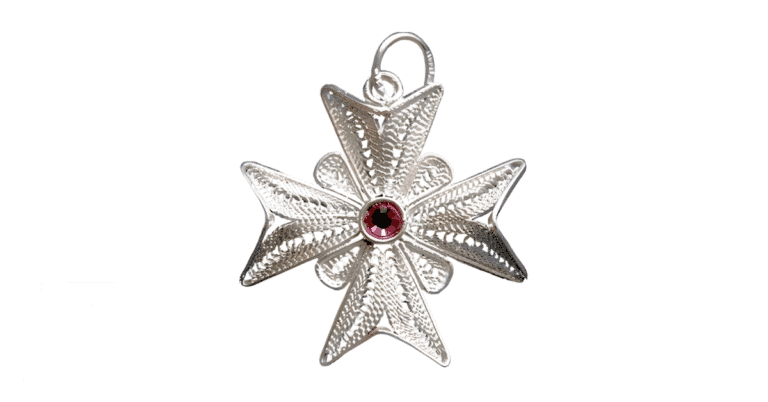
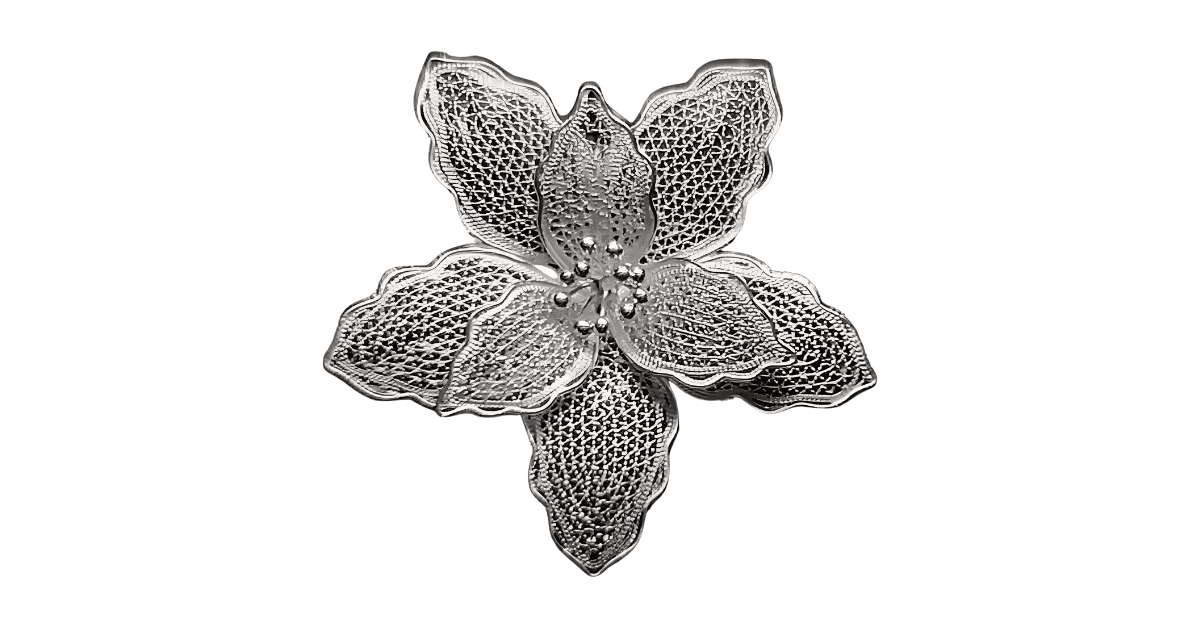
Filigree Jewelry Origin – History & Evolution
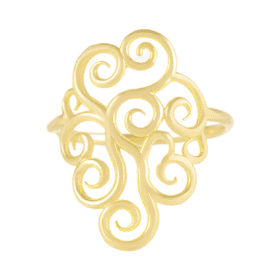
Filigree is one of those timeless metalworking techniques that have lingered from the past and remains incredibly relevant today. At its core, filigree making involves twisting, curling, and plaiting fine metal threads and soldering them into detailed, lace-like patterns. This is an art of patience, where the beauty comes from the precision of the wirework and the intentional spaces left behind to create airy, delicate designs.
This guide contains the latest insights as of October 2026 to help you separate myth from reality. We will look at key facts and statistics of filigree jewelry, five filigree origin claims, the true stories, and the different techniques that define quality pieces. We will also look into the symbolic and religious origins of these designs, where to find authentic Edwardian pieces, the specific materials used in Victorian designs, and how to care for your collection. You will also get easy style tips for wearing silver filigree.
This craft spans thousands of years. Early civilizations recognized that by drawing metal into thin wires, they could build complex structures without the weight of solid metal sheets. Over centuries, these techniques traveled across trade routes, picking up unique regional tastes, from the geometric knotwork seen in Celtic metalwork to the highly detailed, nature-inspired scrolls in Mediterranean traditions.
Key Facts & Statistics of Filigree Jewelry – October 2026
The following data contains the state of the global jewelry market and the specific interest surrounding filigree pieces this year.
- Current market analysis shows that the global jewelry sector is projected to reach a valuation of $480 billion by the end of the year
- Handmade artisanal segments, such as filigree, are already showing a steady annual growth rate of 6.5%.
- Consumer interest in sustainable fashion has driven a 22% increase in searches for recycled silver filigree jewelry over the past 12 months.
- Experts note that 75% of collectors prioritize pieces that show signs of manual wire-twisting, as opposed to modern die-cast reproductions.
- In terms of craftsmanship, it is estimated that a single master-level filigree brooch requires upwards of 40 hours of intense labor to complete from start to finish.
- Market reports from early 2026 indicate that 40% of millennials and Gen Z buyers are now actively seeking out heirloom-style filigree as a way to invest in jewelry with deep cultural history.
- Approximately 15% of all fine jewelry retail inventory currently features some form of wire-based openwork or filigree detailing, reflecting a strong resurgence in romantic, vintage-inspired aesthetics.
5 Filigree Origin Claims & Their True Stories
You will find plenty of arguments about where this craft started, but the truth is that multiple ancient societies mastered the art of drawing and soldering fine metal wires independently. While some regions developed their own unique styles, the fundamental skill of twisting and joining hair-thin threads of precious metal appears across the globe.
Cultures from Mesopotamia and Egypt to Greece, India, and Portugal all hold valid claims to developing their own branches of this intricate work.
1. Mesopotamia
Archaeological finds place the earliest examples of this metalwork in Mesopotamia, specifically near Mardin, around 3,000 BCE. This area served as a major crossroads for ancient trade, allowing the technique to spread quickly. The oldest known pieces from these early sites show that craftsmen were already capable of soldering fine wires into complex patterns thousands of years ago.
In this region, the craft became a foundational skill for any serious metalworker. Over time, it grew into a specific style known as telkari, which relies on the use of gold and silver wires. Even today, master workers in the area keep these ancient methods alive, creating pieces that mirror the designs produced in those first workshops.
2. Ancient Greece
The Greeks brought a level of precision and artistic flow to the craft that changed how it looked forever. Between the 6th and 3rd centuries BCE, Greek goldsmiths pushed the boundaries of how thin they could draw gold wire, using it to create jewelry designs that mimicked organic shapes like flowers, vines, and leaves.
Unlike other civilizations that focused on carving or casting, Greek artisans built their pieces by adding layer upon layer of wire. They frequently combined this work with granulation, which involves attaching tiny gold spheres to the metal surface. This approach made the jewelry look light, airy, and incredibly delicate, as if it were spun from sunlight rather than forged from heavy metal.
3. The Iberian Peninsula
The history of this craft in Portugal and Spain is complicated, with some evidence suggesting early pieces were brought in by visiting merchants from the Middle East rather than produced locally. However, the true transformation began in the 8th century CE when Arab populations settled in the region and introduced new methods for manipulating metal threads.
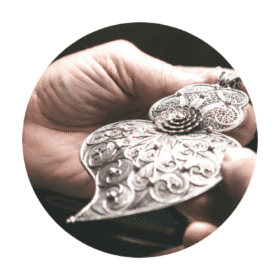
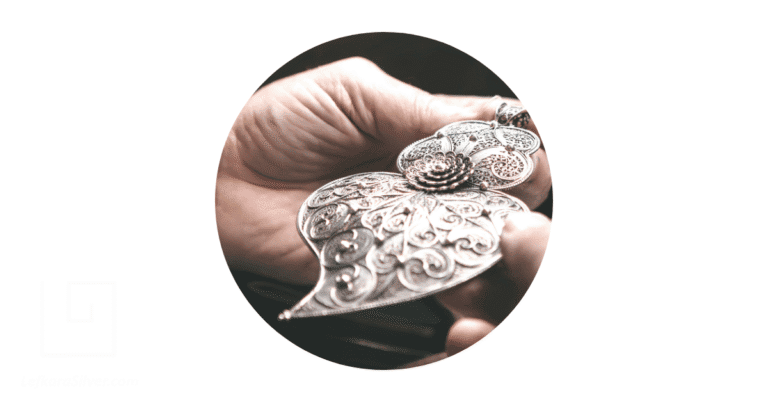
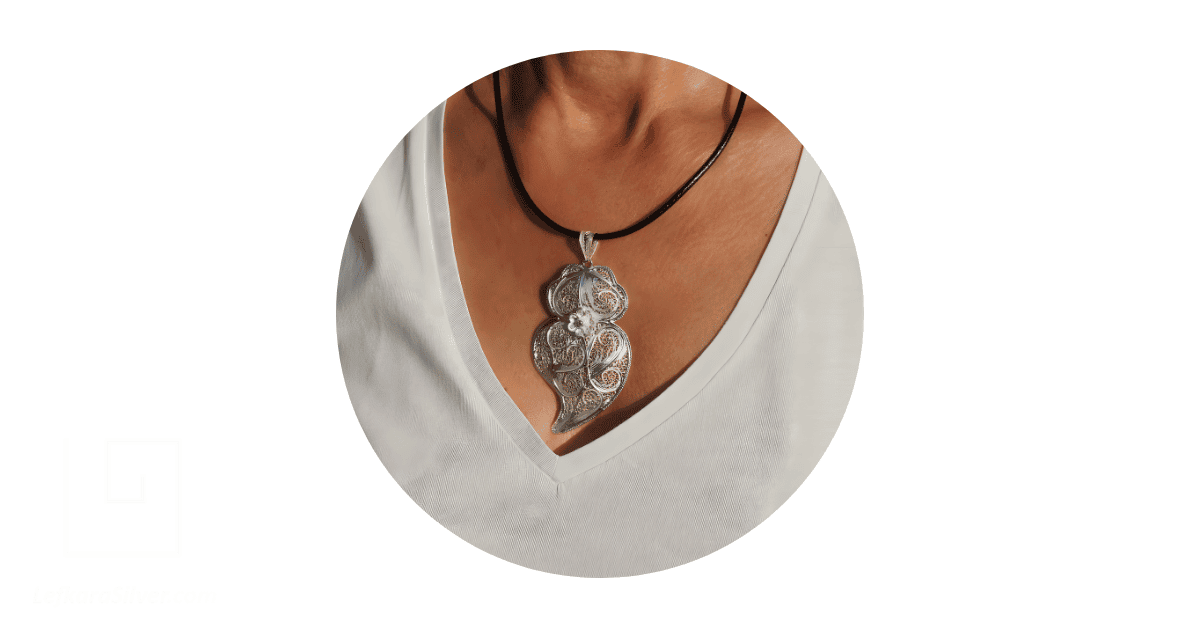
While the tradition faded in parts of Spain, it took root and flourished in Portugal. By the 17th and 18th centuries, Portuguese workers had developed a distinct visual language. The heart, a symbol that started as a religious icon representing dedication, became the most recognizable shape in Portuguese metalwork. This regional style is now famous for being exceptionally complex, often featuring patterns so fine that the metal appears to be a solid piece of lace.
4. China
In the Chinese tradition, known for being one of the most technical forms of the craft, the focus shifted toward using metal as a medium for imperial status. While early inlay work existed centuries prior, the technique reached its height during the Ming and Qing dynasties. Artisans in the imperial workshops were tasked with creating headpieces and ornaments for the royal family that were as light as gauze.
The precision here was unmatched. Some historical crowns from this period were crafted using hundreds of gold wires, each measured at roughly 0.2 millimeters in diameter. This work was done entirely by hand, without the aid of modern machines. The artisans often integrated kingfisher feathers or enamel into these structures, creating a contrast between the gold framework and the bright, natural colors of the decorative elements.
5. India
In India, the art remains a living tradition that has changed very little over thousands of years. Wandering craftsmen historically traveled to their employers’ homes, bringing their own tools and charcoal pans to heat and work the metal on-site.
The style in the eastern state of Odisha is particularly noted for its focus on religious iconography and imagery. These workers use silver wires that are often thinner than coarse human hair to build their patterns. Despite the demand for modern, mass-produced items, these traditional workers continue to use the same methods as their ancestors, weighing the precious metal before and after the work to ensure every scrap is accounted for.
Learning the Filigree Techniques
The first step is almost always drawing the wire to the desired thickness. The filigree makers pass metal through a series of increasingly smaller holes in a drawplate until it reaches the required diameter. Once the wire is thin and pliable, the worker often twists two or more strands together to create a stronger, textured rope. Some makers choose to flatten this twisted rope with a rolling mill, giving the final pattern a more finished, architectural look before it is bent into shape.
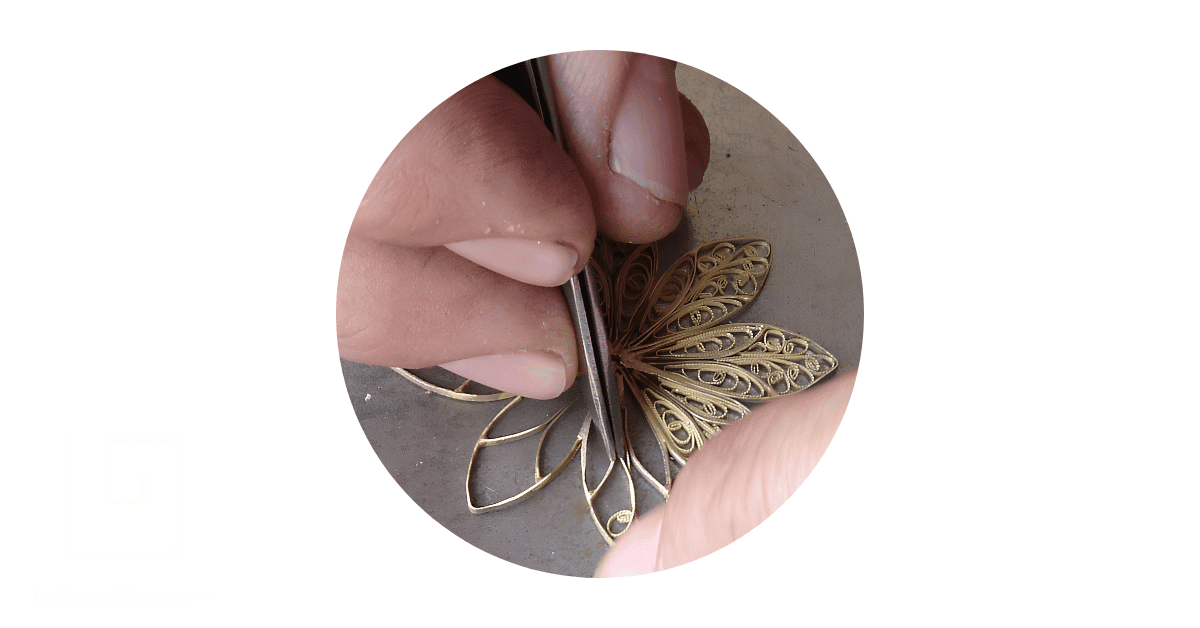
After the wire is prepared, the pattern construction begins. The worker uses fine-tipped tweezers to curl, coil, and braid the wire into designs like spirals or waves. In many cases, these wires are arranged inside a thicker metal frame that provides the necessary structural support for the piece. If the maker wants a more delicate look, they may go for openwork, where the design stands alone without a backing, relying on the soldered connections at the points of contact to hold the structure together.
The final, and perhaps most difficult, step is the soldering process. This requires extreme precision because the wires are so thin that they can melt if the heat is too high. The worker applies a mix of borax and metal powder to the junctions, then uses a blowpipe or torch to bond the pieces. Mastering the temperature is the mark of an expert, as the solder must be strong enough to hold the piece together while remaining invisible to the eye. This process ensures that the finished jewelry is durable enough to wear despite looking as fragile as fabric.
The Symbolic & Religious Origin of Filigree Designs
Many filigree patterns people wear today carry deep symbolic and religious meanings that go back hundreds, if not thousands, of years. These fragile metal threads were rarely just for decoration; they often served as a language of protection, faith, and status. By twisting metal into specific shapes, ancient artisans could turn a simple piece of gold or silver into a powerful talisman or a visual representation of their most held beliefs.
In many Mediterranean and Middle Eastern traditions, filigree patterns were directly tied to the warding off of negative energy. You often see detailed interlocked knots in these pieces, which were meant to trap evil spirits or bad luck, preventing them from reaching the wearer. Spirals, a symbol of filigree work, were frequently used to represent rebirth and the cyclical nature of life. These protective symbols were so common that they were often sewn into bridal jewelry across cultures to serve as a shield during major life transitions.
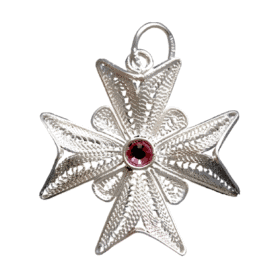
Religious iconography also played a massive role in how these designs took shape. During the Byzantine era, goldsmiths combined filigree with enamel and gemstones to craft crosses, icons, and items meant to shimmer with what they believed was divine light. In various Asian traditions, specific motifs such as the lotus blossom were used to represent purity and enlightenment, while cloud motifs were often chosen to signify infinite fortune. The extreme precision required to create these patterns was considered a form of devotion itself, making the jewelry a physical manifestation of prayer.
Where to Find Edwardian Filigree Jewelry?
The Edwardian era, which ran roughly from 1901 to 1915, marked a high point for filigree craftsmanship. Unlike the heavy, bold styles of the Victorian period that preceded it, Edwardian jewelry focused on an airy, feminine, lace-like aesthetic. Jewelers at the time used platinum and white gold to create incredibly fine, web-like structures that held diamonds or pearls, giving the pieces a weightless look.
To find authentic pieces from this era, you have to look at specialized dealers who focus on estate or antique items. Because of the delicate nature of platinum-set filigree from this time, always check the condition of the metalwork, as thin wires can snap over time. You can shop Edwardian Jewellery through dedicated antique retailers online and in major hubs like London’s Hatton Garden.
Prices for these pieces vary wildly based on the complexity of the metalwork and the stones used; simple filigree brooches might start around $800 to $1,500, while detailed, diamond-set engagement rings from this era often range from $3,000 to over $10,000, depending on the quality and size of the center stone.
Materials Used for Victorian Filigree Jewelry
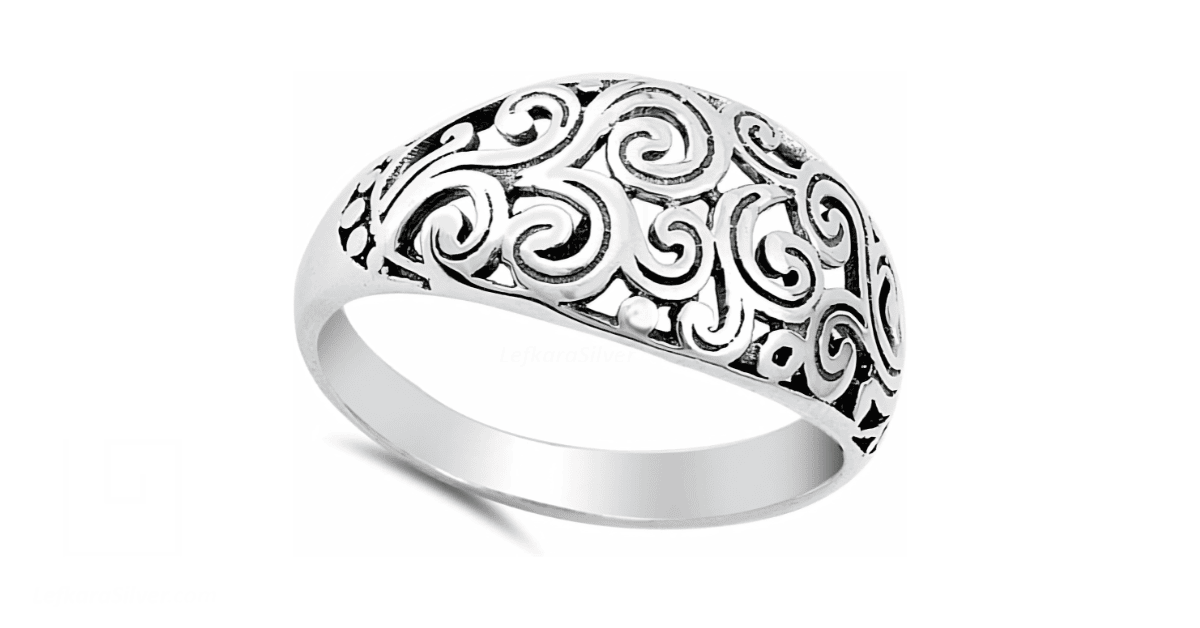
The longevity and character of filigree depend entirely on the raw ingredients. Jewelers working during the Victorian era had specific preferences for the metals they twisted into those trademark lace-like patterns. The choices they made directly impacted how the pieces held up over time and how they looked against the skin.
- Gold: High-karat gold was the gold standard, favored for its flexibility, which allowed for the tightest curls and most intricate twists without snapping.
- Silver: This metal was a frequent choice for more affordable, everyday pieces, often prized for the clean, bright look it gave to delicate wire work.
- Pinchbeck: This was a clever mix of copper and zinc designed to mimic the appearance of gold. It allowed people to own ornate jewelry without the hefty price tag of precious metals.
- Gilding: To get the look of gold on base metals, jewelers often applied a thin layer of gold over the surface.
- Gemstones: It was common to see small, unfaceted, or flat-cut stones tucked into the center of wire motifs to add a flash of color.
High-karat gold is consistently the top choice for fine filigree. Because the process involves drawing metal into incredibly thin threads, the material must be soft and malleable. Gold offers the best balance of strength and pliability, meaning a jeweler can create complex, airy designs that hold their shape for centuries.
While silver is beautiful, it is softer and can bend more easily if the wire is too thin, which is why pieces meant to last generations as heirlooms were almost exclusively crafted in gold.
Top Filigree Makers You Can Find Online
If you want the authentic handmade filigree pieces that feel like they have a soul, you have to ignore the mass-produced, stamped-out items. Genuine, handmade filigree requires a level of patience and hand-eye coordination that machines simply cannot replicate.
Here are the top filigree makers who offer authentic handmade filigree jewelry online:
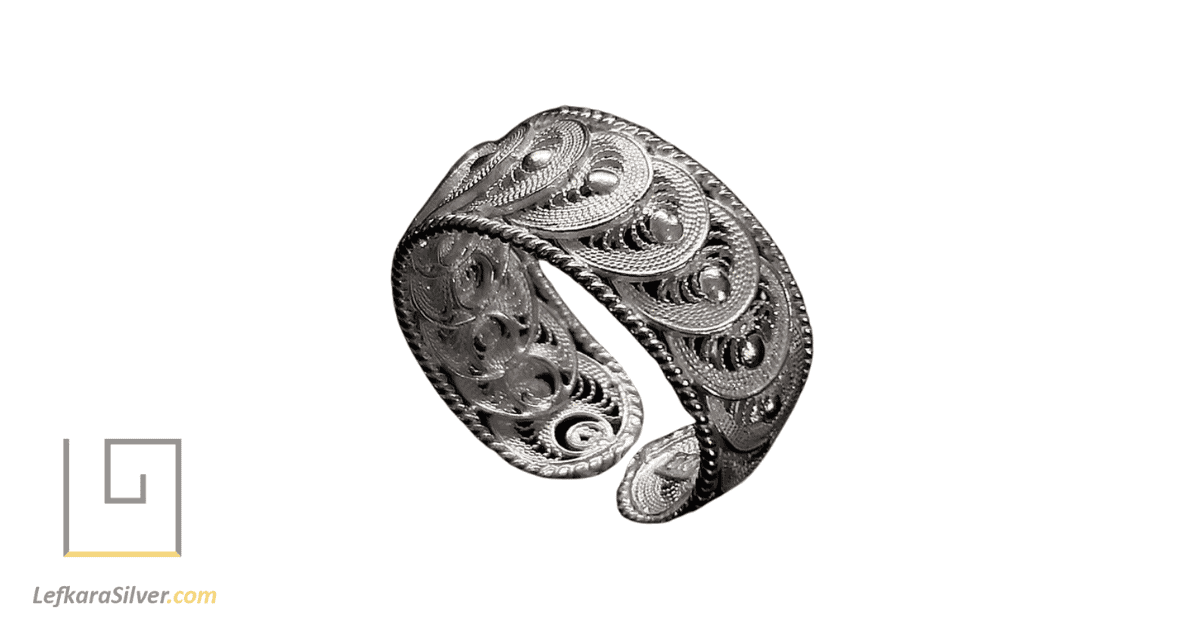
- Lefkara Silver: Located in Cyprus, this workshop is legendary for keeping traditional techniques alive. They specialize in precise, lacy work that stays true to historical methods. You can reach them through their official website to view their current catalog or request custom designs. Customers consistently talk about the sturdiness of their silver threads.
- Eleuterio: They operate out of Portugal, a country with a deep, centuries-long history in this craft. Their work often feels like a bridge between old-world techniques and modern luxury. You can contact them directly through their main digital portal to inquire about their latest collections. Fans of the brand often highlight the incredible uniformity of their wire work, which is a sign of extreme technical skill.
- Filigrana di Campo Ligure: Based in Italy, this group is famous for maintaining specific, regional styles of wire work that you cannot find anywhere else. They offer a direct line of contact on their website for those interested in purchasing pieces directly from the source. Many collectors report that their pieces retain a bright, crisp finish for years, thanks to the high quality of the silver they use.
When you buy from these makers, you are paying for the time it took to create the piece. Handmade filigree often takes ten times longer to finish than standard jewelry, which is reflected in the quality. You can also find handmade filigree jewelry on Etsy.
Easy Style Tips for Silver Filigree
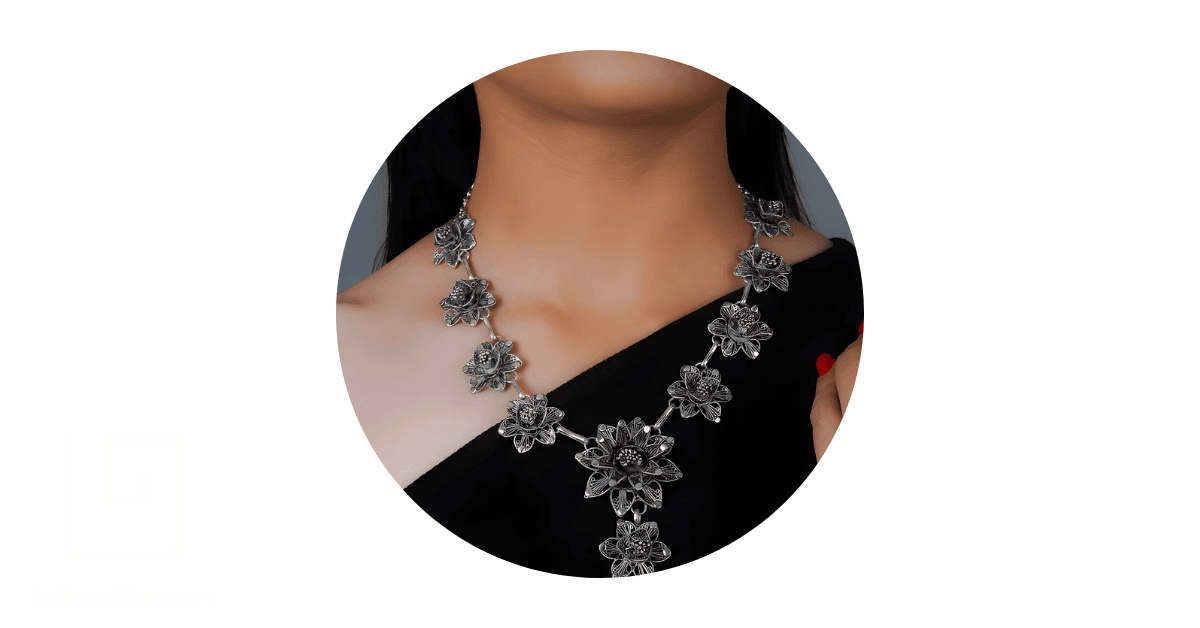
Getting your jewelry look right matters because your accessories set the tone for your entire outfit. When you work with filigree, you are dealing with pieces that have a lot of personality, texture, and visual weight. These items serve as focal points, so it is often best to keep the rest of your outfit relatively simple to let the jewelry shine. You want to make sure your choice matches the mood you are aiming for, whether that is a casual daytime look or a formal evening event.
Keep your other accessories to a minimum if you choose to wear a large, statement filigree pendant. If you add too many competing pieces, you lose the intricate details that make filigree special.
Use filigree earrings to pull together a plain outfit, such as a crisp white shirt or a simple black dress. The detail in the wirework adds just enough interest without needing any extra embellishment.
Check the edges of your clothing before you head out, as filigree is made of fine wires that can occasionally catch on delicate fabrics like silk or lace. Consider placing these pieces on sturdier materials like wool or denim for a safer, stylish pairing.
Try stacking simple silver bands with a filigree ring to ground the look and make it feel more contemporary. This blend of modern minimalism and historic technique is a great way to update your daily style.
Clean your silver pieces regularly with a soft cloth to ensure the metal retains its natural luster. Because filigree has so many tiny gaps and crevices, dirt builds up quickly, which dulls the impact of the pattern.
What is the Connection between Celtic Metalwork and Filigree?
Celtic metalwork refers to the highly skilled production of gold, silver, and bronze items produced by ancient and medieval people living in parts of Europe, particularly across the British Isles and Ireland. This tradition is famous for its use of complex, non-representational patterns, including interlacing knots, spirals, and zoomorphic figures. These artisans crafted everything from massive torcs and brooches to ornate reliquaries, all marked by a level of precision that remains impressive today. You often find these remnants of high-status art in archaeological finds from burial sites and monastery treasures.
Filigree became a key tool for Celtic metalworkers because it allowed them to fill large surface areas with complex, continuous lines that mirrored their love for knotwork. Instead of just engraving a design into a flat sheet, they used fine, twisted metal wires to build up the pattern. This technique allowed them to create the “endless knot,” where a single thread appears to weave over and under itself without a visible beginning or end. This matches the philosophical and aesthetic goals of Celtic art, which often prized themes of eternity and interconnectedness.
The connection deepened as these artisans applied filigree wire to the surfaces of high-status personal items, such as brooches, to create depth and shadow. By the 7th century, the technique of using wire to form complex, hard-to-follow patterns reached a level where a single thread could be traced through long, winding passages across the surface.
These metalworkers often finished the ends of these wires with tiny, precise shapes resembling the heads or tails of mythical creatures. This application transformed functional objects into intricate puzzles, cementing filigree as a fundamental technique for producing the most prized treasures of the time.
How to Take Care of Your Filigree Jewelry?
Buying a piece of filigree from a reputable maker is only half the battle. Because this work involves fine, twisted wires and intentional open spaces, it attracts dust, lotions, and everyday grime.
Here are some cleaning & maintenance tips to follow:
- Handle your pieces with extreme care during your daily routine. Always put your jewelry on after you finish styling your hair and applying perfume or hairspray. Chemicals in beauty products build up in the tiny crevices and dull the metal over time.
- Clean your jewelry using only gentle methods. You can safely soak your pieces in a bowl of lukewarm water mixed with a few drops of mild dish soap. Let the jewelry sit for about 15 minutes to soften any trapped dirt. Use a soft-bristled brush, such as a clean paintbrush, to gently sweep away residue from the hard-to-reach spots. Never scrub hard, as you risk bending or snapping the fine wire work.
- Dry your pieces thoroughly after a wash. Moisture is the enemy of shine, especially if your filigree contains oxidation or black detailing. Pat the piece dry with a soft, lint-free cloth. Avoid leaving it to air dry, as water spots can form.
- Store your filigree separately to prevent damage. Because the wire patterns are fragile, they can easily get crushed or tangled if thrown into a crowded jewelry box. Keep each item in its own individual soft pouch or a dedicated compartment in a jewelry case. This protects the shape of the delicate scrolls and prevents the wires from catching on other, harder pieces.
Filigree Origin – The Bottom Line
We have covered everything you need to know about the origin of filigree in this guide, from the origin claims & their true stories to the different filigree techniques and the symbolic & religious origins of filigree designs. We also looked into where to find Edwardian filigree jewelry, the materials used for Victorian filigree jewelry, the top filigree makers you can find online, easy style tips for silver filigree, the connection between Celtic metalwork and filigree, and essential methods for how to take care of your filigree jewelry.
Here are some points to take with you:
- Filigree work requires no extra material; it relies entirely on heating and joining fine metal wires together.
- The term comes from Latin words meaning thread and grain, perfectly describing the combination of wirework and tiny metal beads.
- Archaeological finds indicate this craft has been in practice for at least 5,000 years.
- Many traditional filigree patterns were designed to symbolize protection, prosperity, or fertility.
- Unlike other jewelry techniques that carve away metal, true filigree is built up by hand.
- Proper storage is essential because the delicate openwork design can easily snag or lose its shape.
This content was last updated in October 2026. Follow our website, LefkaraSilver.com, to stay informed about new jewelry offers, news, and buying guides.
Filigree Origin FAQs
These are answers to some frequently asked questions about filigree origin:
How Do You Say Filigree?
You pronounce filigree as FIL-uh-gree, with the primary stress on the first syllable. This term stems from the Latin words filum, meaning thread, and granum, meaning grain or bead. It is a simple word to say once you break it down into these two distinct sounds.
What Does a Filigree Symbolize?
Across various cultures, these delicate metal patterns often represent protection, prosperity, and eternal love. Historically, people wore these pieces as talismans to ward off negativity or celebrate important life milestones. In some regions, specific motifs like hearts or knots symbolize deep family devotion and status.
Which City is Famous for Silver Filigree?
Cuttack, located in the Indian state of Odisha, is globally recognized for its masterful silver work known as Tarakasi. Expert artisans there use ultra-fine wires to create complex, lace-like patterns that have been produced for generations. This specific style is a dying art form that remains a major cultural identifier for the region.