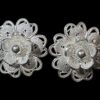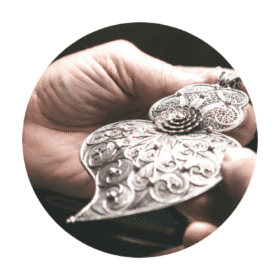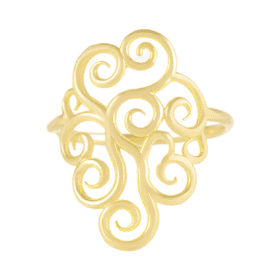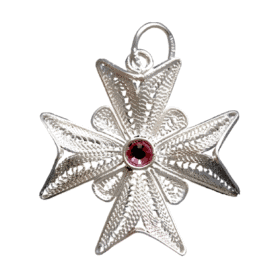
White gold filigree rings or yellow gold? Which should you really pick? If you’re worried about avoiding tarnish from wearing your ring every day, both options can work, depending on the carats and how you handle it.
Some people avoid white gold because they think it’s plated and will wear off before they blink. That’s not true.
In this guide, we’ll show you why white gold filigree rings are a great idea, plus the latest trending styles, and where to customize white gold filigree rings for women. We’ll also look at the best stores to buy these rings and show you how to choose between 14k, 18k, and 10k white gold filigree rings.
What You Should Know About White Gold Rings
White gold is not a naturally occurring element like yellow gold. It’s simply yellow gold mixed with other white metals like nickel and palladium. It’s mostly mixed with palladium for hypoallergenic properties.
Once the metals are mixed, they are melted down at extremely high heat, usually over 1000 degrees Celsius. After this process, the ring still has traces of yellow hues, so it’s plated with rhodium to give it that silvery glow, and it’s then called white gold.
Although rhodium is highly resistant to tarnish, it can wear off, so our experts recommend having your rings serviced every few years. It’s also important to consider the carats of the yellow gold that you melt with other metals to form white gold.
6 Pros of White Gold Filigree Rings
Here are some of the best reasons why people choose white gold filigree rings, and maybe you should too:
1. It’s durable for everyday wear
White gold is highly durable because it mixes pure yellow gold with strong metals. This mix makes it much tougher than pure 24k gold, which is far too soft for delicate filigree wires.
It holds its shape better than sterling silver, and if you wear your ring every day, this added strength keeps those tiny filigree loops from breaking or warping.
2. It’s the perfect backdrop for sparkling gems
White gold makes diamonds look larger and brighter; unlike yellow gold, which can sometimes cast a warm yellow tint into a clear diamond.
This background also goes well with colored accent stones like sapphires or emeralds. It gives you a clean, sleek backdrop that lets the central gem stand out without color interference.
3. It’s an affordable luxury compared to platinum
Platinum is a wonderful metal, but it is also highly dense and expensive. White gold filigree rings give you that same luxurious, silvery look at a much lower price.
White gold lets you put more of your budget toward a high-quality center stone or detailed custom filigree instead of paying a high amount just for the metal.
4. It’s more resistant to scratches
Thanks to the harder alloy metals mixed into white gold, it resists daily wear and tear better than sterling silver or high-karat yellow gold. White gold stays bright and smooth much longer.
5. It looks vintage with a modern twist
Filigree work has a long history, dating back to ancient times and peaking during the Edwardian and Art Deco eras. White gold provides that old-world, romantic look while keeping the metal composition thoroughly modern.
It fits right in whether you are wearing casual clothes or dressing up for a formal event. It bridges the gap between classic heritage and modern style, making it incredibly versatile.
6. It’s easier to customize and resize
Unlike titanium or stainless steel, which are almost impossible to resize or modify, white gold is highly workable for skilled jewelers. If your finger size changes, a jeweler can adjust white gold filigree rings far more easily.
This workability also makes it the ideal canvas for custom work. If you want to design a custom piece, white gold allows for highly detailed patterns without the extreme difficulty of working with stiffer, non-precious metals.
Latest Trending Styles for Gold Filigree Rings
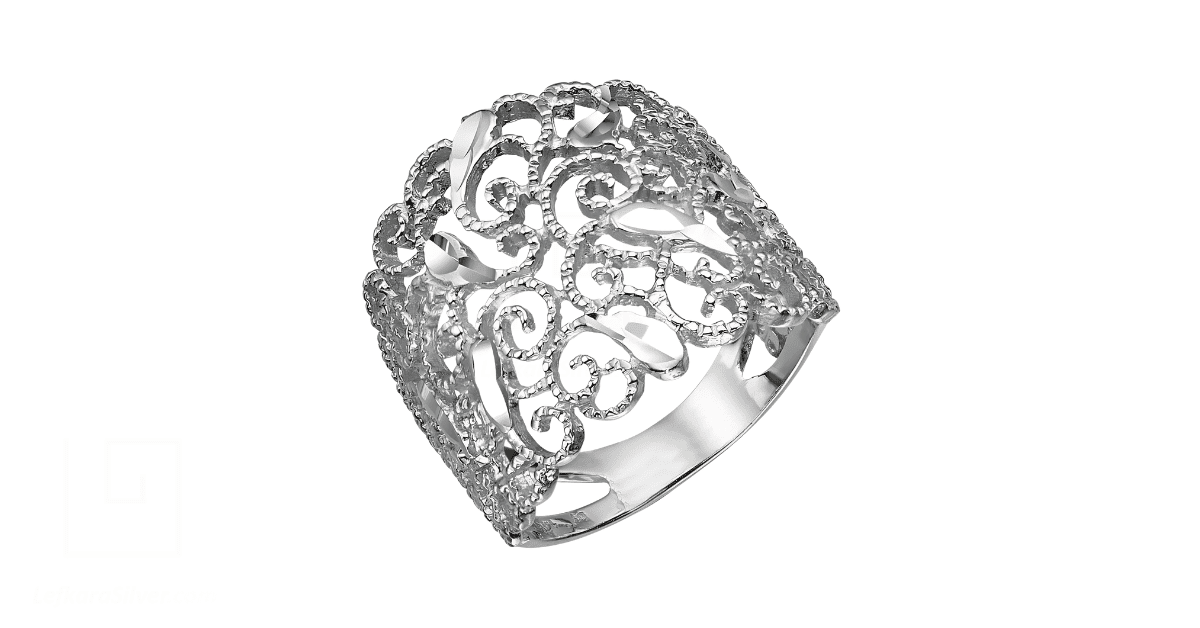
Fashion trends move quickly, and even classic white gold filigree ring styles shift with what buyers prefer from season to season. While the core technique of twisting fine metal threads remains ancient, the way jewelers pair these details with modern cuts keeps evolving.
Today, buyers want pieces that feel personal but also historical.
Right now, geometric Art Deco styles are leading the trend. Buyers still love the hexagons and triangles, mixed with airy openwork.
Another major trend is the natural, botanical look. Floral filigree patterns that look like leaves, vines, and petals are highly sought after. To understand what goes into these delicate designs, you can read about the basics of filigree.
Rather than sticking to traditional diamonds, modern buyers are also choosing colorful center stones like teal sapphires and emeralds to make the leaf patterns stand out.
Where Can You Customize White Gold Filigree Rings for Women?
If you want to design your own custom ring, here are the top places to go:
- Green Lake Jewelry Works
You can find them in Seattle, Washington. Their design process is quite straightforward: you work with their artist to sketch your ring; when you’re happy with the design, you can approve it and stay updated with pictures of how it’s being made; and after that, you can pick your ring. - Krikawa Custom Jewelers
Located in Arizona, Krikawa is known for its unique vintage styles and structural design guidance. You can set up an appointment in person or on Zoom so their designer can assist you. - Whitehouse Brothers
Operating out of Cincinnati, Ohio, and online, this workshop has been making filigree jewelry since 1898. They use a special die-striking technique that makes the metal 33% denser than cast jewelry, ensuring the delicate openwork withstands daily wear. Their jewelers then hand-pierce and engrave the patterns using tiny saws and tools. - Jewelers Workshop
Situated in Madison, Wisconsin, this store has created custom jewelry in-house for over 50 years. They combine old-world metal techniques with modern 3D modeling software so you can see your white gold design before they craft it.
More people than ever want a ring that tells their own story rather than buying a mass-produced piece off a shelf. Customizing your white gold filigree ring lets you choose every detail, from the karat to the metal to the exact pattern of the wirework. Filigree is perfect for this, as jewelers can shape the tiny wires into personal symbols, initials, or custom patterns that hold special meaning for you. Because vintage-style ring searches have climbed by 20% lately, custom filigree has become a top request for couples who want a mix of old-world charm and modern construction.
The Best Stores for White Gold Filigree Engagement Rings

Visiting the right jewelry store is a major step when you want to buy a white gold filigree engagement ring. True filigree is extremely delicate, and buying from an unverified seller can leave you with a mass-produced piece that bends easily or catches on your clothes.
Our team has searched high and low to find stores that offer authentic white-gold filigree engagement rings. Here are the best stores offering these rare rings, along with their locations, average prices, and what sets them apart in the market.
Estate Diamond Jewelry
Located in Manhattan’s historic Diamond District in New York, NY, this boutique has been buying and selling rare jewelry for decades. They carry a highly curated collection of original Edwardian and Art Deco filigree rings, as well as exact custom reproductions. Their prices for white gold filigree rings typically range from $2,000 to over $22,000, depending on the age and the size of the center stone.
They stand out because they work with third-generation bench jewelers who recreate historic metalwork by hand, making it incredibly hard to tell their custom creations apart from hundred-year-old originals.
Filigree Jewelers
This family-run store specializes in actual antique pieces and vintage estate finds. Their white gold filigree ring prices typically span from $1,000 to over $15,000, with the most popular settings falling between $3,000 and $6,000. What makes them stand out is their massive archive of physical Edwardian and Art Deco pieces. Over 50% of their inventory consists of true vintage or estate items, while the rest are modern pieces built with repurposed gemstones. This gives you a high level of historical character that mass-produced jewelry lacks.
Joseph Jewelry
This is a custom-first shop. Instead of selling off-the-shelf rings, they help you design your own piece from the ground up. Their white gold filigree ring settings (without the center stone) cost between $2,000 and $4,500. They stand out in the market because they use state-of-the-art computerized casting machines that vacuum oxygen out during casting, preventing tiny air bubbles from forming in the metal. This guarantees that your custom white gold wires remain structurally sound for decades.
The Antique Ring Boutique
This is based in Knightsbridge, London, UK, but serves buyers worldwide. Their prices are highly flexible, ranging from under $1,300 (£1,000) to $26,000 (£20,000) or more. They stand out because their founder personally selects every single ring in their catalog based on its rarity, historical era, and condition. To make shopping easier, they offer free insured worldwide shipping and free resizing on all their vintage rings, making buying from overseas stress-free.
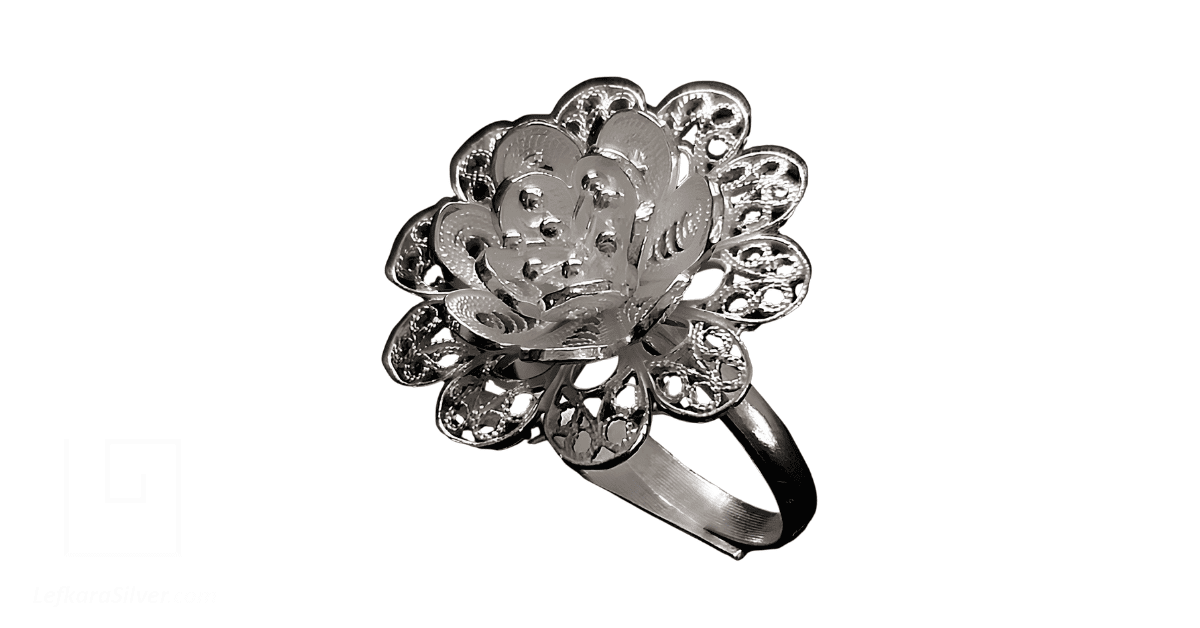
If you prefer silver filigree rings, be sure to check out Lefkara Silver’s filigree collection for the best, unique, and carefully handmade silver filigree rings. The prices are affordable, too. We also offer custom gold filigree rings on request, tailored to create a truly one-of-a-kind addition to your collection.
14k vs. 18k vs. 10k White Gold Filigree Rings
Karat weight measures the purity of the gold in your ring. Pure gold is graded as 24k, but at 100% purity, it is far too soft to hold detailed metalwork. It bends easily under light pressure, meaning those tiny, delicate filigree wires would warp or snap within days. To solve this, jewelers mix pure gold with other metals such as nickel, zinc, silver, or palladium to create a durable alloy. The resulting alloy is much stronger and takes on a cooler, silvery tone.
Understanding the different karats of gold helps you choose a ring that fits your lifestyle, budget, and skin sensitivity.
- 18k gold is composed of 75% pure gold and 25% alloy metals. It is best used for high-end, custom-crafted filigree where maximum malleability is required to hand-bend intricate, lace-like patterns.
- 14k gold contains 58.3% pure gold and 41.7% alloy metals. This is the absolute industry sweet spot, accounting for nearly 60% of all engagement ring sales globally. It is best used for daily-wear rings, offering a superb balance of structural strength and real gold value.
- 10k gold contains 41.7% pure gold and 58.3% alloy metals. It is best suited to budget-conscious buyers or those who need maximum scratch resistance, though its high concentration of base metals may require caution if you have sensitive skin.
The table below shows how these karats behave in white gold:
| Gold Karat | Pure Gold Percentage | Durability Level | Metal Allergy Risk | Best Used For |
|---|---|---|---|---|
| 18k White Gold | 75% | Moderate (easier to scratch) | Low | Delicate hand-crafted filigree and luxury collections |
| 14k White Gold | 58.3% | High (highly scratch-resistant) | Low to Medium | Daily-wear engagement rings and detailed vintage settings |
| 10k White Gold | 41.7% | Very High (hardest option) | High (due to high nickel/zinc content) | Budget-friendly jewelry and simple, durable wedding bands |
When you weigh durability against luster, 14k white gold is evidently the most practical choice for a filigree ring. While 10k gold is technically harder, its high alloy content makes it rigid, which can actually cause fine filigree wires to snap rather than bend under pressure. On the flip side, 18k gold provides a rich weight, but it is soft enough to scratch and wear down over the years of daily chores.
In terms of shine, all white gold rings get their bright, mirror-like finish from a thin layer of rhodium plating. This means a 10k, 14k, and 18k white gold ring will actually look identical when brand new.
However, as the plating naturally wears down over 1 to 3 years, 14k white gold maintains its structural integrity much better than 18k and shows a far less yellow undertone. It gives you a great middle ground: a long-lasting frame that keeps your tiny filigree wires safe, and a bright white finish that only requires occasional replating.
Vintage & Antique White Gold Filigree Rings
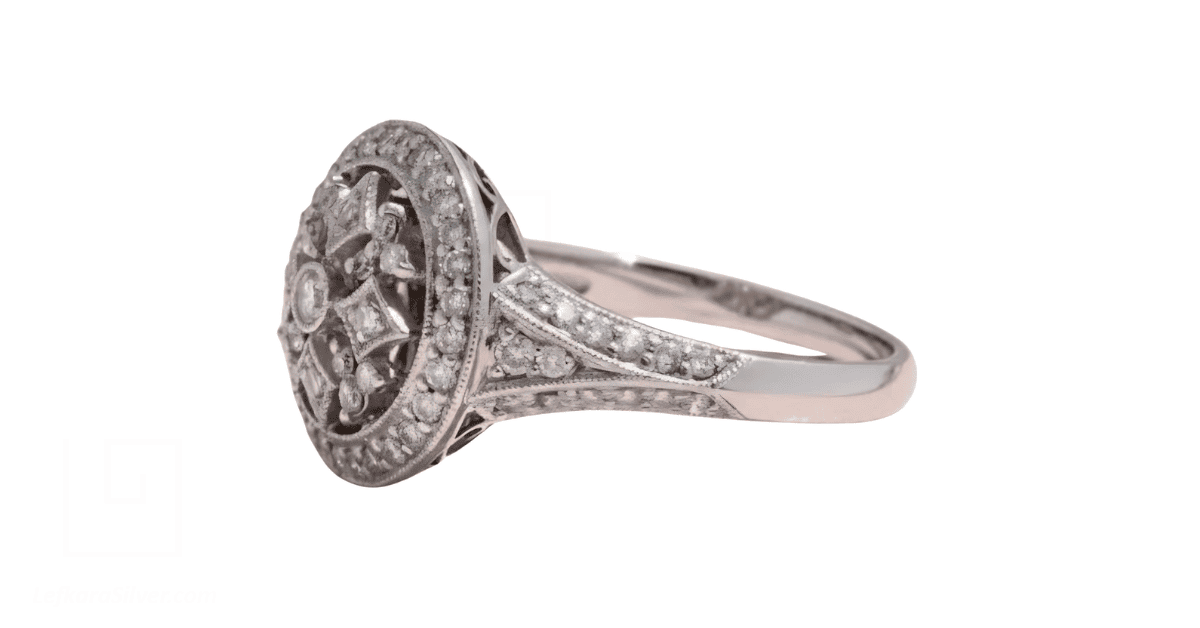
Vintage and antique white gold filigree rings are popular choices for those who love older styles. These rings contain delicate, thread-like metal wires shaped into complex patterns, creating a lace-like style that stands out from modern, plain bands. While people often use the terms interchangeably, they refer to entirely different time periods and design movements.
An antique filigree ring must be at least 100 years old. This means true antique pieces come from the early 1920s or earlier, including the Edwardian and Victorian eras. During the Edwardian era, jewelers used platinum to create delicate openwork filigree, which has no solid metal backing. If you want the finest examples of openwork and classic floral styles, looking for authentic Edwardian pieces is your best path. These older rings are highly valued for their rare hand-crafted detail, as they were made before modern manufacturing took over.
On the other hand, a vintage filigree ring is between 20 and 100 years old. This group includes pieces from the late Art Deco era up through the late 20th century. During the 1920s and 1930s, white gold became widely popular as a more affordable alternative to platinum. This is where you will find the best geometric, sharp-edged filigree designs that mirror the period’s bold architecture.
Today, white gold and platinum make up about 65% of the filigree rings chosen by customers, making them the top metal choices for vintage shoppers. For those looking for structured, symmetrical patterns, shopping for a white gold filigree engagement ring from the mid-20th century offers a great balance of classic design and wearability.
What to Look Out for When Buying White Gold Filigree Rings
Filigree is very delicate because of how jewelers make it. They bend, coil, and solder tiny metal wires together to build these patterns. Because this style is so detailed, there are specific things you must check before making a purchase. White gold requires extra attention because it is an alloy of pure yellow gold and white metals, which jewelers coat with a thin layer of rhodium to give it a bright, white finish. This thin coating can hide flaws or wear down over time, making careful inspection necessary. Since gold engagement rings account for roughly 60% of sales worldwide, knowing what to look for when selecting a gold alloy is key to making a smart purchase.
Here is what you should check when shopping for these white gold pieces:
- Metal purity and composition: Make sure the ring is either 14k or 18k white gold. Avoid 24k gold for filigree because it is too soft to hold its shape over time; opt for 18k or 14k instead. Keep in mind that white gold is an alloy, typically containing about 75% gold and 25% other metals such as nickel and zinc, which gives it added strength.
- The condition of the solder joints: Look closely at the points where the wires meet. Check the solder joints carefully to ensure they are neat,
discreet, and not too thick or weak. Messy or thick solder joints ruin the clean lines of the design, while weak joints can cause the ring to break apart during daily wear. - Signs of yellowing: Check the overall color of the ring. If you notice a faint yellow tint, it means the thin rhodium plating is wearing off. This is
a normal part of owning white gold, but it means you will eventually need to pay a jeweler to re-plate the ring to restore its bright finish. - Smoothness and wearability: Run your finger along the design. High-quality filigree should feel smooth, with no sharp edges, gaps, or loose wires that can snag on your clothes. Poorly made pieces have sharp projections that will catch on fabrics and wear down quickly.
- The style of the filigree: Decide between openwork and metal-supported filigree. Openwork has no solid backing, making it lighter and more delicate. Metal-supported filigree has a solid metal base, which makes the ring far stronger and less likely to bend or break.
- Stone security: If the ring has a center stone, make sure the delicate metal prongs are holding it securely. Always choose a setting that balances the size of the center stone with the filigree so the metal work is not overpowered or bent by a heavy gem. This is especially important since
diamonds are the choice for over 80% of engagement rings, and large gems can easily damage delicate metalwork if not set properly.
How Durable Are White Gold Filigree Rings?
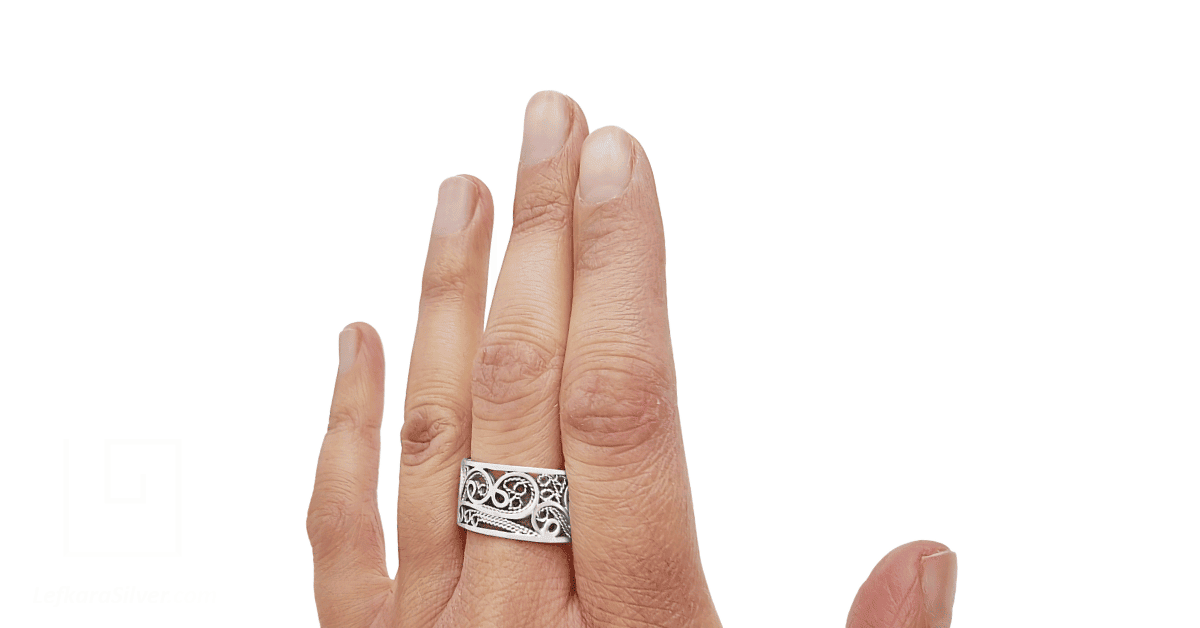
Filigree metalwork is extremely delicate because it is built by twisting and bending extremely thin metal wires into lace-like patterns. While this look is incredibly beautiful, it does not hold up well under highly active conditions. If you work out with weights, spend weekends digging in the garden, or do heavy household chores, a white gold filigree ring is highly likely to bend, snap, or lose its shape. The thin wires can also easily latch onto clothing or blankets, pulling the metal out of shape or loosening the stones.
The type of filigree makes a massive difference in terms of strength. Openwork filigree, which has no solid metal backing, is far more fragile because the wires rely entirely on each other for support. On the other hand, ground-supported filigree is soldered onto a solid metal sheet, making it a bit tougher.
When it comes to the metal alloy itself, 14k white gold is made of 58.3% pure gold and mixed with harder metals like zinc and nickel, which makes it structurally tougher than softer 18k white gold. In fact, white gold and platinum account for about 65% of filigree rings chosen by customers because these metals provide the strength needed to keep the thin wirework secure.
Even with tough metals, daily wear will impact the ring. White gold relies on a thin rhodium plating to get its bright silver look. Instead of typical tarnishing, white gold begins to show its natural warm yellowish tone as the outer plating wears thin. For an active person who wears the ring daily, this plating might wear off quickly, requiring a trip to the jeweler for a fresh coat of rhodium every 1 to 3 years.
To avoid excessive wear and tear, it is best to wear your white gold filigree ring only during low-impact times. Save it for special social gatherings, dinner dates, office work, or events where you will not be working with your hands. You should always take the ring off before going to the gym, doing chores, or swimming.
How Much Does a White Gold Filigree Ring Cost?
Several key elements come together to determine the final cost of a white gold filigree ring, including:
- The Metal Choice and Purity: The karat weight of the white gold directly affects the price. An 18k gold ring contains more pure gold than a 14k gold ring, making it more expensive. If you opt for platinum instead, the price will rise even higher because platinum is denser and more difficult for jewelers to work with.
- Craftsmanship and Labor: Filigree is an incredibly labor-intensive art form. The more complex and intricate the wirework, the more hours a master jeweler must spend shaping and soldering the piece. Genuine handcrafted or customized filigree pieces carry a much higher labor cost than mass-produced, cast jewelry.
- The Center Stone and Accent Gems: A large, high-quality center diamond will always drive up the total cost. However, many modern buyers look at alternative stones to keep costs down.
- Historical Age: Original antique rings from the Art Deco or Edwardian eras carry a historical premium. You will often pay more for an authentic vintage piece than for a modern reproduction of the same design because of its rarity and collectible value.
When looking at the market today, the average price of a white gold filigree ring can vary widely based on these factors. For a simple, modern white gold filigree setting without a center stone, you can expect to pay anywhere from $1,000 to $2,500.
If you are looking for a complete engagement ring with a decent-sized center stone, the price typically ranges from $3,000 to $8,000. While some Americans spend about $5,000 on an engagement ring, choosing alternative center stones like moissanite or lab-grown diamonds can help you find a beautiful, highly detailed filigree piece at a much lower price.
Care & Maintenance Tips for White Gold Rings
Taking proper care of your white gold rings ensures their long life and signature shine. This means you must regularly clean and protect your white gold filigree pieces to prevent damage to their delicate details. Since filigree consists of thin, twisted wires, dirt and oils can easily get trapped in the tiny openings.
Fortunately, keeping your ring clean at home is quite simple. Fill a bowl with warm water and add a few drops of mild dish soap. Make sure your soap is free of chlorine and harsh chemicals, as these can harm the metal. Let your ring soak in this mixture for 20 to 30 minutes to loosen any grease or dirt.
Once the soak is done, use a new, ultra-soft baby toothbrush to gently wipe away any remaining grime. Pay close attention to the small gaps in the intricate filigree patterns. Always rinse the ring in a separate glass of water rather than directly over an open sink drain to avoid accidental loss. Pat it dry with a soft, lint-free cloth. Avoid using paper towels, which can leave small scratches on the shiny metal surface.
Your white gold ring gets its bright, silvery look from a thin layer of rhodium plating. Over time, daily friction and skin oils will wear down this layer, revealing the warm, yellowish hue of the gold underneath. This color shift typically occurs every 1 to 3 years for daily-wear rings, and it is completely normal. To get that original icy shine back, you simply need to take the piece to a professional jeweler for a quick re-plating.
To protect your ring between cleanings, build a few smart daily habits. Always put your jewelry on last when getting ready to avoid buildup from perfumes, hairsprays, and lotions. Take your ring off before you hit the gym, work in the garden, wash dishes, or go to sleep. Chemicals like chlorine in swimming pools can permanently damage gold alloys, so always leave your jewelry in a safe storage pouch before going for a swim.
Finally, schedule a professional check-up once a year. A jeweler can use specialized tools to deep clean your ring and inspect it for loose gems or worn-out prongs. This quick visit helps you catch minor issues before they turn into costly repairs.
Final Thoughts on White Gold Filigree Rings
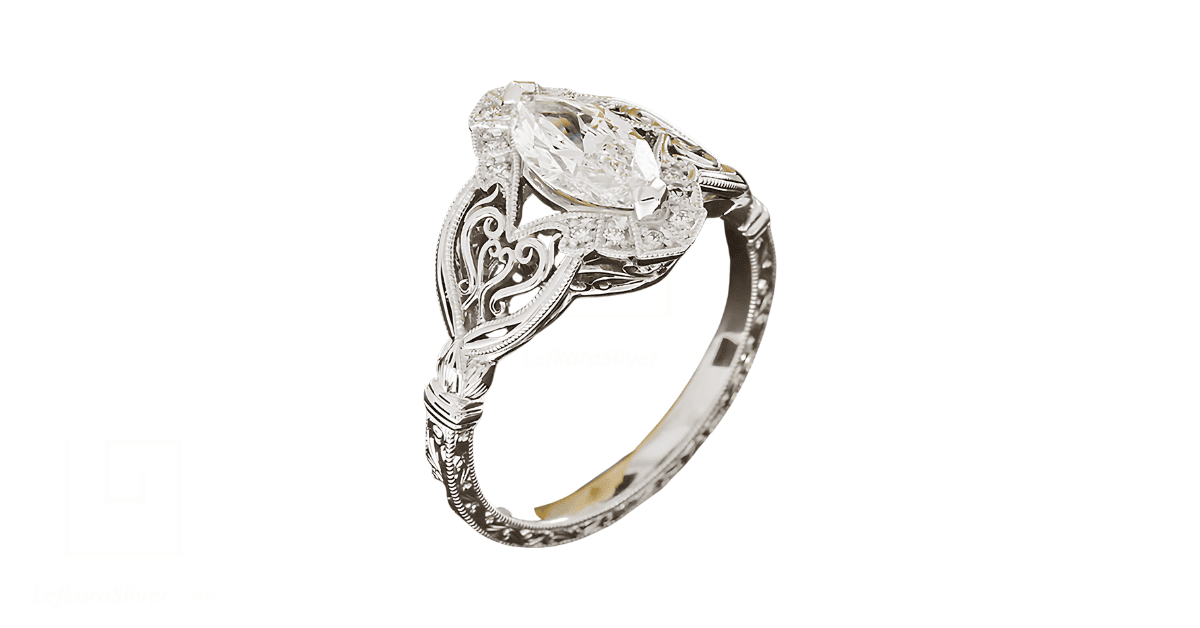
We have looked at everything you need to know about these beautiful jewelry pieces, including the advantages of white gold filigree rings over other metals, the latest trending styles for gold filigree rings, and where to customize white gold filigree rings for women.
We also covered the best stores for white gold filigree engagement rings, compared 14k vs. 18k vs. 10k white gold filigree rings, and explained the differences between vintage & antique white gold filigree rings.
From what to look out for when buying white gold rings to understanding how durable white gold rings are, how much a white gold ring costs, and the essential care & maintenance tips for white gold rings, you are now ready to make an educated choice.
Here are some of the most interesting facts about these stunning pieces you should keep in mind:
- Filigree work dates back thousands of years, with roots in ancient Mesopotamia, Egypt, and India.
- White gold and platinum make up about 65% of the filigree rings chosen by buyers today.
- Gold engagement rings account for roughly 60% of sales worldwide, remaining the most popular option due to cost and availability.
- The demand for vintage-inspired styles has risen by 15% to 20% in recent years.
- Lab-grown diamond sales grew by 35% in a single year, offering a pocket-friendly and green alternative to mined stones.
- Rhodium is one of the rarest and most expensive metals in the world, used to give white gold its bright, mirror-like finish.
This guide was last updated in October 2026 to bring you the freshest insights on these timeless treasures.