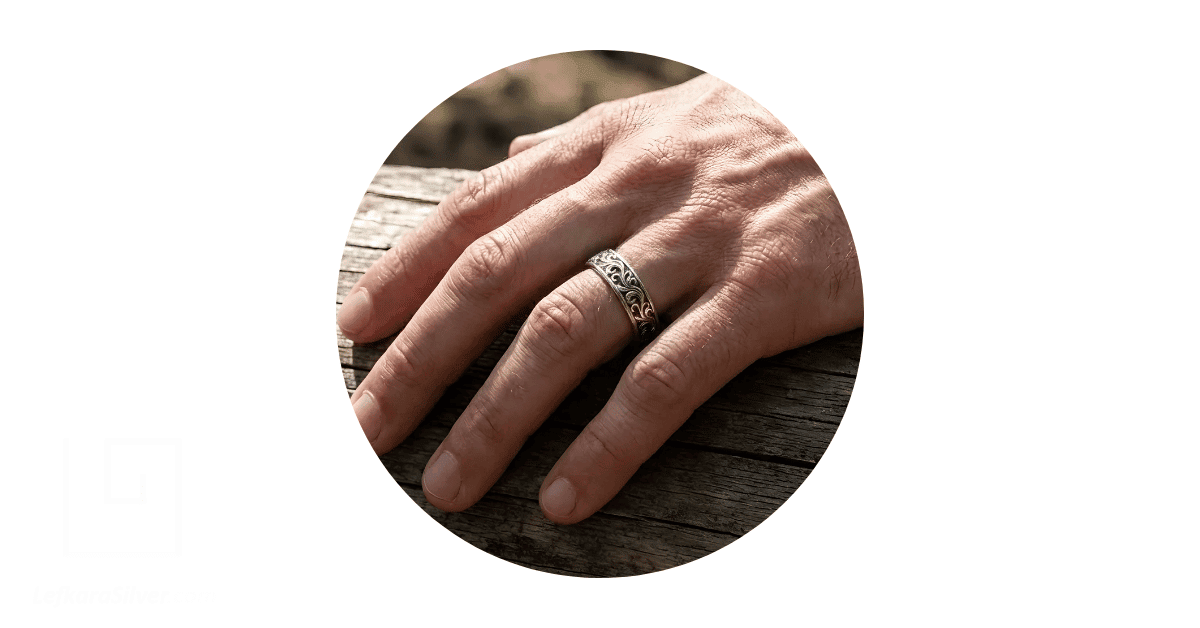
When choosing a wedding band for a man, you’re most likely going to spend a good number of hours looking for a ring that’s not too flashy, not too bland, not glittery, but also not dull- one that gets attention but also stays simple. Men want rings that make them feel powerful (and a little whimsical too, even if they never admit it).
If you’ve chosen to go with the men’s filigree wedding band, we’re here to help you pick the best piece on the market. In the following sections, we will look into 5 jewelers who make the best men’s filigree bands, the different settings, and some of the best materials you can use for yours.
We will also cover the features that define these bands, share styles suited to an active lifestyle, and explain why 1920s-inspired antique bands are always in demand, and more.
What You Need to Know About Men’s Gold Filigree Wedding Band
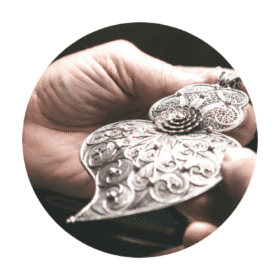
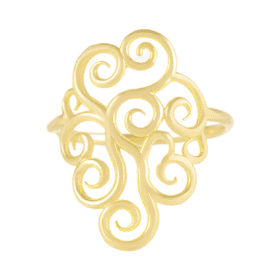
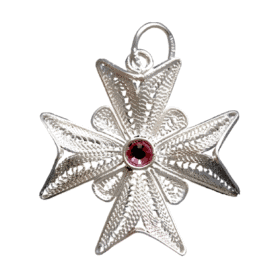
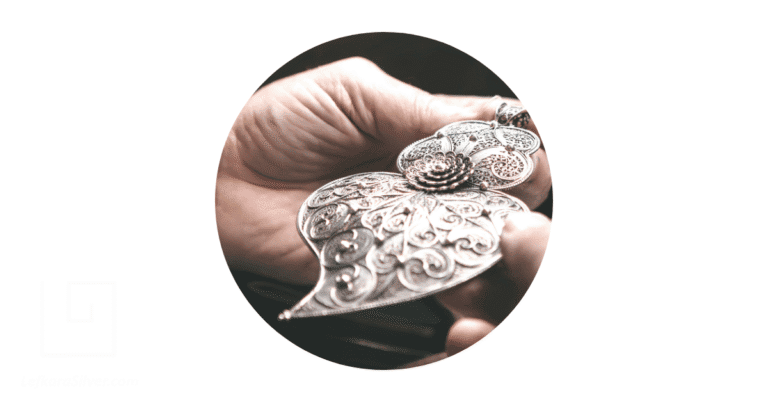
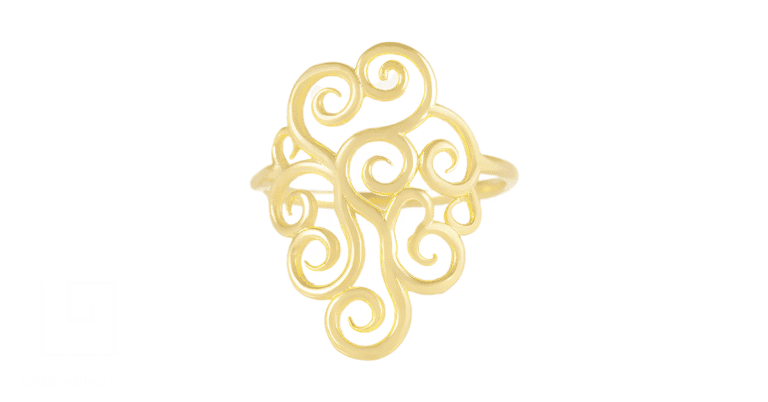
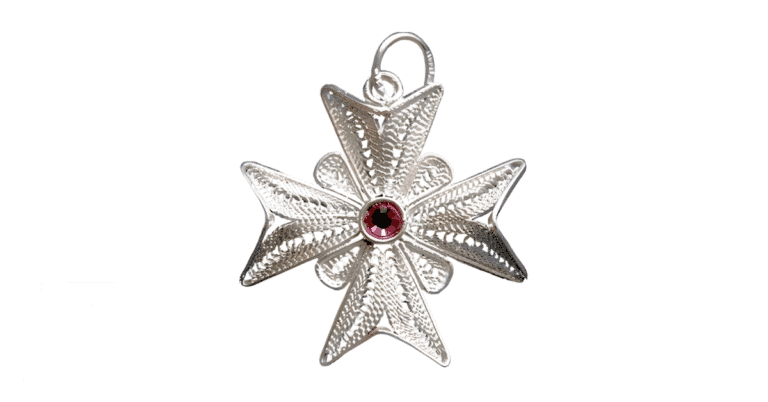
More often than not, when you hear the term ‘men’s wedding band,’ you immediately picture a boring plain ring often found in standard jewelry stores, but filigree wedding bands are different, even for men. Their uniqueness comes from the fine art of twisting and soldering thin metal threads into complex, lace-like patterns.
While these designs look airy and light, they have a unique character that stands out against traditional, minimalist bands. They carry visual weight and historical depth that appeal to those who value craftsmanship, and each design is constructed with precision.
Learn more about the filigree art and its origins here.
5 Jewelers Who Make the Best Filigree Wedding Bands for Men
We selected these jewelers based on the originality of their bands, customer service, and the quality of their filigree jewelry:
1. Joseph Jewelry
This jeweler knows their craft. Their men’s filigree wedding bands are uniquely beautiful and embody the power many men want in their rings, along with the beauty and simplicity of each piece. They have studio locations for in-person consultations and remain very accessible online.
Their ring prices range from $1,500 to $10,000 for a unique men’s filigree piece, and for some filigree bands, you must request a quote.
2. Lefkara Silver
Lefkara Silver maintains a strong reputation in the filigree industry. Our handcrafted designs honor traditional filigree methods, and our rings are as simple as they are complex. If you like simple designs, you will find the best of them here for as low as $150. Most of our pieces are made with silver, but upon request, we can make yours from scratch, from the metal to the design pattern.
With custom rings, you get to feel part of the process, and you’re sure you’ll get a unique wedding band that feels like you and is also aesthetically pleasing and comfortable.
3. Camelli Jewelry
This is a luxury jewelry store, and most rings here cost no less than $2000. Their pieces are unique, with styles ranging from diamond filigree to vintage and classic filigree. You can make a virtual appointment to discuss your needs. They also offer a 30-day free return policy.
4. Green Lake Jewelry
This jeweler offers a variety of custom filigree wedding rings that are designed to match your engagement rings. For any piece you pick, you can customize it how you like. They have physical stores in Seattle and Bellevue, and they also ship pieces worldwide, with generous discounts.
5. Estate Diamond Jewelry
This appointment-only showroom is located in New York. You’ll find all kinds of estate rings here, with their vast collection of filigree bands from the Victorian, Edwardian, and Art Deco eras.
Different Types of Settings for Men’s Filigree Wedding Rings
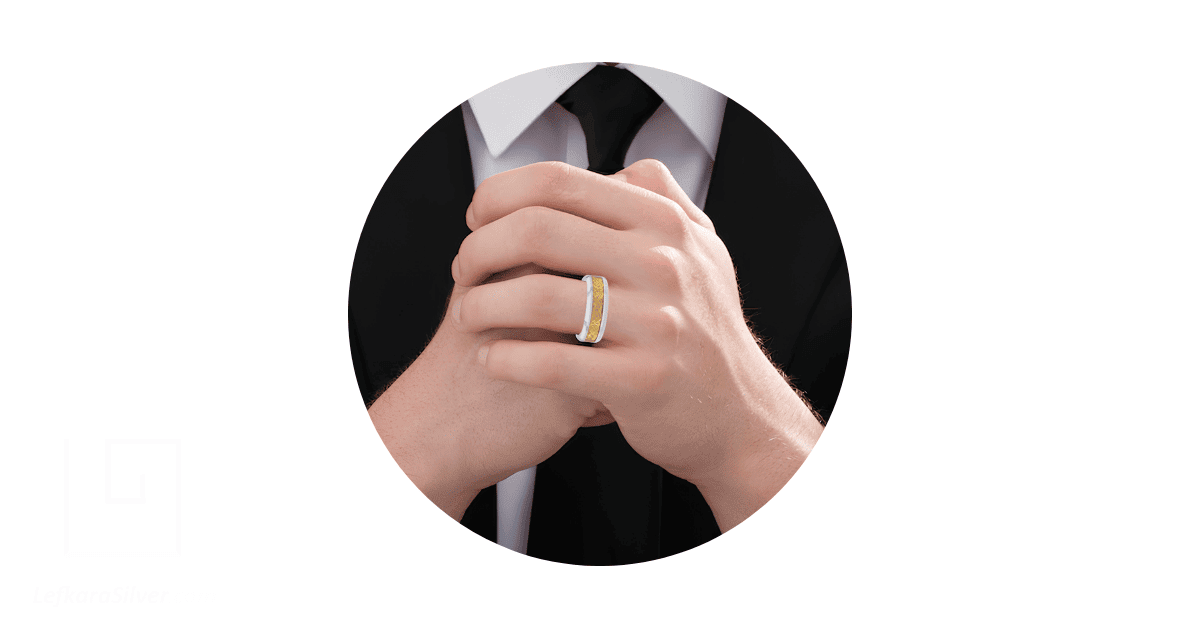
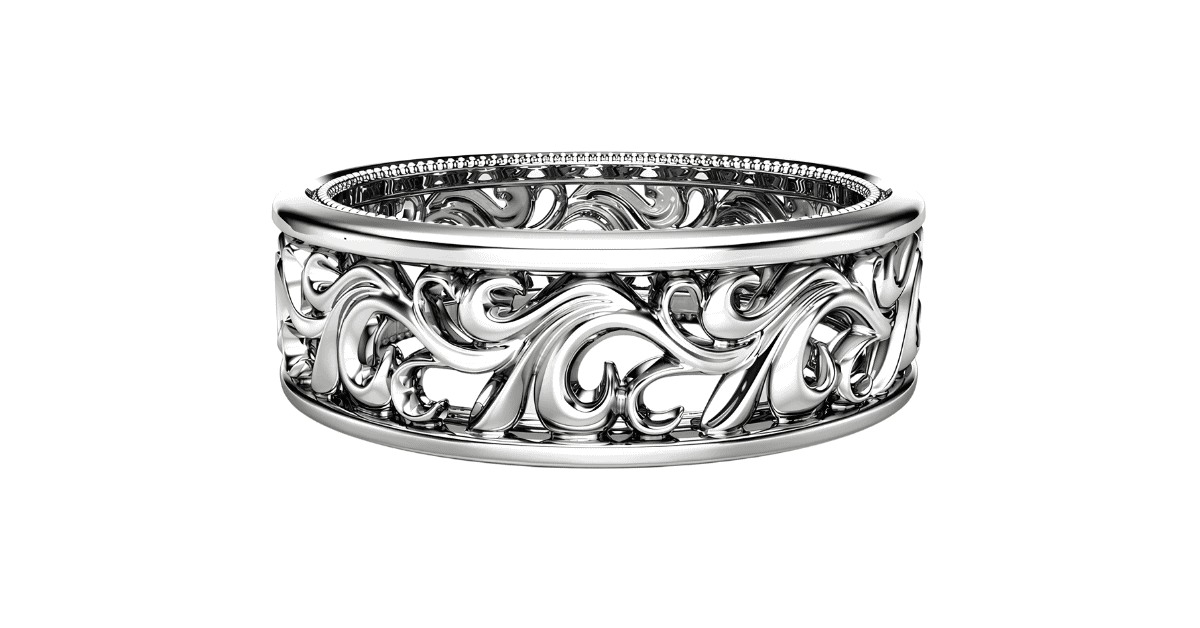
One of the most common types is the cutout filigree band, which creates a negative-space effect by removing portions of the metal to reveal the details of the filigree. This style usually highlights geometric, scroll, or floral motifs. If you want a band that feels lighter on the finger without the heaviness of a traditional men’s wedding ring, this is the perfect setting for your filigree band.
There’s also the integrated filigree setting, which is where the wirework is nested into a channel or recessed area of the band. This setting protects the filigree from daily wear and tear, especially if you lead a very active life. By placing the detailed work inside a frame, the ring gains added structural integrity, making it less likely to catch on clothing or deform under pressure.
Men mostly prefer metal-supported, or framed, filigree bands because they are as aesthetic as they are detailed, with the durability needed for everyday wear.
What Are the Best Materials for Men’s Filigree Bands?
The most popular materials used for these rings include tungsten, silver, gold, and diamond-set combinations. Each metal behaves differently when twisted or soldered, which ultimately dictates how detailed the final design can be.
Gold is most people’s first choice. It’s soft enough to shape into complex wirework by hand, and it allows for highly detailed, one-of-a-kind patterns. Gold is warm and timeless, and it may require professional polishing every few years to keep the filigree sharp and clean. The downside is that it can be expensive if you don’t have the budget.
Silver, on the other hand, is a budget-friendly option, but it comes with specific maintenance demands. Jewelers can easily shape it into fine scrolls and vines, making it a great material for highly artistic pieces. However, silver tarnishes and bends more easily than gold or platinum, so it may not be the best choice if you plan to wear your ring during heavy manual labor.
Tungsten is the best option if you prioritize durability above everything else. It’s one of the hardest materials available for rings and is virtually scratch-proof. This hardness also makes traditional manual filigree work difficult; instead, these patterns are often laser-cut or inlaid. The main disadvantage is that tungsten cannot be resized. Once you select your size, you are stuck with it for the life of the ring.
Platinum is the premium choice because it is both strong and dense. It does not wear down or lose material over time as gold does. It’s the most expensive, but it’s also the most reliable metal for maintaining thin filigree for decades. This makes it the most common choice for heirloom-quality pieces.
What Features Make Up Men’s Filigree Wedding Bands?
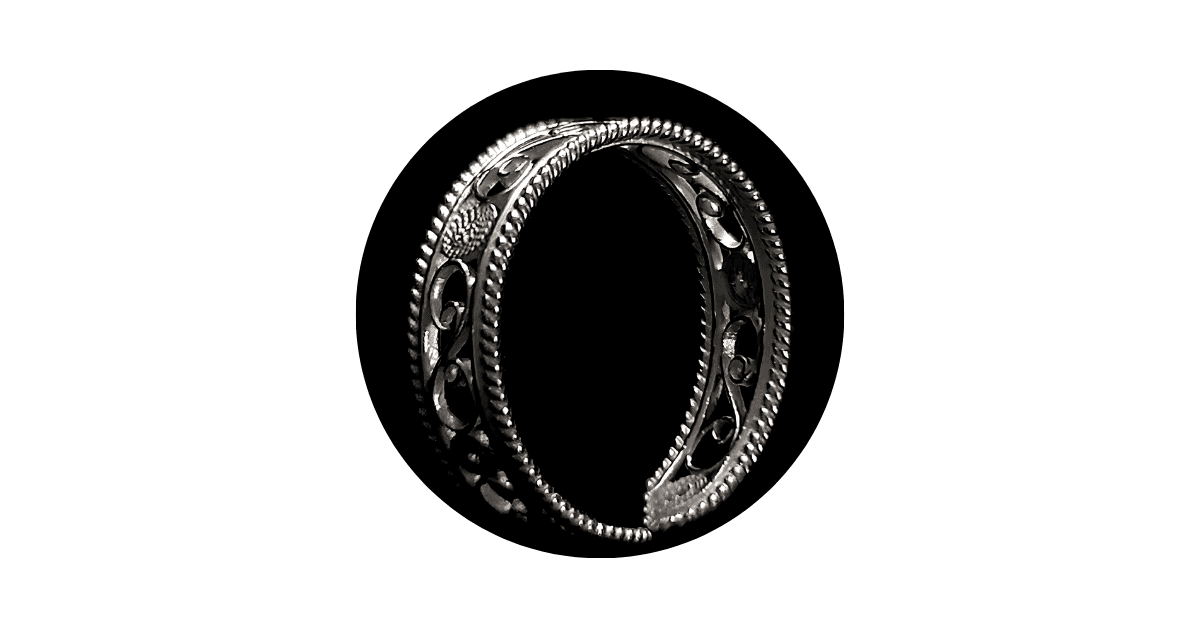
The detailed metalwork that gives men’s filigree wedding bands their characteristic, lace-like appearance is their most defining feature. This effect comes from manipulating fine metal threads shaped into scrolls or geometric patterns.
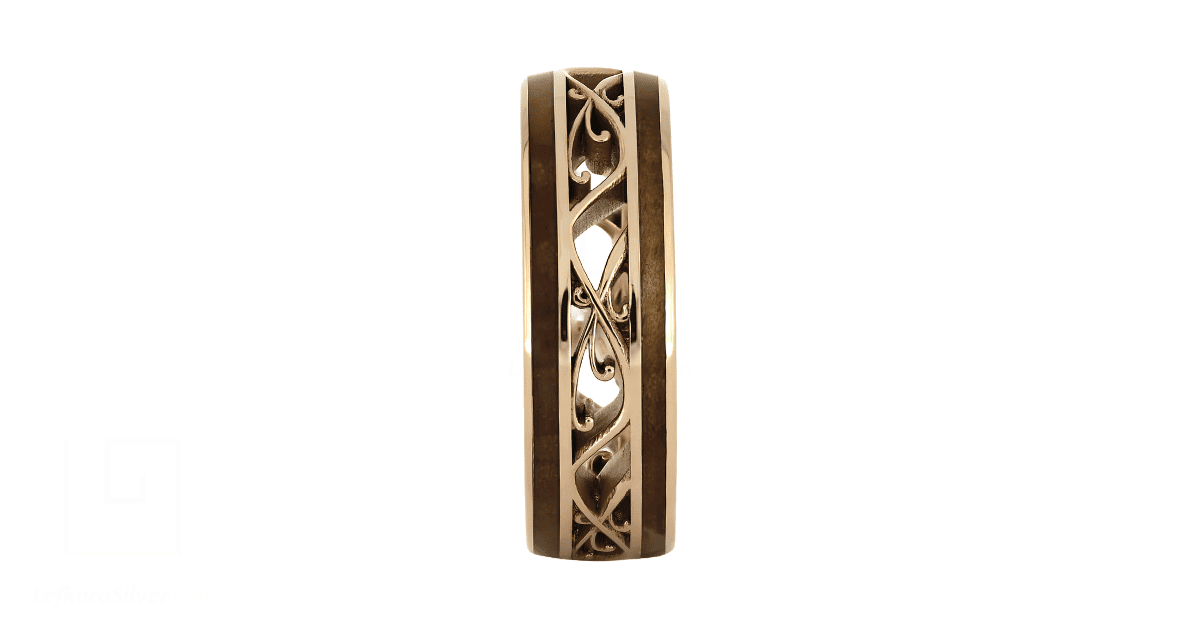
Beyond the decorative wirework, these bands incorporate structural rails or borders that frame their patterns, protecting the delicate internal structure from direct impact. Without these rails, the filigree would be far more likely to catch on fabrics or bend if the hand accidentally brushed against a rough surface.
The contrast between the high-polish finish of the outer rails and the textured, often matte-finish filigree in the center adds visual depth that makes the design appear bolder and more substantial on the hand.
The setting technique plays a major role in the ring’s final look and how it feels on the finger. You will find two main settings: openwork and metal-supported. In an openwork setting, the filigree is suspended within the band with no solid backing, allowing light to pass through the pattern. This produces a light, airy look. A metal-supported filigree setting has wires soldered to a solid metal base.
Filigree Wedding Band Styles for Men with Active Lifestyles
When choosing your wedding ring, you need to balance personal style with the realities of your daily routine. Jewelry extends your lifestyle, and ignoring your activity level when choosing a ring can lead to maintenance headaches.
If your day involves heavy lifting, constant chemical exposure, or outdoor hobbies, your ring’s structure matters as much as its aesthetics. Filigree is delicate, but you don’t have to settle for a plain band if you prioritize design; you just need a version that can withstand movement.
If you lead an active life, the best filigree style uses metal-supported, or ground-supported, wirework. In this setup, the delicate threads are soldered to a solid, continuous metal sheet inside the band. This construction eliminates open spaces that can catch on equipment or bend out of shape.
Use metals like platinum or a high-karat gold alloy for a better balance of strength and flexibility than softer, purer metals. Also, choose a low-profile design where the filigree doesn’t sit raised above the ring’s edge to prevent the pattern from getting scraped against gym equipment or tools.
Why are the 1920s Men’s Antique Wedding Bands Popular?
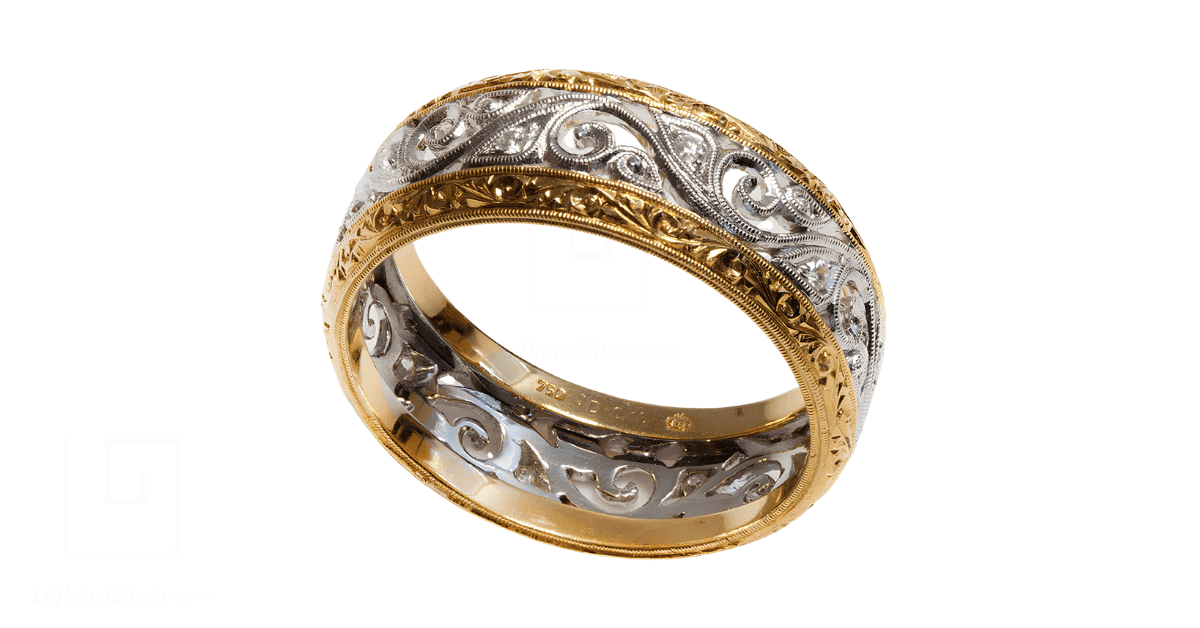
Men’s wedding bands from the 1920s are popular because they mark a distinct shift away from the soft, romantic curves of earlier eras toward a sharper, more architectural aesthetic. These rings have clean geometric motifs like chevrons, zigzags, and sunbursts.
These rings are defined by precision and symmetry, mirroring the period’s towering skyscrapers and industrial machine-age art. While some bands are plain metal, many others showcase hand-engraved patterns or thin, structured filigree that feels tailored and masculine rather than fussy or overly decorative.
For filigree lovers, the 1920s style is especially appealing because it treats wirework with discipline. This era’s approach maintains the airy, detailed charm of filigree while providing a sturdy, streamlined look that fits easily into a modern wardrobe.
The Average Price of Men’s Filigree Wedding Bands
Several factors impact the final cost of a men’s filigree wedding band, including:
- Metal Choice: Platinum remains the most expensive option due to its density and durability. Gold (14k vs. 18k) is generally more affordable, while silver is the most budget-friendly, though it is softer and wears down faster.
- Complexity of Design: A band with simple, machine-aided filigree will cost significantly less than a bespoke ring featuring hand-soldered, complex, or multi-layered wire motifs.
- Construction Method: Openwork designs require thicker wire to maintain structural integrity, which increases metal usage and cost. Metal-supported filigree, which uses a solid base, can vary in price based on the thickness of that base metal.
- Gemstone: If the ring includes diamonds or colored gemstones integrated into the filigree, the carat weight and quality of those stones will raise the price.
- Brand and Provenance: Authentic vintage rings or bands from high-end artisan designers often carry a premium because of their age, rarity, or brand name, while modern mass-produced versions are usually priced lower.
While costs fluctuate based on these specifics, you can expect to pay anywhere from $500 to $10,000 for a quality filigree band. Simple gold or silver designs can start at $300, while platinum, custom-engraved, or diamond-set pieces often exceed $4,000.
How to Find the Right Size of Men’s Filigree Wedding Bands?
The average ring size for men in the United States typically falls between size 9 and size 11. If you are unsure of your size, consult a professional jeweler. Professional sizing is almost always free and provides the most precise baseline for your order.
When searching for the right fit, keep these tips in mind:
- Measure at the Right Time: Fingers often swell in the heat or after physical activity and shrink in cold weather. Aim to measure in the late afternoon when your body temperature is stable, and your fingers are at their largest.
- Consider Ring Width: Wider bands, such as 8mm or larger, fit more snugly than thin bands of the same size because more surface area contacts the finger, so it’s best to size up a half size for wider filigree bands to ensure comfort.
- Think About Your Lifestyle: If you work with your hands, a ring that is too loose can be a safety hazard, but a ring that is too tight will be uncomfortable throughout the day.
- Use a Trusted Sizer: If you cannot visit a jeweler, order a dedicated plastic or metal ring sizer online. These provide a much more reliable measurement than makeshift DIY tools.
Care Tips for Men’s Filigree Wedding Bands
To care for men’s filigree wedding bands and keep them shiny for a very long time, follow these steps:
- Remove your ring before lifting heavy objects, working on home improvement projects, or handling abrasive chemicals.
- Always put on your jewelry after applying cologne, hairspray, or lotion. Residue from these products builds up quickly in the tiny crevices of the filigree, creating a film that is hard to remove.
- Mix a small amount of mild dish soap with lukewarm water in a bowl to wash your ring. Let it soak for about 15 minutes to loosen any trapped debris. Gently brush the filigree pattern with a soft-bristled toothbrush to remove dirt.
- Always rinse your ring in a separate container of water rather than under an open faucet to prevent it from accidentally slipping down the drain.
- Take your ring to a trusted jeweler at least once a year. They will check the structural integrity of the solder joints and ensure that no wires have loosened or snagged.
- When you are not wearing your ring, store it in a fabric-lined jewelry box or a soft pouch.
What’s Next for Men’s Filigree Wedding Bands?
Throughout this guide, we covered everything you should know about men’s filigree wedding bands, from the features that define these rings to the most durable materials for active lifestyles.
Whether you prefer the boldness of a machine-age Art Deco piece or the more modern pieces, filigree offers a level of artistry that plain bands simply cannot match.
Here are some interesting facts to take with you:
- Filigree work is a historic technique dating back thousands of years that involves twisting fine metal threads into intricate, lace-like patterns.
- The term “filigree” is derived from Latin words meaning “thread” and “grain,” which perfectly describes the fine metal threads and tiny beads used in the process.
- A wide band (8mm+) will always feel tighter than a narrow band of the same size, which is why experts recommend sizing up a half size for wider rings.
- Most high-quality filigree is now metal-supported, which means the wirework is soldered onto a solid base to survive the rigors of a modern, active lifestyle.
This content was last updated in October 2026. Follow our website, LefkaraSilver.com, to stay informed about new jewelry offers, news, and buying guides.