Ruby Jewelry – What You Should Know
Picking a ruby is a power move that connects you to thousands of years of royal history. It isn’t just about the bright red color; it is about the science and the high stakes involved in finding a piece that actually keeps its value. As of October 2026, the ruby jewelry industry has undergone significant changes, especially with new mines in Africa and advances in lab tech changing the game. This article contains the latest information on the market as of October 2026.
In the following sections, we look at ruby jewelry key facts & statistics and point you toward the 10 top ruby jewelry stores for pigeon blood pieces. We also look at the different types of ruby jewelry, how to style ruby jewelry earrings for a modern look, and how to identify a real ruby jewelry ring when you are out shopping. If you want to play the long game, we will cover investing in a ruby jewelry set and what the current price for an original ruby jewelry piece looks like.
We also talk about ruby jewelry materials like silver vs gold, check ruby jewelry quality and grading, and go over ruby jewelry care and maintenance so your gems stay bright for life.
Ruby Jewelry Key Facts & Statistics – October 2026
The market for these red stones is growing fast, with record prices and new mining locations changing how people buy and sell.
- Rubies are incredibly tough stones, hitting a 9 on the Mohs scale, which makes them the second hardest natural gem in the world.
- The highest price ever paid for a single ruby at auction was $1,266,901 per carat.
- When you look at stones in a typical shop, about 95% of them have been through heat treatment to fix their color or remove small flaws.
- The famous ‘Sunrise Ruby’ holds a massive record, selling for more than $30,000,000 at a high-end auction.
- A single mine in Mozambique has changed the world market by providing nearly 50% of the total supply of rubies each year.
- Finding a top-tier ruby that weighs more than 1 carat is much harder for miners than finding small diamonds of the same weight.
- The largest rough ruby ever mined is the 125West Ruby, which weighs about 8.2 pounds or roughly 18,696 carats.
- High-quality rubies that have never been heated often sell for 2 to 3 times the price of stones that were improved in a lab.
- Tradition says you should give a ruby for the 15th and 40th wedding anniversaries, which keeps the demand for these stones very high.
- Some famous royal ‘rubies’ turned out to be other stones, like the 170-carat red spinel that sits in the British Imperial State Crown.
10 Top Ruby Jewelry Stores for Pigeon Blood Pieces
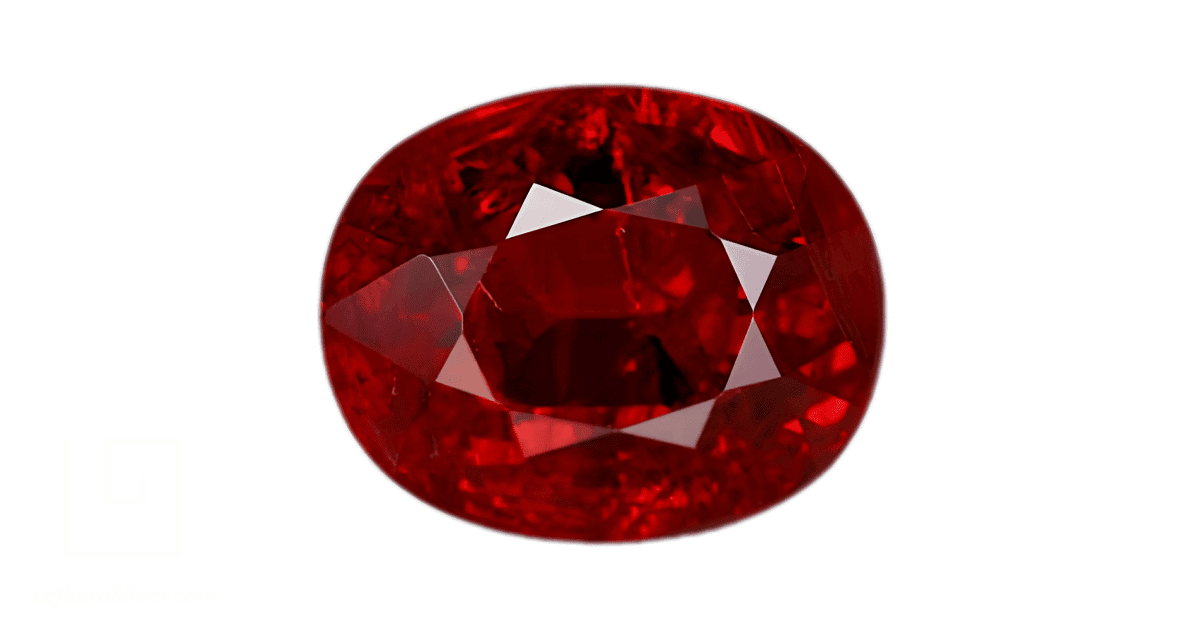
Pigeon blood rubies are a specific, vibrant red with a soft blue undertone that makes the stone look as if it’s glowing from within. This color is the gold standard for quality. Because these stones are so rare and expensive, you can’t just pick one up at a mall kiosk. You need a seller with a rock-solid reputation who can provide paperwork proving the stone isn’t a fake or a low-grade rock filled with glass.
Our team did thorough research to find top jewelry stores that offer this rare stone:
1. Graff
This London-based powerhouse is where you go when you want the best of the best. Graff is famous for handling some of the most important rubies in history, including the record-breaking “Graff Ruby.” Their collection usually features large, untreated stones set in platinum or high-karat gold, often surrounded by the world-class diamonds for which they are known.
Expect to pay a massive premium here. Prices for their high-jewelry ruby rings often start in the six-figure range and climb rapidly into the millions. Their flagship store sits on New Bond Street in London, but they have salons in major hubs like New York, Geneva, and Hong Kong. They offer bespoke design services for clients who want to build a piece around a specific loose pigeon blood stone.
2. Cartier
Cartier has been the “jeweler of kings” for over a century, and their ruby work is legendary. They are masters of the Art Deco style and the famous “Tutti Frutti” designs featuring rubies, emeralds, and sapphires. Their pigeon blood pieces are usually part of their High Jewelry collections, which focus on heritage and museum-quality stones.
A ruby ring or necklace from Cartier is an investment in a brand whose value holds up at auction. While they have boutiques in almost every major city, the most exclusive pieces are found at their “Maison” locations in Paris (Rue de la Paix), New York, and London. They provide full-service maintenance and historical authentication for their heritage pieces.
3. Harry Winston
Harry Winston also happens to be a top-tier source for rare colored gems. Their ruby jewelry often uses the “Winston Cluster” style, which minimizes the metal so the stones appear to float on the skin. They specifically look for stones with high fluorescence, meaning the rubies pop with a bright red glow even in normal daylight.
Prices here reflect the extreme rarity of the materials and the brand’s prestige. You’ll find their salons in luxury districts like Fifth Avenue in New York and the Ginza in Tokyo. They offer private viewing rooms for serious buyers looking for high-carat pigeon blood specimens.
4. The Natural Ruby Company
If you want a more data-driven approach to buying, this New York-based specialist is a top choice. They focus heavily on transparency and provide 3D scans, detailed lab reports, and high-definition videos for every stone in their inventory. They have one of the largest online databases of untreated pigeon blood rubies in the world.
Their prices are often more competitive than the big heritage houses because they operate with less retail overhead. You can find pieces starting around $5,000, but their top-tier stones still hit the six and seven-figure marks. They are located in New York City’s Diamond District and offer global shipping with a focus on education and gemological proof.
5. Van Cleef & Arpels
This French jeweler is famous for the “Mystery Set,” a technique where the prongs are hidden so the rubies look like a solid wall of red velvet. This requires rubies of perfectly matched color and high clarity, which is incredibly difficult to achieve with pigeon blood stones. Their floral and animal-inspired designs are iconic in the jewelry world.
Their boutiques in Paris, New York, and Hong Kong offer a mix of their classic Alhambra collections and their one-of-a-kind High Jewelry. A Mystery Set ruby piece can take hundreds of hours of labor to complete, and the price tags reflect that intense craftsmanship. They offer specialized cleaning and repair services to ensure the delicate settings remain intact.
6. David Morris
Based in London, David Morris is a family-run brand that has dressed everyone from James Bond girls to royal families. They are known for their “Bond Street” aesthetic, which is bold, feminine, and uses very rare stones. Their ruby pieces often feature pear or cushion cuts that maximize the depth of the red color.
They focus on sourcing stones from Myanmar and Mozambique, two of the top origins for quality rubies. Their main salon is on New Bond Street in London, but they have expanded to the Middle East and Asia. They take pride in their hand-crafted atelier work, which happens right above their flagship store.
7. Bulgari
Bulgari brings a sense of Italian architectural drama to ruby jewelry. They aren’t afraid to use large, cabochon-cut rubies—stones that are polished into smooth domes rather than faceted. This style highlights the “silk” and color of the stone rather than just the sparkle. Their pigeon blood rubies are often paired with yellow gold for a warm, Mediterranean look.
Prices vary, but their high-jewelry Diva’s Dream or Serpenti collections with rubies are high-ticket items. Their main historical store is on Via Condotti in Rome, but they have a massive presence in the US and Asia. They offer a unique “Gem Table” experience at select locations where you can look at loose stones with their experts.
8. Garrard
Garrard has a history of working with some of the most famous rubies in the royal vaults. Their modern ruby jewelry often draws from these royal designs, featuring tiara-inspired motifs and classic halo settings. They are a go-to for traditionalists who want a piece of jewelry that feels like an heirloom.
You can find their flagship boutique in Mayfair, London. They offer bespoke services where you can help design a piece that fits a specific family occasion. Garrard created the original setting for the Prince of Wales’s feathers, often using rubies for the base.
9. Moussaieff
Moussaieff is the “insider’s” jeweler. They don’t do much traditional marketing because their clients are some of the wealthiest people on the planet. They are known for owning some of the world’s most valuable loose stones, including high-carat, untreated Burmese rubies. If you want a pigeon blood ruby that is large enough to be a museum centerpiece, this is where you go.
Their locations include Park Lane and New Bond Street in London, as well as Geneva and Hong Kong. The service is incredibly private and personalized. Prices are available on request, but expect them to be at the top end of the market.
10. Chopard
Chopard is a leader in “sustainable luxury.” They have been very vocal about ethical mining and use “Fairmined” gold for many of their collections. Their ruby jewelry is often featured on the red carpet at the Cannes Film Festival. They mix the glamor of Hollywood with a serious commitment to where the stones come from.
Their boutiques are worldwide, but their high-jewelry workshops are in Geneva. They provide detailed documentation regarding the ethical sourcing of their gems and metals. Their Red Carpet Collection frequently features high-grade rubies in intricate, artistic designs.
Bonus: For a piece of jewelry made specifically for you, with your input and vision, check out these custom jewelry tips and have your ruby piece customized.
Types of Ruby Jewelry
Ruby jewelry has a history that goes back over 2,000 years. In ancient Sanskrit, the stone was called ratnaraj, or the “king of precious stones.” Warriors in Myanmar even believed that inserting a ruby into their skin would make them invincible in battle. Over time, the way we wear rubies has changed from protective talismans to the ultimate symbol of love and status.
Today, rubies are a favorite for engagement rings and 40th-anniversary gifts. The value of a ruby is largely determined by its color, but its history and how it was made also play a significant role.
Natural Ruby Jewelry vs Lab-Grown Ruby Jewelry
Natural rubies form over millions of years under intense heat and pressure deep within the Earth. They are made of a mineral called corundum, and their red color comes from trace amounts of chromium. These stones are rare, especially in larger sizes. A natural ruby over 3 carats is significantly rarer than a diamond of the same size. Because they are finite and take eons to form, they hold their value incredibly well and often appreciate over time.
Lab-grown rubies, on the other hand, are created in a matter of weeks. They have the exact same chemical, physical, and optical properties as natural rubies. To the naked eye, they look identical. However, because they can be mass-produced in factories, they cost about 10% to 20% less than natural stone. People choose lab-grown rubies for their perfect clarity and ethical peace of mind, as they don’t involve mining.
You can identify them under a microscope by looking for curved growth lines or a lack of natural mineral inclusions. They are great for everyday wear, like stud earrings or simple pendants, and pair well with casual outfits like a white linen shirt or a sundress.
Treated Rubies vs Untreated Rubies
In the jewelry world, it is safe to assume that a ruby has been treated unless a lab report says otherwise. About 97% of all rubies on the market are heat-treated. This is a standard industry practice in which stones are placed in a furnace at extreme temperatures to improve their color and dissolve some of the internal “silk,” making them clearer.
Heat treatment is permanent and stable, meaning the color won’t fade over time. These stones are the most common type found in high-end retail stores and are perfect for engagement rings or statement necklaces worn to formal events like weddings or galas.
Untreated rubies came out of the ground with perfect color and clarity and didn’t need any human help. Because they are so rare, an untreated ruby can be two to three times more expensive than a treated one of the same size. You can identify them by looking for intact rutile needles (silk) that would have melted if the stone had been heated. People wear untreated rubies as a sign of extreme wealth and a love for natural rarities. They are best styled with classic, understated clothing, like a black evening gown, to let the natural stone be the star of the show.
Star Rubies
Star rubies are a fascinating freak of nature. They exhibit a phenomenon called asterism, which looks like a six-rayed star shimmering across the surface of the stone. This happens when tiny, needle-like inclusions of rutile are aligned in just the right way to reflect light. To show off this effect, star rubies are always cut into a smooth, domed shape called a cabochon rather than being faceted. A high-quality star ruby will have a sharp, well-centered star that moves smoothly as the stone is turned in the light.
People wear star rubies for their unique, celestial look and because they were traditionally thought to bring good luck and protection. They have a vintage, mystical vibe that stands out from standard sparkly jewelry. You can identify a real star ruby by looking for a star that isn’t too “perfect”—synthetic star rubies often have stars that look painted on, while natural ones have slight irregularities.
They are a great choice for men’s rings or bold cocktail rings. Style them with rich textures like velvet or silk to lean into their old-world charm, and wear them to evening events where direct lighting will make the star pop.
Ruby Jewelry Earrings Trend
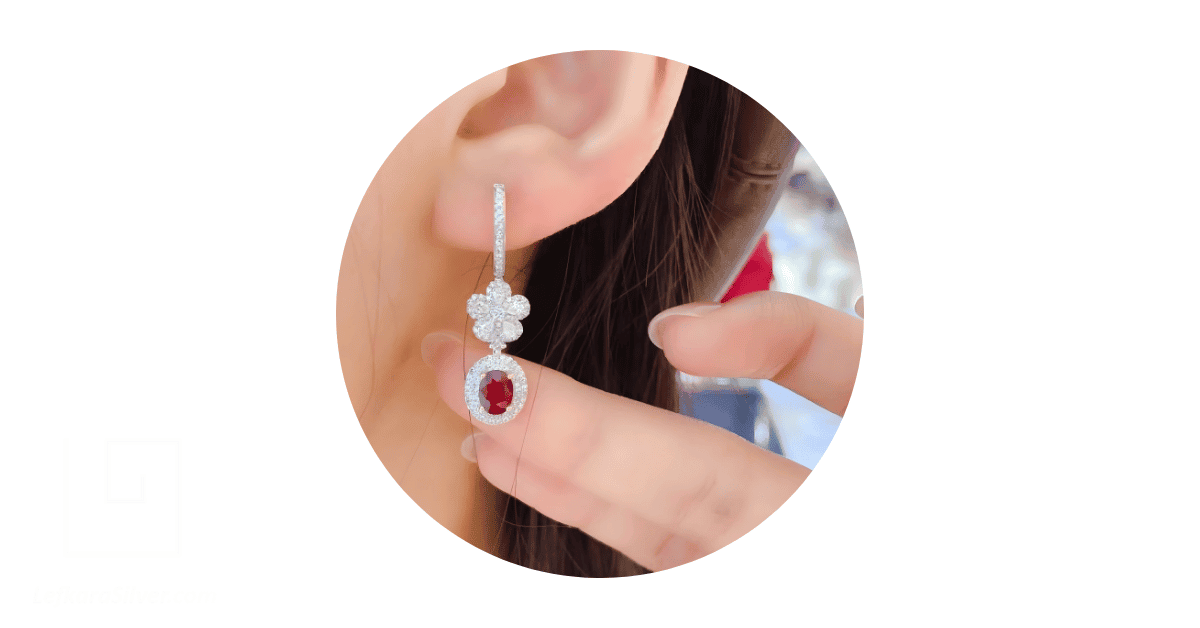
Ruby earrings have been a status symbol since ancient times, when warriors and royalty wore them to show off their power and wealth. These pieces have stayed popular because red is the color of passion, and let’s be honest, it looks great on everyone. People choose rubies when they want a look that stands out more than clear diamonds ever could.
Because rubies are the most valuable colored gemstone, often fetching higher prices per carat than even the rarest diamonds, they are a favorite for those who want their jewelry to make a statement.
Here are the top trending ruby earring designs and why they are taking over:
- Halo Studs: These feature a central ruby ringed by small white diamonds. You’ll see these on corporate leaders and brides alike. The reason they are so popular is simple: the white diamonds act like a frame that makes the red stone look bigger and brighter. It’s an easy way to get a high-end look without needing a massive center stone.
- Drop and Chandelier Styles: Long, swinging earrings are the go-to for red carpets and galas. Red is the most visible color from a distance, so stars wear these to grab attention in a crowded room.
- Ruby Huggies: These are small, thick hoops that sit close to the earlobe, lined with tiny rubies. They are a hit with the “quiet luxury” crowd. People wear them to the office or for brunch because they add a subtle pop of color that doesn’t feel like “too much” for a Tuesday morning.
- Mismatched Pairs: Younger jewelry fans are ditching the “perfect pair” rule. They might wear a ruby stud in one ear and a gold hoop in the other. This trend is all about showing off personality and making traditional stones feel modern.
- Vintage Clusters: These designs often look like flowers or sunbursts, taking cues from ruby jewelry history. They are popular with fans of the “old money” aesthetic who want pieces that look like they were pulled straight from a museum vault.
- Minimalist Solitaires: Just a single ruby set in gold. These are perfect for daily wear because rubies score a 9 on the Mohs scale of hardness, meaning they are tough enough to handle daily wear without getting scratched.
How to Identify a Real Ruby Jewelry Ring?
Rings take more hits and bumps than any other piece of jewelry, so you need to be sure your stone is the real deal and not just a piece of red glass. Fake rubies are everywhere, ranging from plastic imitations to lab-grown stones that can fool a casual observer. Identifying a real ruby ring doesn’t always require a lab, but it does require knowing what to look for.
Use these tips to spot a real ruby ring:
Check the Hardness: A ruby is incredibly tough, ranking second only to diamonds in terms of natural hardness. You can test this by scratching the surface with a coin or a key. If it leaves a mark, it isn’t a ruby. Diamonds are the only natural gemstones harder than a ruby, so a real stone will stay smooth even after years of wear.
Look for “Silk”: If you use a magnifying glass to look inside the stone, you should see tiny, needle-like marks called silk. These are rutile inclusions that happen while the stone forms over millions of years. If the stone looks 100% perfect and clear inside, it’s likely a synthetic stone or glass. Nature is rarely that perfect.
The Bubble Test: Look for tiny gas bubbles. If you see round bubbles inside the red stone, it is almost certainly glass. Natural rubies have jagged or liquid inclusions, but they never have perfectly round air bubbles trapped inside them.
Check for Fluorescence: Many high-quality rubies, especially those from Myanmar, glow under UV light and even direct sunlight. This effect is so strong in some stones that they look like they have an internal fire.
The Streak Test: Rub the stone against a piece of unglazed porcelain, like the bottom of a white coffee mug. A real ruby will not leave a mark, but a fake made of composite materials or glass might leave a red streak behind.
Watch for Color Zoning: Real rubies often have areas where the red is slightly different shades. If the color is perfectly flat and identical from every single angle, you might be looking at a lab-grown stone. E
Investing in a Ruby Jewelry Set
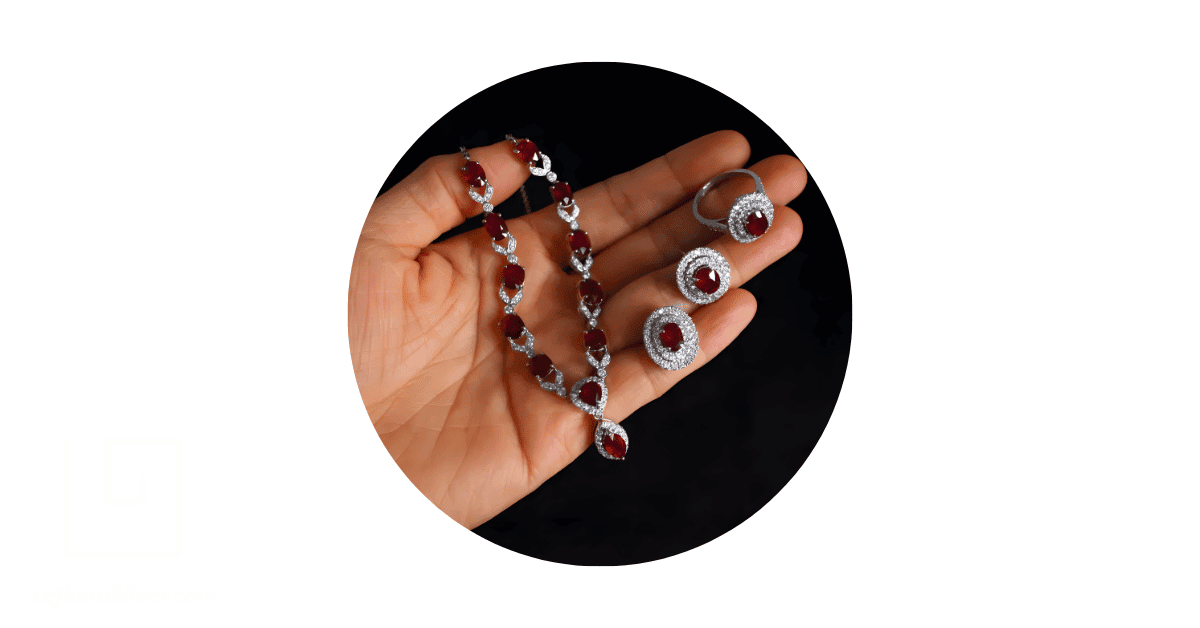
Investing in a ruby jewelry set is often a smarter move for collectors than sticking strictly to diamonds. While diamonds are found in jewelry stores everywhere, high-quality, natural, untreated rubies are incredibly rare, making up less than 1% of all rubies mined. If you pick a set featuring “Pigeon Blood” stones from Myanmar, you are holding an asset that has historically outpaced many other luxury goods in value growth. These specific stones have hit record-breaking numbers at auction, with some selling for over $1.2 million per carat.
Whether this is a good or poor investment depends almost entirely on how the stones are treated. Rubies that have been filled with glass or treated with chemicals do not hold their value and are generally poor choices for a financial portfolio. You should always look for sets that come with reports from top labs such as GIA or Gübelin to confirm they are natural. An untreated ruby can be three times more expensive than a heat-treated stone of the same size. Because these gems are so hard to find in large sizes, their value tends to stay stable or go up over time, even when other markets are shaky.
Unlike stocks or gold bars, you can wear a ruby necklace while it sits in your collection. Just keep in mind that liquidity in the colored gemstone market is slower than in gold or cash. Selling a high-end set often requires working with specialized dealers or auction houses rather than a quick sale. However, for those who know what to look for, the payoff is clear: the price of top-tier Burmese rubies has grown by roughly 25% in the last five years, proving that the market for red corundum is as strong as ever.
When you buy a full set, you get matched stones. Matching the color and saturation of rubies in a set is extremely difficult, so a well-matched necklace, ring, and earring set often costs more than the individual pieces combined.
What is the Price for an Original Ruby Jewelry?
Pricing for a ruby jewelry piece depends on a few specific traits that decide if a stone is a common find or a rare treasure.
Several key things drive the price of a ruby:
- Color: This is the biggest factor. A pure, vibrant red with a tiny hint of blue is the top choice.
- Origin: Where the stone was mined matters. Burmese rubies carry a massive price premium because of their history and inner glow.
- Treatment Status: Most stones are heated to make them look better. Finding a ruby that hasn’t been heated is a win for your wallet, as they are worth much more.
- Clarity: You want a stone that looks clean to the eye. While tiny marks inside show the stone is real, too many will drop the value.
- Carat Weight: The price jumps fast as the stone gets bigger. A fine three-carat ruby is worth much more than three one-carat rubies put together.
For a piece of jewelry with a high-grade, natural ruby, you can expect to pay anywhere from $5,000 to $15,000 per carat for a great stone. If the ruby is untreated and from a famous source like Mogok, that price can easily go over $50,000 per carat. When comparing these red gems to diamonds, the rarity of a ruby often makes it the more expensive choice at the top tier of quality.
| Gemstone Type (1 Carat) | Quality Tier | Estimated Price Range |
|---|---|---|
| Natural Untreated Ruby (Burma) | Investment / Collector | $15,000 – $100,000+ |
| White Diamond (Colorless) | High Grade (D-F, VS1+) | $7,000 – $12,000 |
| Heat-Treated Natural Ruby | Fine Jewelry Grade | $2,000 – $6,000 |
| Lab-Grown Ruby | Top Grade / Created | $200 – $1,200 |
Ruby Jewelry Materials – Silver vs Gold
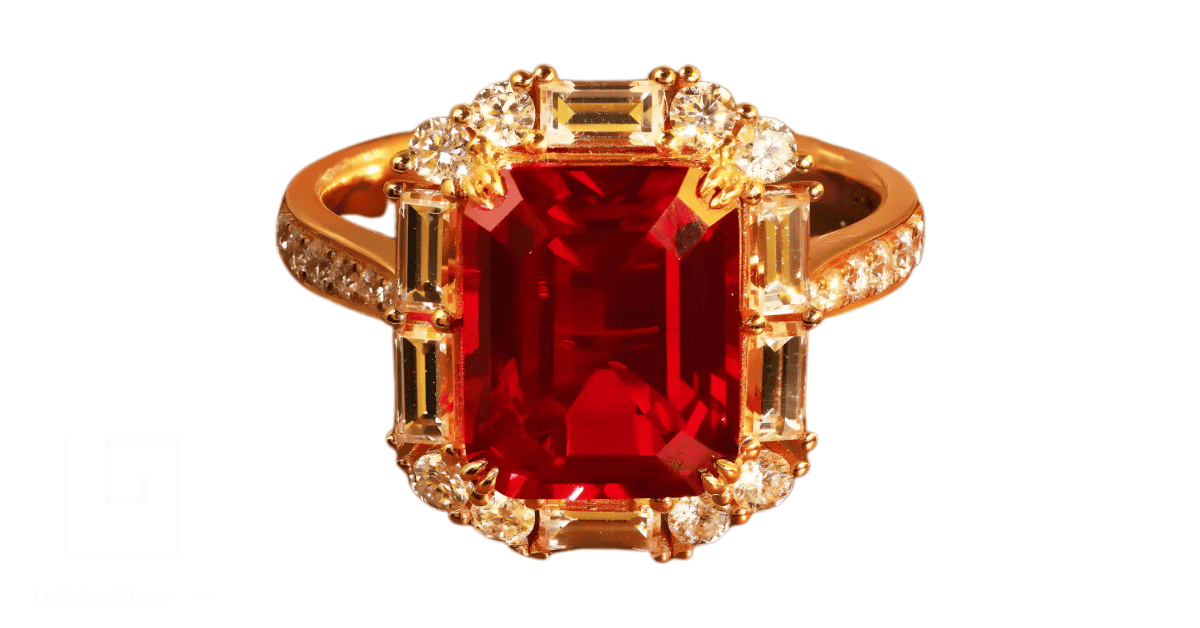
Gold is the most popular pick for setting these red gems. Yellow gold is a classic because the warm yellow metal makes the red of the stone look even warmer and richer. If you want something that looks more modern, white gold or platinum is a great way to go. The cool, white metal creates a sharp contrast that makes the red stone really pop. Rose gold is also a top choice lately, as its pinkish tones blend well with the pinkish-red tints found in many stones.
Silver is a much cheaper option, but it has some drawbacks. It bends or loses its shape more easily than gold. It also turns black or grey over time, meaning you have to spend a lot of time cleaning it to keep it looking good. Since a ruby is such a valuable gem, most experts recommend choosing gold or platinum to give the stone the high-quality setting it deserves.
Gold and platinum are the best materials for ruby jewelry because they provide the strength needed to securely hold the stone. Gold does not rust or tarnish, which helps the piece stay bright for a lifetime. Most high-end jewelry uses 14k or 18k gold for the best balance of purity and durability. These metals also help preserve the piece’s value over time, making it a better choice for an heirloom.
Ruby Jewelry Quality and Grading
Today, the ruby is best known as the birthstone for July and the traditional gift for a 40th wedding anniversary. It stands for a deep, burning love and a strong spirit.
What makes a ruby stand out is its color. You want to see a red that is thick and rich, not thin or watery. The best stones have a special glow called fluorescence. This happens because the chromium in the stone reacts with sunlight, making the gem look as if it is lit from within.
To find the best quality, look at how clear the stone is. Almost all natural rubies have small marks inside them, which experts call inclusions. One specific mark to look for is “silk,” which consists of tiny, needle-like crystals. Silk is actually a good sign because it often shows the stone has not been heated to extreme temperatures in a lab. About 95% of rubies on the market are heat-treated to fix their color, so finding a natural, unheated stone is a major score for a collector.
The way the stone is cut also plays a big role in its appearance. A good cut makes the light bounce back to your eye rather than leak out the bottom of the stone. If the stone is cut too thin, it might look big, but it will lose its life and sparkle. Check the stone under different types of light to ensure it stays red and does not turn brown or too dark when you leave the jewelry store.
Grading these gems is a bit different than grading diamonds. Experts look at hue, the basic red color, as well as saturation and tone. Saturation refers to how strong a color is, while tone refers to how light or dark it appears. A pigeon’s blood ruby from Myanmar is the gold standard and usually fetches the highest price at auction.
Labs will test the stone to determine whether it is natural or lab-grown. They also look for “zoning,” which is when the color is not spread out evenly across the stone. A high-grade stone will have an even, rich red from one side to the other. A 25.59-carat ruby once sold for over $30 million, showing just how much value a top-grade stone can hold. Proper grading ensures you know exactly what you are paying for when buying a high-end piece.
Ruby Jewelry Care and Maintenance
Keeping your rubies in top shape starts with where they sleep at night. While these stones are famously tough, they can be a bit of a bully to the rest of your collection. Rubies rank at a 9 on the Mohs scale of hardness, meaning they are harder than almost every other gemstone except for diamonds. If you toss a ruby ring into a pile with gold chains or softer stones like opals, the ruby will win the fight and leave scratches everywhere.
The best way to store your pieces is in a box that gives every item its own room. Look for jewelry boxes with individual velvet-lined slots or stackable trays that prevent pieces from banging into each other. For those who travel often, a padded jewelry roll with separate zippered pockets is a smart pick. This keeps your gems from rubbing together during a bumpy flight. Always keep your rubies away from direct heat or windows, as constant high heat can sometimes mess with the stability of certain stone treatments.
Maintaining that signature red glow is simpler than you might think. You can do most of the work at home with things you already have in your kitchen. First, get a bowl of lukewarm water and add a few drops of mild dish soap. Let your jewelry sit for about ten to fifteen minutes to loosen up any oils from your skin or bits of lotion.
After the soak, use a very soft toothbrush to gently scrub the stone, paying close attention to the underside where dirt likes to hide. Rinse it under clean water and pat it dry with a soft, lint-free cloth. If you have a glass-filled ruby, skip the lemon juice or harsh cleaners entirely. These stones are more sensitive to acids and chemicals, which can erode the filler, making the stone look dull or cracked. Stick to a simple, damp cloth for these pieces.
Ruby Jewelry – Key Takeaways
We have looked at everything from the mind-blowing statistics of the ruby market to the top spots for finding that perfect pigeon blood piece. We also checked out the different types of jewelry available, how to pick the right earrings for your style, and the tricks for spotting a real ring versus a lab-grown one.
Whether you are looking at rubies as a serious investment or just want a piece of their beauty, knowing the basics of quality and care is the best way to get your money’s worth.
Here are some essential points to take with you from this guide:
- Fine rubies can sell for over $1,000,000 per carat, making them rarer and sometimes more expensive than diamonds.
- The Estrela de FURA holds the record for the most expensive colored gem ever sold, fetching $34.8 million at auction.
- Mozambique now produces about 50% of the world’s rubies, a massive shift from the traditional Burmese dominance.
- Over 95% of all rubies in the market have been heat-treated to improve their color and clarity.
- The “pigeon blood” red color is the gold standard, characterized by a deep red with a slight purple or blue tint.
- Synthetic rubies have the exact same chemical makeup as natural ones and have been produced since the late 1800s.
This content was last updated in October 2026. Make sure to follow Lefkara Silver to stay on top of the latest jewelry trends and expert tips.
Ruby Jewelry FAQs
Here are answers to some frequently asked questions about ruby jewelry:
Is Ruby an Expensive Stone?
Top-tier rubies often beat diamonds in price per carat. Record sales have reached over $1,000,000 per carat, including the $34.8 million Estrela de FURA. Even modest 1.52-carat stones can start at $5,500 per carat, depending on quality. Since less than 1% of mined rubies are gem-quality without heat, rarity drives these high costs.
How to Identify a Real Ruby?
Look for “silk” inclusions, since natural, flawless rubies are nearly non-existent. A real gem has a hardness of 9 on the Mohs scale, meaning it easily scratches glass. Beware of gas bubbles, which reveal a flame-fusion synthetic origin. Most natural stones also show strong red fluorescence when put under UV light.
How to Wear Ruby Jewelry?
Pair these gems with yellow gold to make the red pop. They are the traditional gifts for 15th and 40th anniversaries, often featured in milestone rings. Since 95% of rubies undergo heat treatment, they retain their color well in everyday light. One bold piece lets the vibrant red saturation stand out.
Can Ruby Be Worn Every Day?
Rubies work for daily wear because they have excellent toughness and no cleavage. While corundum is stable, avoid acids like lemon juice if the stone is fracture-filled. These gems easily handle the bumps of daily life in rings.