What You Should Know About Engagement Rings
Picking out a ring is a big deal, and the rules of the game have changed quite a bit. Now, it is no longer just about picking the biggest rock you can find. It is about finding a piece that fits a specific lifestyle, matches a personal look, and stays within a smart budget. People are putting more thought into where their stones come from and how the metal is made than ever before. This article gives you the most current facts and tips as of October 2026 to help you make a choice you will love for a lifetime.
We will look at key engagement ring statistics for October 2026 to see how people are spending their money. You will find a list of the top 7 stores to find perfect engagement rings, along with the latest engagement ring trends that are popping up on social media. We also break down engagement ring styles and settings, and help you pick the best metals for an engagement ring. Plus, we share quick tips for finding the perfect engagement ring size, the price of an average engagement ring, and how to customize your engagement ring to make it truly yours.
Key statistics of Engagement Rings in October 2026
Here’s a look at the numbers shaping how people buy rings this year.
- The average amount couples spend on a ring in the United States has settled at $5,500, showing that people are balancing quality with clear financial goals.
- Lab-grown diamonds now make up 55% of all center stones sold, as buyers realize they can get a larger stone for a much better price.
- About 75% of all buyers now ask for some form of customization, moving away from off-the-shelf designs to create something unique.
- The average carat weight for a center diamond has climbed to 1.5 carats, largely because the lower cost of lab-grown options makes bigger stones more accessible.
- Online sales for rings have reached 40% of the total market, proving that people trust digital stores when they offer clear data and high-quality photos.
- Yellow gold has made a massive comeback, now appearing in 45% of new ring orders, beating out the long-standing lead of white gold and platinum.
- Interest in men’s engagement rings has jumped by 30% this year, as more couples choose to both wear a symbol of their commitment before the wedding.
- Round brilliant cuts still lead the pack, but oval shapes have captured 22% of the market, making them the most popular alternative shape.
- Roughly 15% of couples are now choosing colored gemstones like sapphires or emeralds as their main stone instead of a traditional diamond.
- More than 80% of buyers say that ethical sourcing and recycled metals are a top priority when they start their search for a jeweler.
Top 7 Stores to Find Perfect Engagement Rings
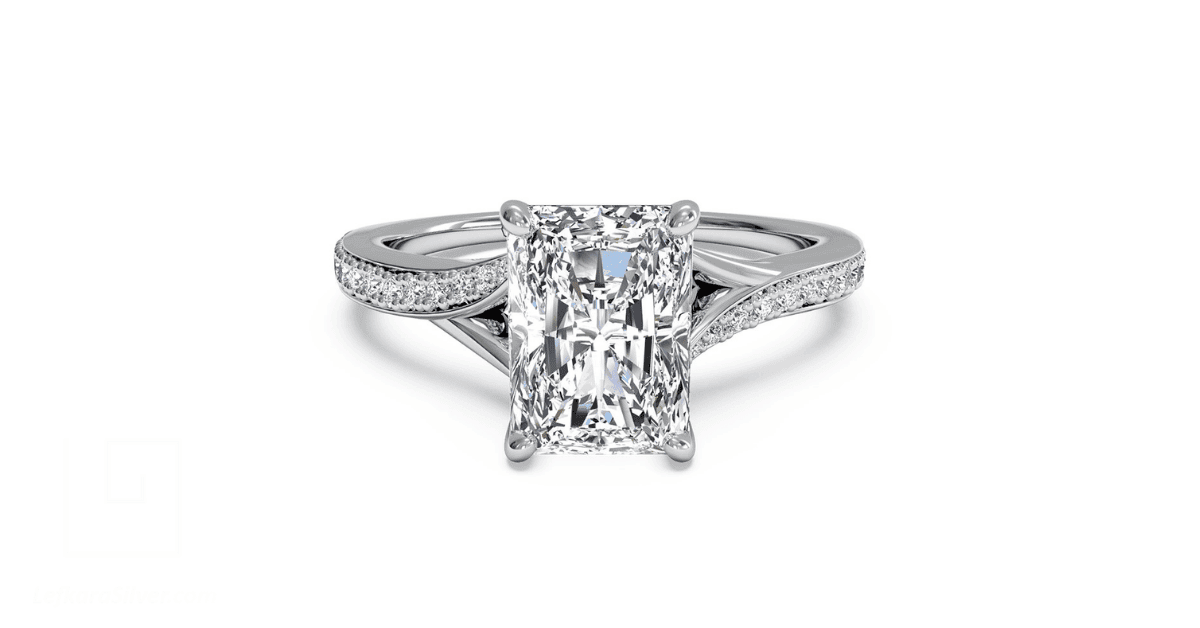
Picking where to buy your ring is just as vital as the stone itself. Since you are likely spending thousands of dollars, you need a shop with a solid reputation that won’t disappear if a prong bends or a stone gets loose. Going with an untrustworthy seller can lead to overpaying for low-quality materials or, even worse, getting stuck with a fake stone. You want a place that offers clear return policies, solid warranties, and real grading reports from labs like the GIA.
Our team spent time checking the most reliable shops available today. We looked at how easy it is to find what you need, how much they charge, and what real customers say about their service. We confirmed these stores use high-quality metals and certified stones so you can shop without worrying about getting ripped off. Whether you want to browse in person or order from your couch, these seven stores are the best in the business for 2026.
1. Blue Nile
They started back in 1999 and have stayed at the top by offering a massive inventory that physical stores just cannot match. They operate mostly online but have opened several “webrooms” in major malls across the US, where you can see styles in person before buying through their site. Because they don’t have the high rent of traditional luxury boutiques, they often pass savings of up to 40% on to the buyer.
You can look through over 150,000 loose diamonds and pair them with hundreds of different bands. They provide high-res photos and 360-degree videos of most stones, so you know exactly what the inclusions look like before you pay. They also offer a diamond price match guarantee, which is great if you are trying to stay within a strict budget.
2. James Allen
If you are nervous about buying a diamond without seeing it with your own eyes, James Allen is your best bet. They are famous for their high-definition, 360-degree viewing technology, which functions like a jeweler’s loupe. You can zoom in on a stone to see every tiny mark or “birthmark” inside the diamond. This transparency makes them a top pick for people who want to understand exactly what they are getting for their money.
They are an online-only shop, though they do have a couple of physical locations for private appointments. Their customer service is available 24/7, which helps if you have a midnight panic about ring sizes. One of their best perks is the free lifetime warranty, which includes cleaning, polishing, and prong tightening. They also offer a 30-day money-back guarantee and free resizing for the first year, making the process much less stressful.
3. Brilliant Earth
Brilliant Earth is the place to go if you care about where your materials come from. They focus heavily on “Beyond Conflict Free” diamonds and recycled metals. While most shops just track diamonds to the border, Brilliant Earth tries to follow the diamond from the moment it leaves the ground. They have a huge selection of both natural and lab-grown stones, plus unique, colorful gems like sapphires and emeralds.
They have a massive online presence but also run over 30 showrooms across the US. This allows you to book a private session to try on different engagement ring setting styles to see how they look on your hand. Recent data shows that over 90% of their gold and 97% of their silver comes from recycled sources, which appeals to the growing number of buyers looking for sustainable options in 2025.
4. Tiffany & Co.
For those who want the ultimate classic experience, Tiffany & Co. remains the gold standard. They literally set the bar for modern engagement rings in 1886 when they introduced the Tiffany Setting—a six-prong mount that lifts the diamond up to catch the light. You are paying a premium for the name and that iconic little blue box, but you are also getting world-class craftsmanship.
They have stores in almost every major city worldwide, from New York to London and Tokyo. Their in-store service is famously high-end, and they offer lifetime cleaning and repair services. Tiffany only accepts about 0.04% of the world’s gem-grade diamonds, meaning their quality control is much tighter than almost any other chain. If you want a ring that will still look right 50 years from now, this is the traditional route.
5. Mejuri
Mejuri is changing the game for couples who want something modern, minimalist, and affordable. They started as a brand for “everyday fine jewelry” but their engagement collection has become a hit for people who hate the stuffy vibe of traditional jewelry stores. Their designs are sleek and lean into current trends like slim bands and unique stone orientations.
They are primarily an online brand but have “guideshops” in cities like Toronto, New York, and London. Their prices are much lower than traditional retailers because they work directly with manufacturers and drop new designs weekly. They use a mix of high-quality materials like 14k solid gold and ethically sourced stones, making them a favorite for millennials and Gen Z buyers who want style without a $10,000 price tag.
6. Vrai
Vrai is a standout for anyone specifically looking for lab-grown diamonds. They are owned by a company that grows its own diamonds in a foundry in Washington state using 100% hydropower. This means their stones are essentially carbon-neutral, which is a big deal in 2025. Because they grow the stones themselves and sell directly to you, they cut out the middlemen and keep prices very low.
They operate mostly online but have a few sleek showrooms in major tech hubs. Their style is very architectural and clean, moving away from the “busy” look of vintage rings. A 1-carat lab-grown diamond from Vrai can cost roughly 70% to 80% less than a mined diamond of the same quality, allowing you to get a much larger, higher-quality stone for the same budget.
7. Catbird
If your partner wants something that looks like it came from a cool boutique in Brooklyn, Catbird is the answer. They are an indie jeweler based in New York that specializes in “ethereal” and “alternative” designs. You won’t find many massive, chunky rings here. Instead, they focus on delicate bands, rose-cut diamonds, and clusters that feel like tiny pieces of art.
They have a small physical shop in Brooklyn but a very large online following. They carry their own line plus designs from other small, independent artists. Catbird is a member of the No Dirty Gold campaign, and they use recycled gold and conflict-free stones for all their in-house pieces. It is the perfect shop for someone who wants a ring that feels personal and unique rather than something found in a mall.
Bonus: If you feel like switching it up and getting a more unconventional engagement ring, you can look at the Lefkara Silver opal ring catalogue to find your perfect piece.
The Latest Engagement Ring Trends
Engagement ring styles are shifting away from the plain looks of the past decade. While the classic round solitaire will never truly die, more people are now picking rings that show off their personality. We are seeing a huge move toward lab-grown stones, colorful gems, and settings that protect the stone for a busy, active life.
The biggest shift in 2026 is the total takeover of lab-grown diamonds. Industry reports show that lab-grown diamonds now account for nearly 50% of engagement ring sales in the US. Buyers have realized that since these stones are chemically and physically identical to mined diamonds, it makes more sense to get a bigger, sparklier stone for a fraction of the price. Along with this, yellow gold has officially replaced white gold as the most popular metal choice, as its warm tone feels more “vintage” and pairs well with different skin tones.
- Toi et Moi Rings: This “You and Me” style features two stones sitting side-by-side on the band. It became a viral hit thanks to celebrities and stays popular because it allows you to mix different shapes, like a pear and an emerald cut, in one ring.
- Bezel Settings: Instead of prongs, a thin rim of metal wraps around the diamond’s edge. Bezel settings are trending because they are the most secure option for people who work with their hands, as they prevent the stone from snagging on clothes or hitting hard surfaces.
- Oval and Marquise Shapes: Elongated stones are in high demand right now. An oval diamond often looks larger than a round diamond of the same weight, and it makes the wearer’s finger look longer and slimmer.
- Hidden Halos: This is a “secret” circle of tiny diamonds that sits just below the main stone’s base. It adds extra sparkle that you only see from the side, giving the ring a more complex, expensive look without adding a ton of cost.
- Lab-Grown Everything: As mentioned, the price gap is too big to ignore. You can often get a 2.0-carat lab diamond for the same price as a 0.75-carat natural stone, leading many to choose the larger look.
- Yellow Gold: After years of silver tones dominating the market, the 18k and 14k yellow gold look is back. It feels more “heirloom” and less like a piece of tech, which fits the current 2025 aesthetic.
- East-West Settings: Instead of a stone sitting vertically (up and down the finger), it is turned 90 degrees to sit horizontally. This is a simple tweak that makes even a traditional stone look modern and edgy.
Engagement Ring Styles and Settings

Engagement rings come in a wide variety of looks, but understanding the difference between a style and a setting helps you pick the right one. The style refers to the overall vibe and design aesthetic, such as whether it feels modern or vintage, while the setting is the technical way the gemstone is mounted in the metal band.
Here are the common styles people choose for their diamonds:
- Solitaire: This is the most popular choice, featuring a single gemstone on a plain or diamond-set band. It keeps the spotlight entirely on the center stone.
- Halo: A center stone is circled by smaller diamonds. This style can make the center stone look up to 50% larger than it really is.
- Three-Stone: Also known as a trilogy ring, this design uses three gems to stand for a couple’s past, present, and future.
- Toi et Moi: A French term meaning “you and me,” this style features two gems of different shapes or colors sitting side-by-side on the band.
- East-West: Instead of the stone sitting vertically along the finger, it is turned 90 degrees to sit horizontally across the band for a modern look.
- Vintage-Inspired: These rings use details like milgrain(tiny metal beads) or floral metalwork to evoke jewelry from the 1920s or earlier.
Picking the right engagement ring styles requires looking at how the setting protects your stone. The prong setting is the standard choice, using small metal claws to grip the diamond. Most rings use either four prongs to show more of the diamond or six prongs for better security. A four-prong setting often makes a round diamond look more square, while six prongs help maintain its round shape.
If you have an active job or hobby, the bezel setting is a smart move. It wraps a thin rim of metal all the way around the gem’s edge. This keeps the stone from chipping and stops the ring from catching on your clothes or hair. Bezel settings are the most secure option for protecting a diamond’s girdle from hard hits.
For those who want a band that sparkles, the pavé setting uses tiny diamonds set closely together. The metal is “paved” with gems, held by beads so small they are hard to see. True pavé settings typically use diamonds that are only 1mm to 2mm in size. Other choices include the channel setting, where gems sit inside a metal groove, and the cathedral setting, which uses arches to lift the stone higher off the finger. Cathedral settings make a stone look bigger but are more likely to snag on everyday objects.
The Best Metals for an Engagement Ring
Various metals can be used to make an engagement ring, and your choice will change the color, weight, and price of the final piece. Platinum is the most popular metal for engagement rings. It is 30 times rarer than gold and is mined in much smaller amounts each year, which accounts for its higher price tag. It is a naturally white metal, so it doesn’t need a coating to stay bright.
Over time, platinum develops a satin-like finish called a “patina,” which many people find adds character to the ring. Because it is a dense, “sticky” metal, platinum prongs are less likely to break or snap than gold, making it the safest choice for holding a diamond. It is also completely hypoallergenic, so it won’t irritate sensitive skin.
Gold is the most traditional choice and comes in three main colors: yellow, white, and rose. 14k gold is often better for engagement rings than 18k because it contains more alloy metals, making it harder and more resistant to scratches. Yellow gold offers a warm, classic look that complements diamond education because it can mask a slight yellow tint in lower-quality stones.
White gold is actually yellow gold mixed with white metals and coated in rhodium to give it a bright, silver look. You will need to have a white gold ring “dipped” or replated every 12 to 24 months to keep it from looking yellow. Rose gold gets its pinkish hue from copper. Rose gold is actually more durable than yellow or white gold because copper is one of the toughest metals used in jewelry.
For those looking for something outside the box, alternative metals like titanium, tungsten, and cobalt are gaining ground, especially for men’s rings. Tungsten is the most scratch-resistant metal on Earth, but it is brittle and can shatter if dropped on a hard surface, such as tile or concrete. The main downside to these modern metals is that they generally cannot be resized.
If your finger size changes over the years, you may have to replace the ring entirely. For a piece intended to be a lifelong heirloom, gold and platinum remain the best options because they can be cut, soldered, and resized as many times as needed.
Tips for Finding the Perfect Engagement Ring Size

Understanding ring sizes is the best way to ensure the proposal goes smoothly, and the ring doesn’t get stuck on a knuckle. Researching the fit helps you pick a band that stays on safely but remains comfortable enough for everyday wear.
Here are few things to keep in mind:
- Fingers change size based on the weather, usually shrinking in the cold and swelling in the heat.
- Measure the finger at the end of the day when it is at its largest to ensure the band is never too tight.
- Bands that are 5mm or wider fit more tightly than thin bands, so buy a slightly larger size for chunky styles.
- For people with large knuckles, use a ring sizer to find a fit that takes a little effort to pull off but does not hurt to put on.
- Resizing a ring with diamonds set all the way around the band, known as an eternity band, is nearly impossible and often requires making a new ring.
- If you are guessing for a surprise, ask a friend or sibling who might have borrowed their jewelry in the past.
- The average ring size for a woman in the US is a 6, which is roughly 16.5mm in diameter.
What is the Average Price of an Engagement Ring?
Engagement ring prices vary based on the specific materials you choose and the level of work in the setting. The main stone usually takes up most of your budget. The “Four Cs”—cut, color, clarity, and carat weight— determine the price. A diamond’s price often jumps at “magic numbers” like 1.00 or 2.00 carats, so choosing a 0.90-carat stone can save you a bundle without looking different to the eye.
Cut quality is the one area you should not cut corners on, as a high-quality cut makes the stone reflect light better and can make a smaller diamond look bigger than a poorly cut larger one. You also have to choose between natural and lab-grown diamonds. Lab-grown diamonds currently cost about 40% to 70% less than natural diamonds of the same quality, which means you can get a much bigger stone for the same amount of cash. Check out engagement ring styles to see more on these options.
The metal for the band and the design’s complexity also affect the final price. Platinum is the most expensive because it is rare and heavy, while 14K gold offers a cheaper but tougher choice. Adding extra elements, like a halo of small stones or a custom design, increases labor costs. In the US, the average center diamond for an engagement ring ranges from 1.00 to 1.20 carats, while the average amount spent on a finished ring across all types and sizes is roughly $5,200.
How to Customize Your Engagement Ring?
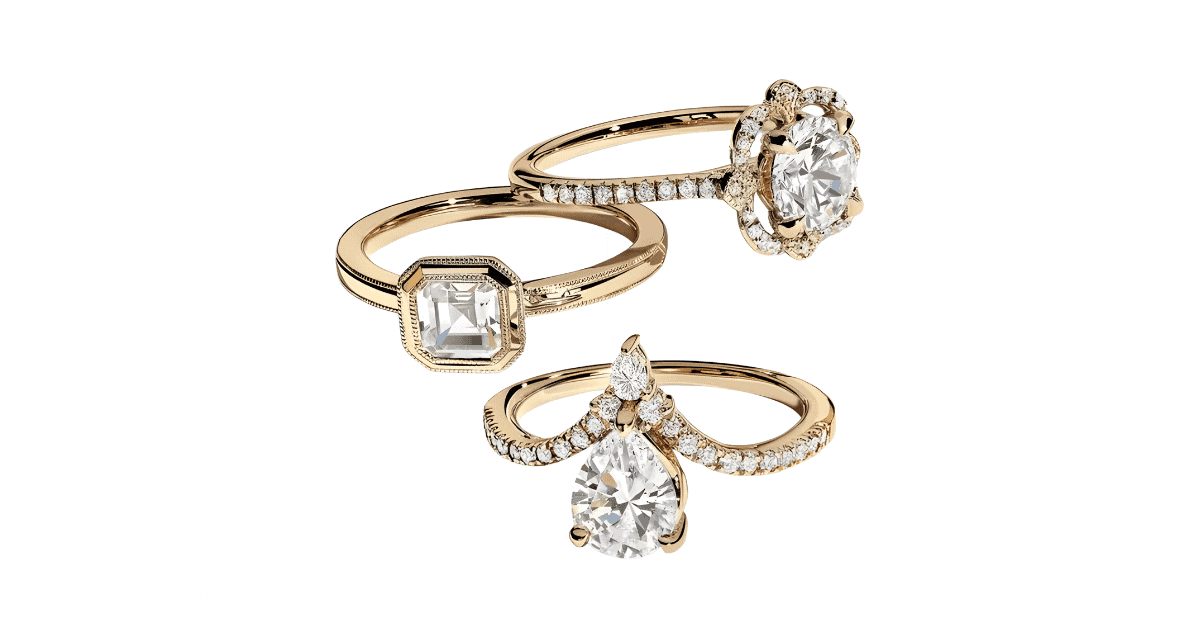
Customizing a ring means you aren’t just picking a pre-made piece from a display case. You are the boss of every part of the design. You can take a basic ring and change the metal or the stone, or you can start from zero and work with a jeweler to draw something new. Most people start the process by picking the center stone. You have to choose between a natural diamond, a lab-grown one, or a colored gemstone like a sapphire or emerald. Lab-grown diamonds have the same chemical makeup as natural ones but often cost up to 70% less, which is a smart way to get a larger stone for your money.
Once you have the stone, you pick the metal for the band. This choice affects how the ring looks and how it handles your daily life. Platinum is the strongest metal and stays white forever without needing a new coating, but it costs more because it is dense and rare. Gold is the most common choice and comes in yellow, white, or rose. 14K gold is more durable than 18K gold because it contains more other metals, so it scratches less easily if you work with your hands.
Then you have to think about the setting, which is how the metal holds the stone. Prongs let in the most light to help the stone sparkle, while a bezel setting wraps the stone in a metal rim to keep it safe from chips. If you want more shine, you can add a halo. A halo setting can make the center stone look up to 50% larger than its actual carat weight. You can also add small touches like a date etched inside the band or a “hidden” halo that you only see from the side view.
If you go the custom route, the jeweler will often make a 3D digital drawing or a wax model for you to see before they cast the metal. This ensures the ring fits the person’s style perfectly. Custom rings typically take 8 to 12 weeks to finish, so you need to plan your proposal well in advance.
Are There Engagement Rings for Men?
The old idea that only women wear a ring before the wedding is fading out. For a long time, there was a double standard where men just wore a wedding band after the ceremony, while women wore a diamond to show they were off the market. That is changing fast. As gender roles change and more people want their relationships to feel like an equal partnership, “mangagement rings” have become a major trend. Recent data shows that more men than ever are buying engagement rings for themselves or getting them as gifts from their partners.
So, what do these rings look like? They aren’t just plain gold bands. Men’s engagement rings often have more personality and specific details. Many men go for a signet-style ring with a single diamond or a dark stone like a black diamond set flat into a wide metal surface. This makes the ring look strong and substantial. Others like bands that have small stones set into the metal or even a large center stone held by prongs for a more classic look. Metals like tungsten and titanium are top choices for men because they are very hard to scratch and feel lightweight on the finger.
History shows that ad agencies tried to sell engagement rings to men in the 1920s with names like “The Stag” or “The Master,” but the idea didn’t stick back then. Today, it’s a different story. You can find rings made with unique materials like pieces of meteorite, wood inlays, or even recycled gold. Some couples even buy matching rings to show they are a team. In countries like Brazil, Chile, and Sweden, it has been the norm for both partners to wear rings during the engagement for decades.
When picking a man’s engagement ring, it’s important to think about his lifestyle. If he works a physical job, a flat-set stone in a hard metal like cobalt or tungsten is a better pick than a high-set diamond in soft gold. Prices for these rings can range from a few hundred dollars for alternative metals to tens of thousands for platinum and large diamonds. No matter the cost, the goal is to find a piece that shows the man’s style and his commitment to the future.
Keeping Your Engagement Rings Clean
Just like a high-performance engine or a favorite pair of leather boots, your engagement ring needs regular care to stay in top shape.
A weekly soak in warm water mixed with a few drops of mild dish soap is the smartest way to keep your stone bright. Use a soft toothbrush to gently scrub the areas behind the stone where lotion, soap, and dirt like to hide. Cleaning your ring at home every two weeks stops grime from blocking light, which keeps the stone looking clear and prevents it from appearing cloudy.
Professional inspections are necessary at least twice a year to make sure your prongs are tight and the metal isn’t wearing down. A jeweler has the right tools to find a loose diamond before it falls out, which is much easier than replacing a missing stone (and less heart-breaking, too). These visits often include a deep clean using specialized tools that reach spots a home toothbrush simply cannot touch.
It is also a good idea to take your ring off before you go to the gym or handle heavy cleaners. Chlorine and bleach can actually damage the metals used in gold alloys, causing the band to become brittle and break over time. Keeping your ring in a safe spot during manual work or swimming protects the setting from getting hit or reacting with harsh chemicals.
Final Thoughts on Engagement Rings

We have looked at the key stats for October 2026, where to find the top stores for a ring, and the latest trends hitting the market. This guide covered the technical side of styles and settings, the most durable metals, and the best ways to find the right ring size.
We also looked at the average price of an engagement ring, the steps to customize your engagement ring, and the rise of engagement rings for men. Following these tips and keeping your engagement rings clean will ensure your jewelry lasts a lifetime.
Here are some key takeaways:
- The average cost of an engagement ring in the United States currently sits at $5,200.
- Platinum is the densest and most durable metal choice, but it develops a satin-like finish called a patina over years of wear.
- The “three-month salary” rule was a marketing tactic from the 1930s and no longer reflects how modern couples actually spend.
- Roughly one-third of buyers spend less than $3,000 on their engagement ring, proving you don’t need a huge budget for a great look.
- Finger size changes based on temperature and diet, so it is best to measure your finger in the afternoon when your hands are at a normal temperature.
- Lab-grown diamonds can be up to 70% cheaper than natural stones while being identical in every chemical and physical way.
Follow our website, LefkaraSilver.com, to stay informed about new jewelry offers, news, and buying guides. This information is current as of the last update in October year].
Engagement Ring FAQs
Here are answers to some frequently asked questions about engagement rings:
Which Finger is the Engagement Ring Worn on?
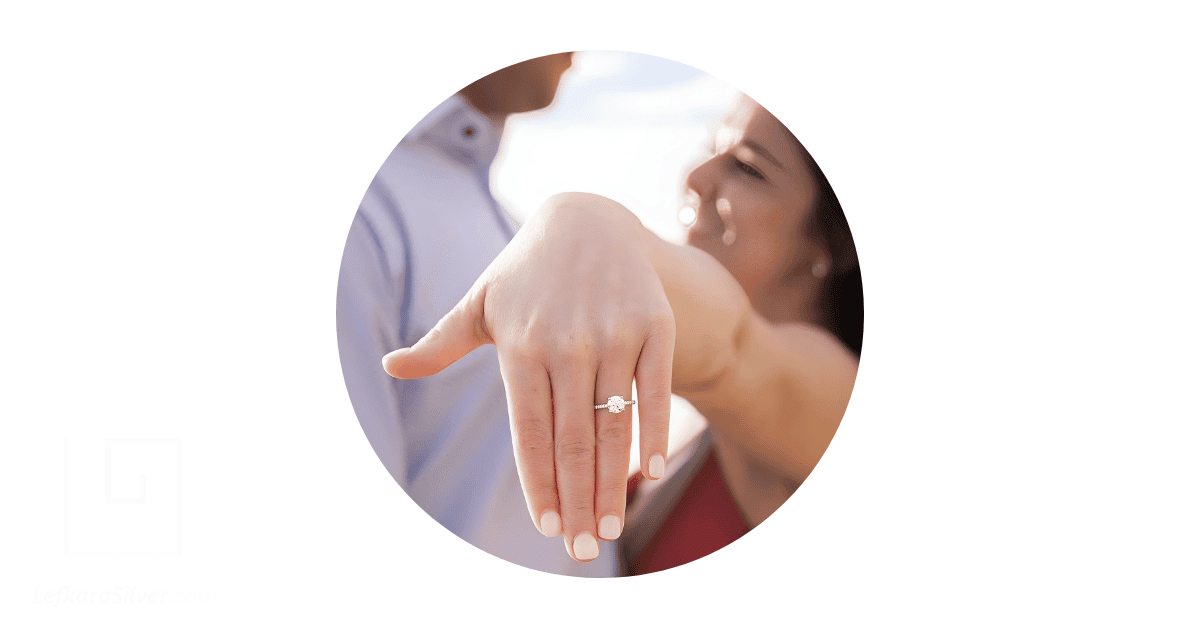
In Western cultures, you wear the ring on the fourth finger of your left hand. This habit comes from the ancient idea that the Vena Amoris vein runs from this finger to your heart. While 75% of American couples stick to this, cultures in Germany or Russia often choose the right hand instead.
Do You Keep Wearing an Engagement Ring After Marriage?
Most people keep wearing their engagement ring stacked right on top of the wedding band. During the wedding ceremony, nearly 80% of brides move the ring to their right hand for a moment. Later, they put it back on the left hand so the wedding band stays closer to the heart.
Can I Wear My Engagement Ring As My Wedding Ring?
You can definitely use your engagement ring as your wedding ring to keep things simple. Many people pick this route to save money or avoid wearing a heavy stack. Currently, roughly 10% of couples choose to skip the extra band. This makes your diamond a single, bold symbol of your life together.
What is the 3-Month Rule for the Ring?
This old rule says you should spend three months of your pay on a ring. It actually began as a 1930s marketing push by De Beers to boost diamond sales. Today, most buyers move past this, as the average ring spend stays near $5,500. You should only spend what feels safe for your bank account.
Who Traditionally Buys the Engagement Ring?
The person who asks for a hand in marriage usually pays for the ring. While men bought the ring in 90% of cases in the past, that is changing. Now, about 15% of couples split the bill or pick out the stone as a team. This shows a growing trend of equity in new relationships.
Who Legally Owns the Engagement Ring?
Most courts see the ring as a conditional gift tied to the act of getting married. If the split happens before the big day, the person who paid for it usually keeps it. Once the ceremony is over, the legal ownership stays with the receiver. Most court rulings favor the giver if no wedding occurs.