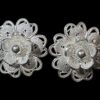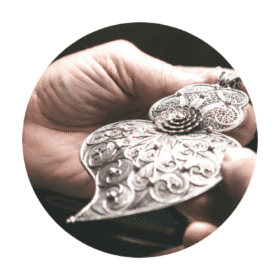
Finally ready to pop the big question? And with a filigree too? We love that for you! Filigree engagement rings are unique, which is part of why they’re still so loved today.
So, now that you’re ready to pick one for your beloved, we’ll show you the most popular designs to inspire yours, but make sure your choice reflects your partner or your taste if you’re buying for yourself. Following trends is the quickest way to end up disliking your ring, so don’t let trending styles influence you; let them inspire you instead.
This guide covers the latest filigree engagement ring trends for the year, luxury designs to choose from, and the pros and cons of these rings. You will see the differences between modern and vintage styles and get practical advice on cleaning your rings.
Latest Filigree Engagement Ring Trends for 2026
- This year, filigree designers are moving away from minimalist, plain settings and returning to the high-detail work that defined early 20th-century filigree jewelry.
- More filigree jewelry lovers are trying unconventional patterns, adding color to their rings and choosing vintage-inspired designs over modern styles.
- For others, it’s custom filigree rings that are geometric, futuristic, artistic, and aesthetically pleasing.
- There’s also a rising preference for “heirloom-modern” rings. This trend combines traditional wirework with modern stone cuts, like elongated cushion or marquise cuts.
- Another trend gaining traction is using non-traditional metal pairings within the filigree itself.
9 Popular Filigree Engagement Ring Designs You Can Try
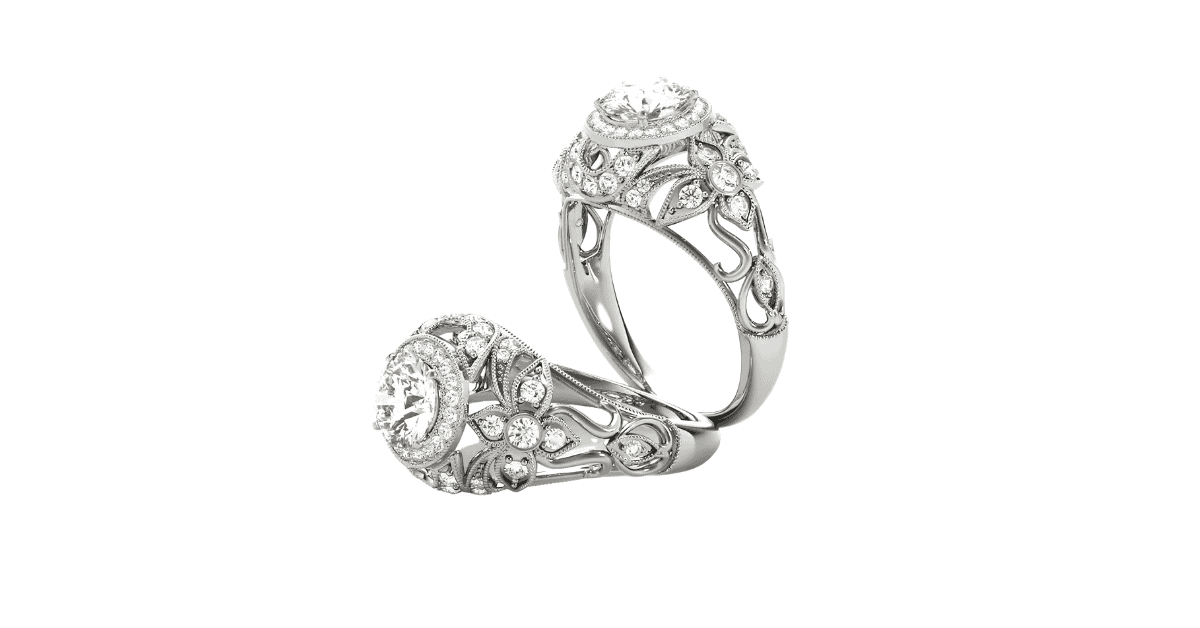
Before picking out the ring you want, explore these options to inspire you:
1. Victorian Floral Solitaire
This design gets its inspiration from the late 19th-century styles, which focus on nature’s organic shapes. It contains vines and petal motifs that wrap around the band, often meeting at a central basket that cradles the diamond.
This style feels like an heirloom from centuries past. It’s the perfect style for you or your partner if you’re a romantic who loves traditional, nature-themed jewelry.
2. Edwardian Halo
This design has complex, curving scrolls that form a lacy halo around the center stone. The halo makes the center stone appear larger, and you can choose a seamless, layered, or spaced look. The metal is worked so finely that it appears to float. It’s a perfect design for a sophisticated bride.
3. Art Deco Geometric Shield
This design blends vintage charm with modern beauty. It emphasizes symmetry and a modern, architectural look that feels structured and high-fashion. If you want clean, defined shapes and a bolder aesthetic or a ring that makes a statement without relying on traditional, flowery motifs, this is the perfect design.
4. Cathedral Arch Filigree
This piece is made up of thin metal wires that rise to meet the center stone and create an archway effect reminiscent of the structural elements of historic buildings. The space under the arch is then filled with dense, lacy filigree patterns that catch the light from different angles.
This design works best if you want your center stone to appear larger and more prominent, with extra height and an interesting side profile.
5. Celtic Knotwork Band
This style has endless loops and twists with no beginning or end. This endlessness symbolizes connection and eternity. If you want a ring that describes the endless nature of the love you share with your partner, then this design should inspire yours.
6. Art Nouveau Asymmetrical Wave
The Art Nouveau style is characterized by a free-flowing, asymmetrical movement. This design often has a single sweeping wave of metal or a vine that creeps up one side of the shank and curls around the setting. It feels fluid and purposefully irregular.
If you want a ring that feels as if it grew naturally rather than was built on a workbench, this style is perfect for you.
7. Milgrain Filigree
Milgrain is a technique that is often confused with filigree. The milgrain filigree style imitates the technique of adding tiny metal beads for a textured border. This style is unique and adds an antique charm to the ring.
8. Multi-Dimensional Cannetille
This design technique uses wire in a multi-dimensional way to create a layered, textured effect. The artisans pile tiny scrolls and beads to create a delicate, raised crown around the stone. It is arguably one of the most complex and labor-intensive designs in the luxury category. If you appreciate the craftsmanship of filigree rings, you’d want this design.
9. Modern Minimalist Filigree
This design suits minimalists who prefer ‘less.’ It uses filigree sparingly, keeping the band and setting sleek and modern. It offers a whisper of vintage charm without overwhelming the ring’s clean profile. If you want a contemporary engagement ring but also want to ensure it has a special, custom detail that isn’t found everywhere, this is the best one for you.
Where is the Best Place to Buy Filigree Engagement Rings?
Lefkara Silver is one of the few filigree jewelers that value traditional techniques. We focus on delicate, handmade silverwork that highlights the craft’s history. You can find unique handmade rings for your engagement in our filigree ring catalog, and we also offer customization services if you have a different design in mind.
The best way to get a durable filigree engagement ring is with custom jewelry designers who offer an end-to-end design process. These businesses usually operate online, so you can review digital mockups before a single piece of metal is cut. Experts can walk you through the differences between metal-supported and openwork designs to ensure your chosen style can withstand daily wear.
Always prioritize brands that explicitly mention hand-finished soldering, because these pieces are built to last for generations. You can find the best of these stores in this filigree ring guide.
Silver vs Gold Filigree Engagement Ring: Which is Best for You?
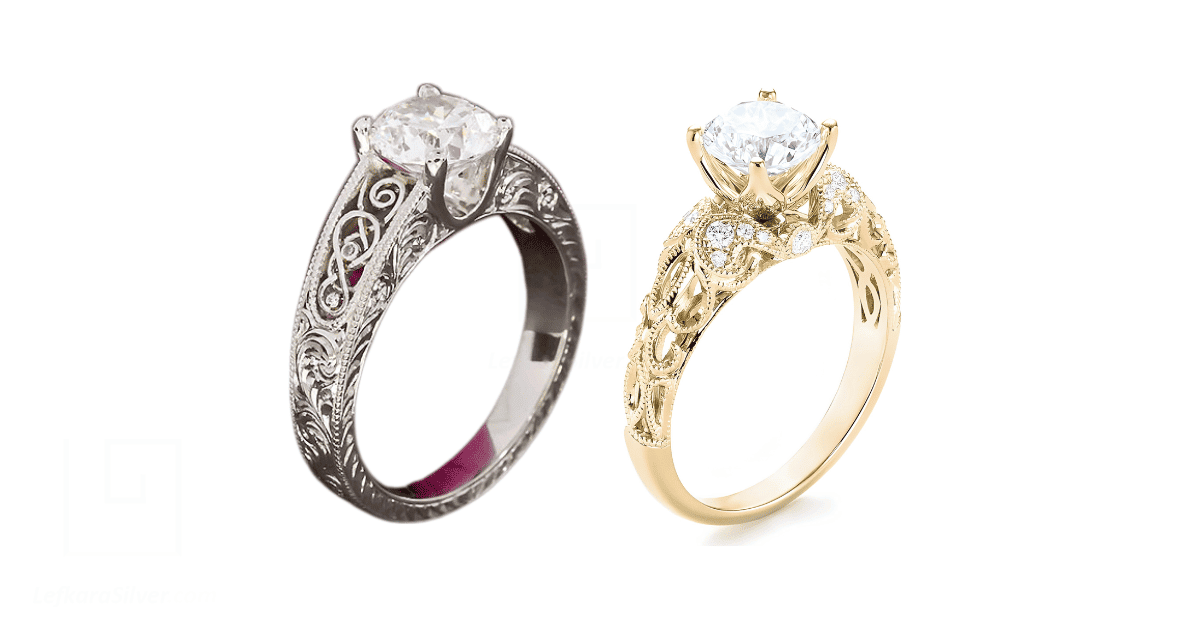
Gold and silver have different chemical and physical properties that dictate how they behave when shaped into fine jewelry. Gold is known for its high corrosion resistance and its ability to retain its shape over time. On the other hand, silver is bright and reflective but softer and reacts more readily with the environment, which can lead to tarnishing.
Silver is also more affordable, but for a ring worn every day, it can wear out easily. Silver can work for a fashion ring or a pendant that stays out of daily chores, but it isn’t ideal for the demands of an engagement ring.
If you like silver’s cool color but need gold’s durability, white gold may be a better alternative.
Modern vs Vintage Filigree Engagement Ring
Many people gravitate toward vintage filigree engagement rings because these rings often feel like miniature art projects. There is a deep appreciation for the time and patience required to craft jewelry by hand in the past, where every curl and bead was manipulated by a skilled artisan without the aid of high-speed manufacturing tools. This character gives vintage rings a soul and a sense of history that modern designs often struggle to replicate.
The history of filigree traces back more than 3,000 years. During the Victorian and Edwardian periods, jewelers pushed the boundaries of how thin they could stretch metal wire to create complex, multi-dimensional patterns.
In contrast, many modern filigree designs are computer-made and cast, which often results in thicker, less airy wire patterns.
Vintage rings have the edge in unique craftsmanship and character, but they require closer inspection for wear and damage. Modern filigree rings offer superior structural reliability, especially when a reputable jeweler blends computer-aided design with hand-finished assembly.
The best choice depends on whether you value an antique piece’s one-of-a-kind nature and story or a modern design’s precise, long-lasting construction.
Choosing the Perfect Filigree Engagement Ring Setting
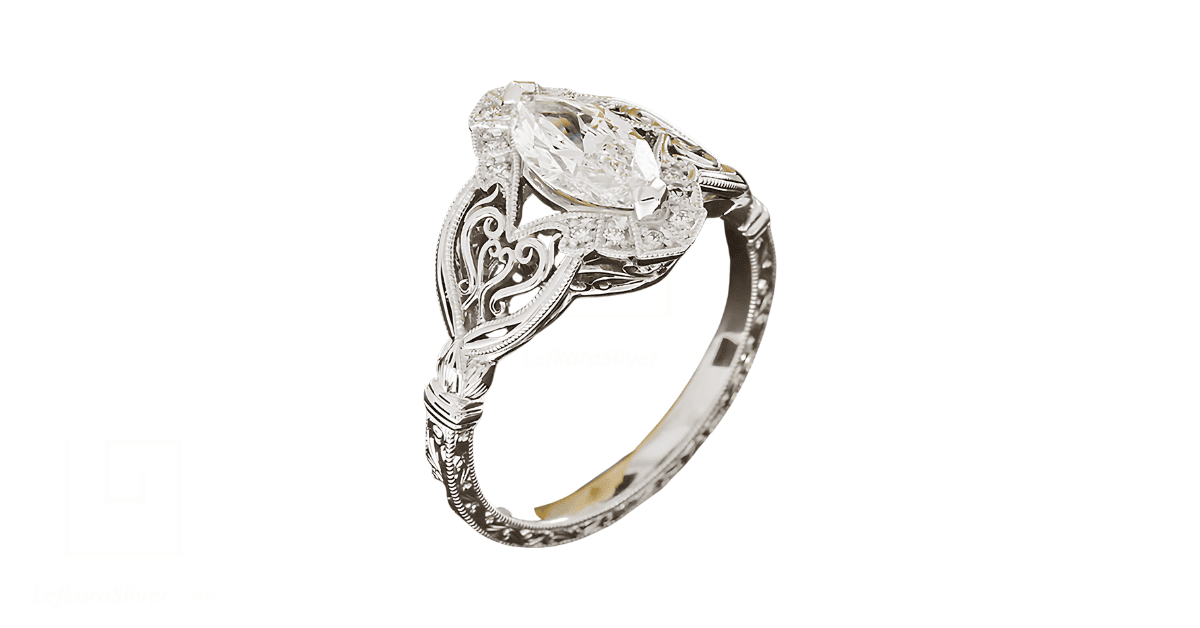
An engagement is a major life milestone, so the ring you choose deserves careful thought and attention. You aren’t just buying a piece of jewelry; you are choosing a symbol of your future to wear on your finger every day.
Filigree settings generally fall into a few distinct categories, such as:
- Openwork settings: These rely entirely on delicate metal wires soldered together to create the structure that holds the center stone. They look airy and light but need thicker, sturdier wires to keep the ring from bending.
- Ground-supported or metal-supported settings: These use a solid base to support the wire designs. They allow much more complex, fragile patterns because the solid base provides the structural support the wires lack on their own.
If you are shopping for a ring, keep these points in mind to make sure you get a quality setting:
- Prioritize structural integrity: Look at how the wires are joined. A well-made ring has clean, smooth soldering joints without thick globs of metal. If the connections look messy, skip it.
- Choose the right base metal: Platinum is the best choice for filigree because its strength supports fine, sharp details that stay rigid for decades. If you prefer gold, stick to 14k or 18k. Avoid 24k gold, as it is too soft to maintain the precise shape of thin wires through years of daily wear.
- Check the stone-to-metal balance: Choose a center stone size that keeps the filigree patterns visible, not hidden beneath a heavy setting.
- Assess your lifestyle: If you work with your hands or lead an active life, opt for metal-supported designs. These are far less likely to catch, bend, or trap dust and debris than delicate openwork styles.
- Look for smooth finishing: Run your finger over the ring. Quality filigree should never have sharp, protruding edges.
How Much Are Filigree Engagement Rings Worth?
You can find decent gold filigree engagement rings priced from $1,500 to $2,500, especially those made with modern manufacturing techniques. However, high-quality, handcrafted filigree rings from reputable studios often start at $4,000 and can easily exceed $10,000.
For rare, authentic vintage or antique pieces from well-known eras, prices are often much higher, depending on the ring’s condition, the quality of the center stone, and its historical significance.
Several key factors influence the price of these rings, including:
- Labor Intensity: Hand-forged rings, where a jeweler builds the design from scratch, typically cost significantly more than CAD-designed, mass-manufactured settings.
- Metal type: Platinum rings cost more than gold versions, not only because the metal itself is more expensive but also because it requires more skill and time to work with.
- Age and Provenance: Authentic antique rings from the Victorian, Edwardian, or Art Deco eras are often more expensive because of their historical value and rarity.
- Complexity of design: The more complex the pattern, the longer it takes to make, and therefore the higher the price.
- Stone quality and size: In many settings, the center stone accounts for the largest portion of the final price, regardless of the complexity of the filigree metalwork.
Always budget for an initial inspection by a jeweler after buying a vintage piece, as older filigree often requires reinforcement or professional cleaning before it can be worn daily.
Things to Consider Before Buying a Filigree Engagement Ring
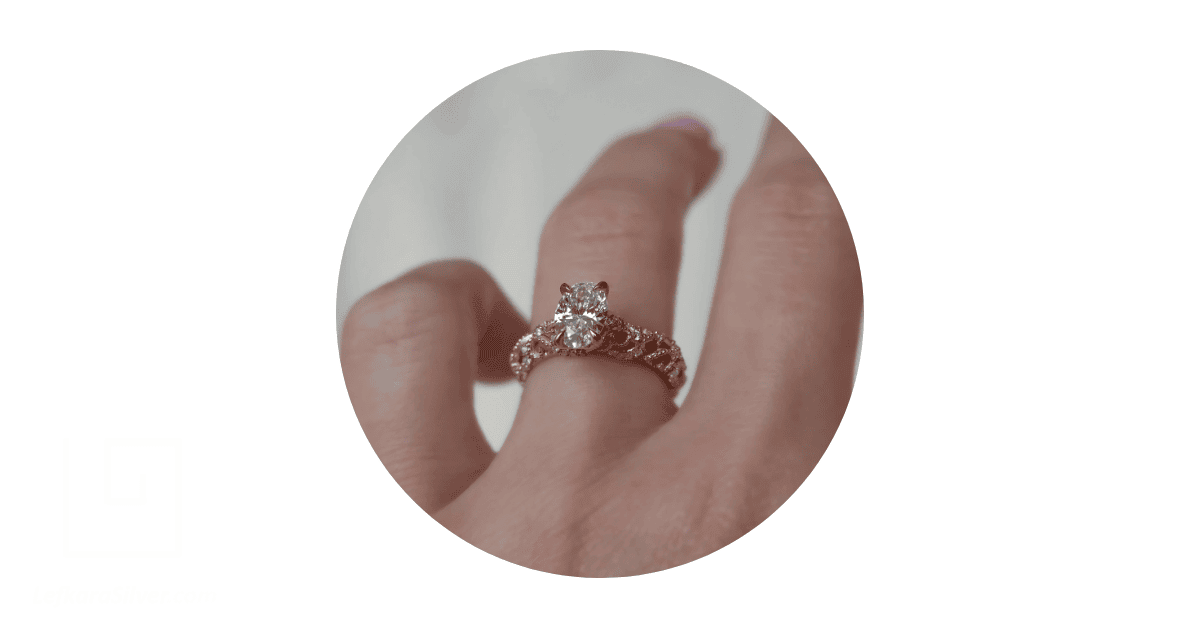
The most critical factor to inspect is soldering quality. If the joints are bulky or weak, the ring will not withstand daily wear. Look for smooth, clean lines, and make sure there are no sharp edges, gaps, or jagged projections that could snag on clothing or hair.
Also choose your metal wisely. Avoid 24k gold, as it is too soft to hold delicate designs securely. Go for 14k or 18k gold instead.
Consider the complexity of the design in relation to your daily lifestyle. If you work with your hands a lot, a ring with high-profile, delicate wirework might not be practical for you. If you need something sturdy, look for metal-supported designs where the threads are attached to a solid base for extra reinforcement.
Finally, consider how the filigree complements your center stone. A massive stone can sometimes hide filigree details, while smaller stones often let it stand out as a central feature of the ring.
The Pros and Cons of Filigree Engagement Rings
Filigree rings look distinct, which is what sets them apart from the standard modern solitaire. However, these benefits also come with trade-offs in durability, cleaning, and maintenance, so consider them before making your final decision.
| Pros | Cons |
|---|---|
| Adds unique, artistic character that stands out from mass-produced rings. | Requires more frequent professional cleaning to remove debris from tight spaces. |
| Creates an airy, vintage aesthetic often associated with antique jewelry. | Can be more fragile and prone to bending, especially in openwork designs. |
| Can help increase the visual size of a center stone by adding detail around it. | Higher potential repair costs due to the complexity of the metalwork. |
| Allows for personalization through custom-designed motifs. | Harder to pair with standard wedding bands without leaving visible gaps. |
Filigree isn’t designed for heavy, daily wear. The tiny gaps and wire patterns easily collect dust, lotions, and soap, so if you wear your ring constantly, you will need to clean it gently with a soft brush and mild soap.
How to Clean Your Filigree Engagement Rings
- When your ring starts to look dull, don’t use harsh jewelry dips and abrasive cloths. Instead, mix a few drops of mild dish soap into a bowl of lukewarm water. Soak the ring for about 10 to 15 minutes to soften debris caught in the wirework.
- Use a very soft-bristled toothbrush to gently brush the metal. Rinse it well under running water and pat it dry with a lint-free cloth.
- When you aren’t wearing your ring, don’t just toss it into a jewelry box where harder gemstones can scratch it or metal chains can twist it. Store it in its own small, soft pouch or a separate compartment.
- Never put a filigree ring into an ultrasonic cleaner. The intense vibrations can snap the delicate metal threads or loosen the settings.
- Know when to call a pro. If your ring is caked with years of buildup, or you see a loose wire, take it to a jeweler. They have the right equipment to clean it safely without compromising the design’s structural integrity.
Final Thoughts on Filigree Engagement Rings
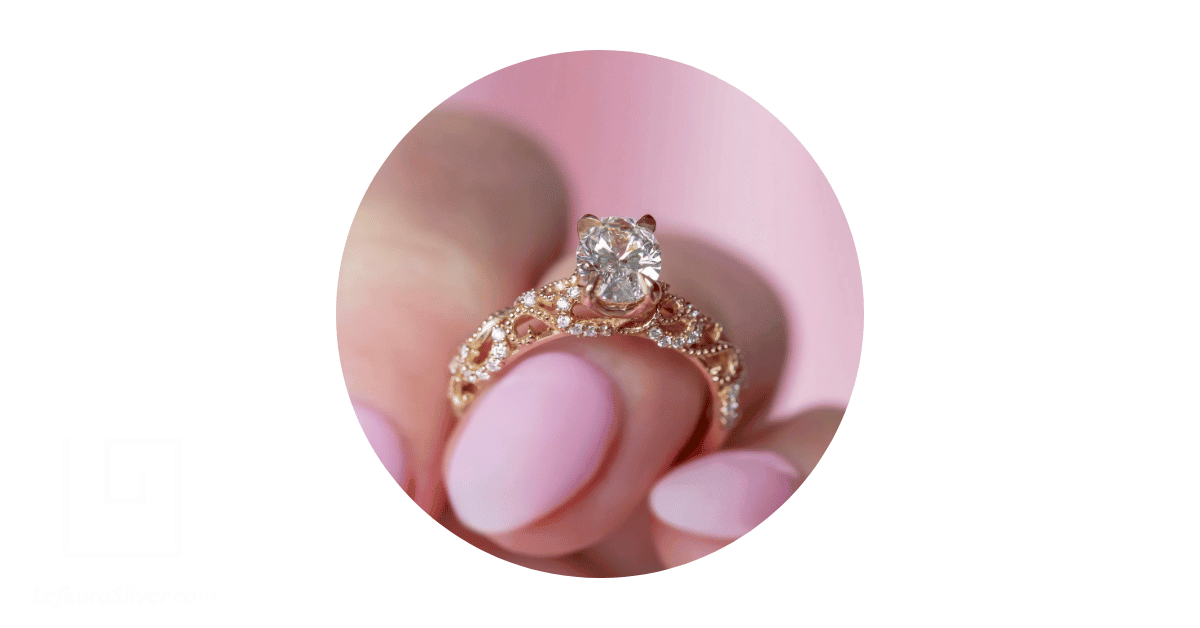
Finding the right ring can be tough, but this guide should give you what you need to make the right decision and start a new journey with the love of your life.
Whether you choose a piece of history or a fresh, custom setting, remember that a filigree ring needs extra care. Filigree is not the same as engraving, which cuts grooves into the surface, or milgrain, which creates beaded borders.
This content was last updated in October 2026. Enjoy your search for the perfect ring that tells your unique story.