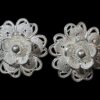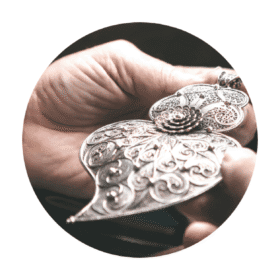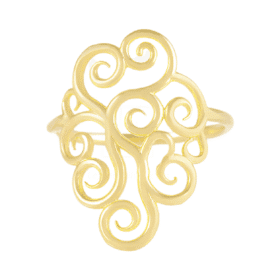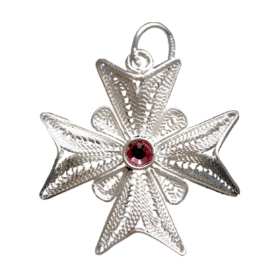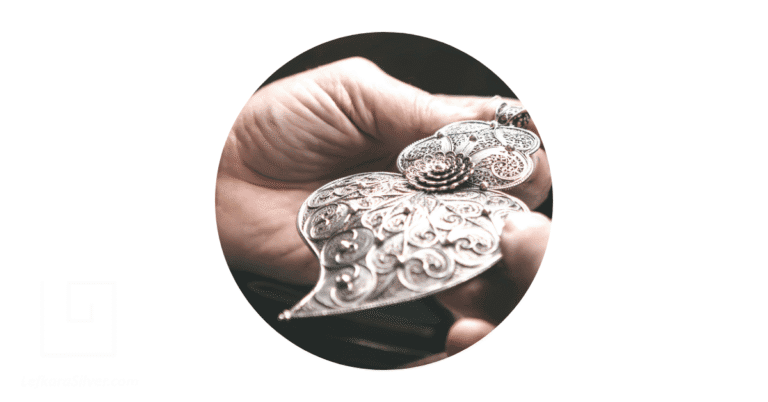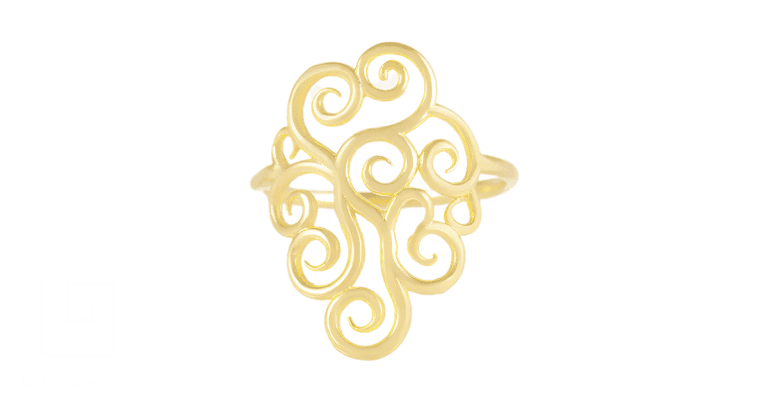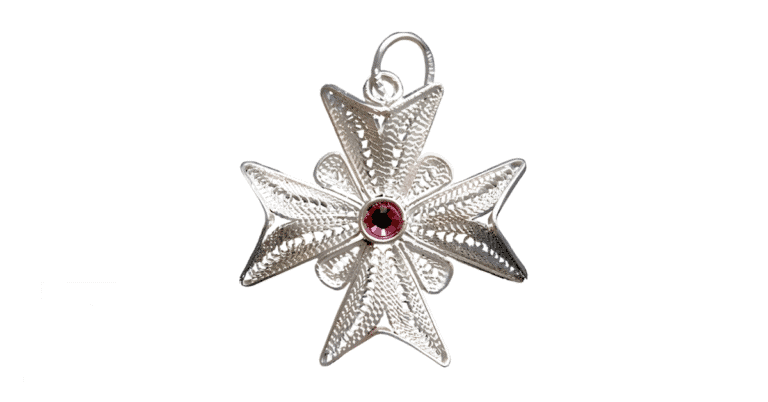

Filigree jewelry is a unique art form that involves manipulating filigree wire made from precious metals. For silver filigree, artisans melt the silver at high heat, then twist, curl, and solder it. It’s time-consuming, but the result is always worth it.
Filigree’s unique beauty and historical symbolism make it appealing even today. Filigree has been around for over 3000 years.
If you are looking for silver filigree ring designs for weddings or need styling tips, this article has the information you need.
We’ll cover silver filigree trends popular in October 2026 and help you find the most reliable stores. You will also get practical advice on choosing the perfect silver filigree bracelet as a gift, picking simple silver filigree earrings for daily wear, and how to tell the difference between handmade filigree and machine-made.
The History of Silver Filigree Jewelry
Filigree was first found in ancient Mesopotamia around 3000 BC, from where it spread across different regions. It was popular during the Roman era and remains popular today for its unique beauty. Order yours from the Lefkara Silver Shop.
The name filigree itself is coined from the union of two Latin words: ‘filum ‘, which means thread, and ‘granum ‘, which means grain which goes to show the process of making a filigree with tiny pieces of filigree wires or threads.
Different regions have their peculiar themes and motifs for filigree. Some of the most popular regions for this art include Italy, Portugal, India, Greece, and Cyprus.
What are the Latest Silver Filigree Trends Today?
The most popular silver filigree jewelry styles as of 2026 include:
- Miniature, hoop-style silver filigree earrings designed for daily wear.
- Heart-shaped filigree pendants that symbolize traditional craftsmanship.
- Stackable filigree bands that are increasingly being chosen as unique, non-traditional wedding rings.
- Layered filigree necklaces that combine several different wire-twisting patterns into one cohesive piece.
- Statement bracelets with wide panels of heavy, reinforced wirework.
5 Most Reliable Stores to Shop for Silver Filigree Jewelry
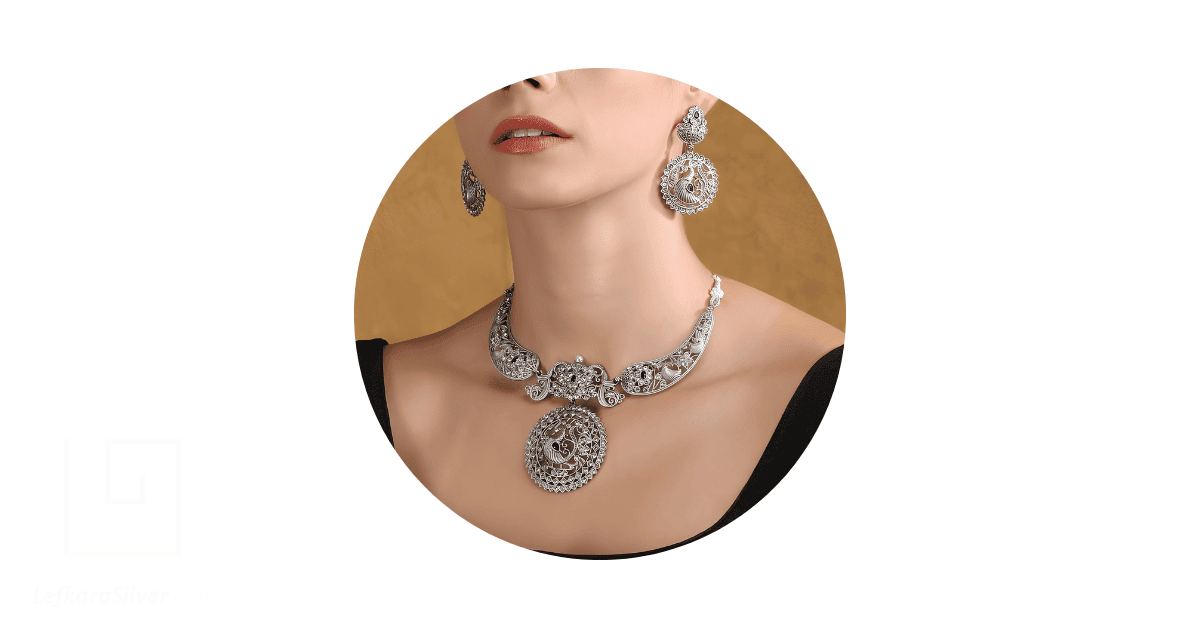
To save you hours of sifting through unreliable websites, our team has reviewed numerous options to find the most dependable shops. We checked for high-quality, authentic silver filigree pieces at fair prices and reviewed customer feedback.
1. Lefkara Silver
At Lefkara Silver, every piece is carefully made by hand with guaranteed 925 silver quality that honors the filigree history while staying relevant today. We focus on fine wirework that tells the story of Mediterranean craftsmanship and is made to withstand daily wear. Check out the new collections in our filigree catalog.
Our prices are fair, and you can take advantage of ongoing sales and discounts across a wide range of options. If you want a simple pair of earrings or a more complex statement piece, we maintain a standard that makes us a top choice in Cyprus.
2. Portugal Jewels
This filigree jewelry brand reflects Portugal’s soul, inspired by centuries-old designs. Their work features a variety of collections, from everyday wear to elaborate pieces for special occasions.
3. Filigranist
Founded in 2003 in Istanbul, this jewelry store offers iconic handcrafted filigree that tells the story of Istanbul’s rich heritage and is built strong enough for daily wear.
4. Silverlace Creations
This store is located in Malta and offers wholesale silver and gold filigree jewelry made with traditional filigree techniques and tailored for the modern lifestyle. They have been in business since 2012.
5. Karen Silver Design
While not a traditional filigree jewelry store, this brand specializes in quality handmade 925 silver jewelry, including filigree. They are located in Bangkok and export to more than 20 countries worldwide.
Why Is Handmade Silver Filigree So Valuable?
The true value of handmade silver filigree is dependent on several key factors:
- Human Skill: Unlike machine-made jewelry that is stamped out in seconds, a single handmade piece requires hours or even days and months of focus and perseverance. The artisan must melt the metal, draw the wire, twist it into ropes, coil it into shapes, and solder every connection by hand. This creates detail that machines can’t replicate.
- Unique Imperfections: When you buy handmade, you pay for the maker’s touch. Slight variations in the patterns are proof a human hand did the work. This makes each piece one-of-a-kind.
- Cultural Legacy: Many filigree patterns are deeply tied to specific regions and families. When you wear them, you help preserve ancient knowledge.
Silver Filigree Ring Designs for Weddings

Couples can explore a variety of filigree designs as the perfect alternatives to the standard ring.
Some of the best designs you and your partner can pick from include, but are not limited to, the following:
- Floral Lace Bands: These rings are made of delicate, interconnected silver wires that look like vines or petals. They wrap smoothly around the finger, creating a soft, lace-like appearance that feels comfortable for daily wear.
- Geometric Symmetry: For a cleaner, sharper look, some designs use straight lines and repeating, balanced shapes. These are perfect for those who want the intricate texture of filigree without a traditional or overly romantic aesthetic.
- Beaded Edge Rings: This style places tiny, spherical silver grains along the border of the filigree work. This adds a subtle, refined texture that catches the light differently than smooth wire, giving the ring extra depth.
- Twisted Rope Bands: By braiding several fine silver wires together, artisans create a structural, robust band that still feels light. This design is highly durable, making it an excellent choice for a wedding ring that needs to withstand constant wear.
Simple Silver Filigree Earrings for Daily Wear
Living an active life does not mean you have to skip out on wearing jewelry. You can definitely wear filigree earrings while you are on the go, provided you choose designs that balance detail with durability. Simply avoid styles with long, loose, dangling parts that might snag during a workout or a busy day. Instead, look for compact, secure pieces that stay close to your ears.
Here are some types of silver filigree earrings that hold up well for people who stay busy:
- Filigree Studs: They sit flush against the earlobe, so they won’t swing or catch on clothing. Look for circular or teardrop-shaped studs in which the wirework is protected by a solid silver outer rim.
- Small Hoop Huggies: These hoops hug the earlobe tightly. A filigree huggie has fine, twisted silver wire wrapped around the hoop itself, providing that signature lacy texture in a very secure, rounded form.
- Flat Medallion Earrings: These consist of a thin, flat silver disc covered in a tightly woven, low-relief filigree pattern. Because the design is flat rather than protruding, these earrings are less likely to bend or catch on things during your daily routine, making them highly practical for those who move around a lot.
- Short Ear Crawlers: These designs follow the curve of your ear upwards. When made with a sturdy silver filigree mesh, they stay put comfortably.
Silver Filigree Necklace Styling Tips
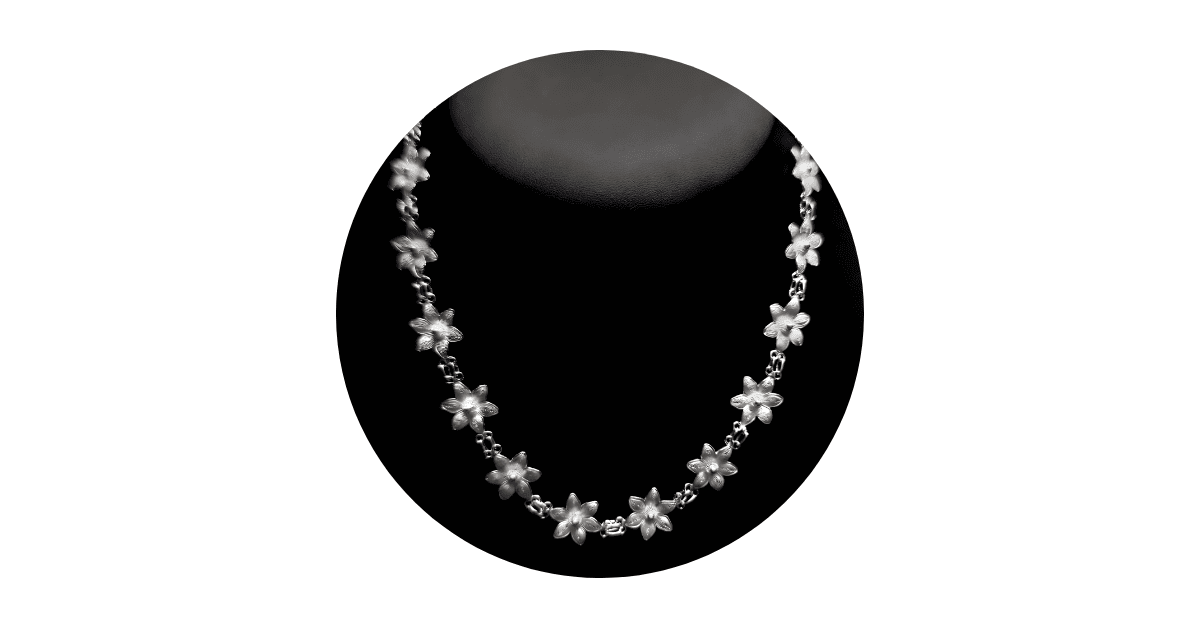
Putting together an outfit is one thing, but knowing how to pick the right necklace brings everything together. Silver filigree acts as a special accessory because its delicate wirework already brings a lot of personality to the table. When you wear a piece with this much detail, you don’t need much else to stand out.
For everyday wear, keep the rest of your outfit simple. A delicate silver filigree pendant works perfectly with a plain white t-shirt, a crisp button-down shirt, or a soft sweater. The goal here is to let the lacy, twisted wire patterns catch the light against solid colors. If you decide to go with a longer, bolder necklace, avoid busy prints that might compete with the filigree design. A solid black dress or a neutral-toned top provides the best backdrop for these complex patterns to pop.
When you have a formal event, you can go in the opposite direction. Pair a substantial, multi-layered silver filigree necklace with an evening gown or a formal blouse. Because filigree often has a vintage feel, it works well with classic cuts and structured fabrics. Mix silver filigree with different textures, such as velvet or silk, to create a beautiful contrast that highlights the silver’s metallic shine. If you want to keep the focus on your neck, opt for smaller, simpler earrings, or skip them entirely.
Also, try layering your silver filigree necklaces with other silver chains of different lengths and weights. This adds depth to your look and makes the filigree piece feel less traditional. Just ensure that the chains have a similar silver tone so the overall effect stays clean and intentional.
Choosing the Perfect Silver Filigree Bracelet for a Gift
Bracelets are truly the top choice for a gift when your friend or loved one has a passion for silver filigree. However, you should not just grab the first piece you see; several specific factors should guide your decision to ensure the bracelet feels personal and well-chosen.
First, look at the size and the weight of the design. Some filigree bracelets are incredibly fine and light, feeling almost like lace against the wrist. Others are thicker and more rigid, incorporating frames to hold the delicate wirework in place. Consider the recipient’s daily activities, as a very delicate bracelet might be better for occasional wear, while a sturdier, framed design stands up better to everyday use.
Think about their personal style; someone who prefers subtle accessories will likely love a slender, minimalist filigree cuff, while someone who likes a statement piece might appreciate a wider, more complex, and heavier bracelet.
Second, check the quality of the finish and the closure. Authentic silver filigree work has precise soldering, where each tiny wire meets the next smoothly, with no visible gaps or rough edges. A well-made clasp is essential for daily wear, so test it to ensure it holds securely yet is easy to operate.
What is the Best Quality for Your Silver Filigree Jewelry?
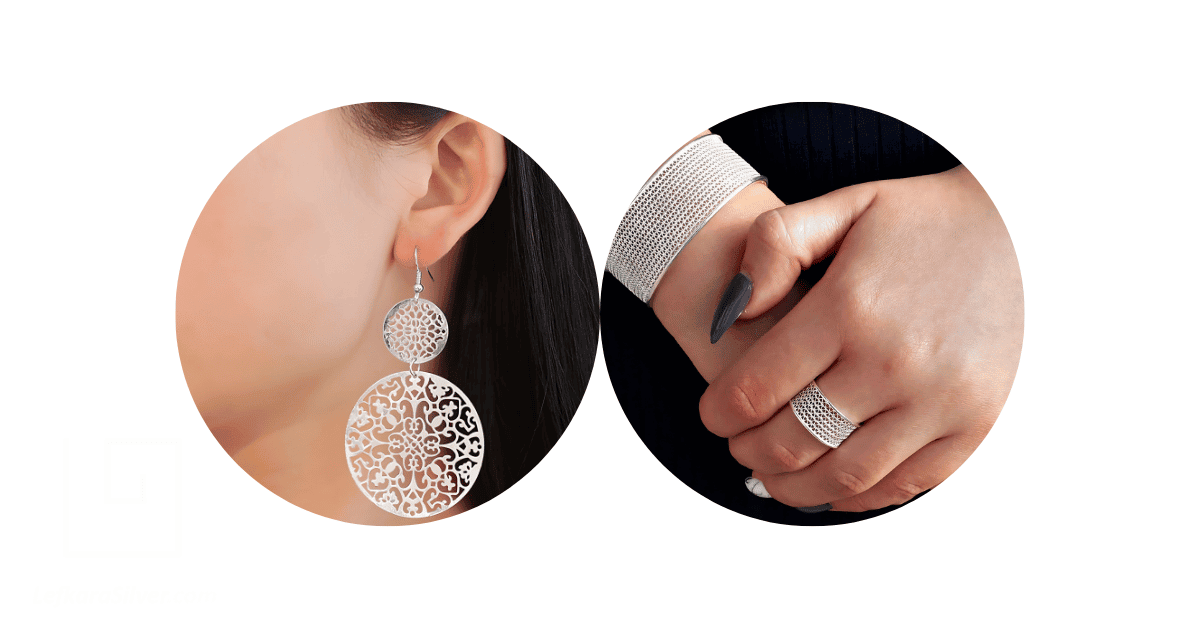
Not all silver is created equal. When you shop for jewelry, you will encounter various grades, each with unique characteristics that change how the piece looks, feels, and holds up over time. Pure silver, often labeled as 999 or fine silver, is soft and malleable. While it has a beautiful, bright white tone, it is often too pliable to stand alone for complex designs that need to hold a specific shape.
Sterling silver, marked as 925, is the industry standard. It is an alloy composed of 92.5% silver and 7.5% of another metal, usually copper. This mixture provides the strength needed for everyday wear. You might also see terms like coin silver or nickel silver, but these are either lower in silver content or do not contain silver at all.
For filigree work, the ideal choice is fine silver (999). Because filigree relies on twisting, curling, and interweaving extremely thin wires, the metal must be soft enough to be manipulated into complex patterns without snapping. Fine silver allows for the precise, delicate work that defines high-quality filigree. It also offers a brighter, whiter finish that does not oxidize as quickly as alloyed silver.
When fine silver is not feasible for a specific piece, sterling silver (925) is your next-best option. While it is slightly stiffer and harder to weave than fine silver, it is far more durable for structural components such as clasps, earring posts, and thicker frames. Many makers use a combination: fine silver for the intricate, decorative wirework and sterling silver for the parts of the jewelry that require structural integrity.
How to Spot a Real Silver Filigree from Fakes?
It is common to find mass-produced pieces that look like handmade filigree, but they lack the genuine quality of the real thing. While a fake might look acceptable from a distance, checking a few key details will help you tell the difference before you spend your money.
First, check for a stamp. Genuine silver is almost always marked with a hallmark like “925” or “Sterling” in an inconspicuous spot, such as the back of a pendant or the clasp of a bracelet. If the metal is completely unmarked, be cautious. Keep in mind that a stamp is not a guarantee, so look deeper.
Examine the wirework closely. True handcrafted filigree is made by manually twisting, bending, and soldering fine wires. Because human hands are at work, you should see slight, charming variations. If the pattern looks perfectly identical down to the millimeter across the entire piece, it was likely pressed out by a machine. Real filigree has depth, texture, and subtle asymmetry that gives it character.
Feel the weight. Genuine silver has a certain heft to it. If the piece feels as light as plastic or cheap hollow metal, it is likely a plated base metal. You can also use a simple magnet test; real silver is not magnetic. If your piece sticks to a magnet, it contains base metals and is not pure silver.
Look at the construction at the solder points. In authentic work, the wires are soldered at the connection points with great precision. On fakes, you may see globs of excess solder or, conversely, gaps where the wires do not actually meet. High-quality filigree work will look clean and deliberate under a magnifying glass, whereas machine-made fakes often look like a single, flat, stamped sheet.
Handmade Silver Filigree vs Machine Made
When you hold a piece of silver filigree, you are looking at metal turned into lace. Whether it is formed by a machine or a human hand, the visual effect of those delicate, twisted wires is undeniable. Both handmade and machine-made versions are technically filigree, but the difference in how they reach your jewelry box is huge.
Handmade filigree starts with silver wire that is drawn, twisted, and curled into patterns by an artisan. It is a slow, methodical process where every single loop, bead, and junction is placed with intention and soldered by heat. Because this requires such a high level of skill and hours of focused labor, handmade filigree is inherently more authentic and carries a higher price tag. You are paying for the time, the tradition, and the human touch that no machine can truly replicate.
Machine-made filigree, on the other hand, is produced in mass quantities. These pieces often use molds or stamping processes to create the look of filigree quickly and consistently. While they can be beautiful and more affordable, they often lack the depth, texture, and slight imperfections that prove a person actually spent days working on the piece. Machine-made versions are uniform, whereas handmade filigree possesses a character all its own.
| Feature | Handmade Silver Filigree | Machine-Made Filigree |
|---|---|---|
| Production Time | Takes days or weeks per piece | Takes minutes |
| Precision | Naturally variable, human-led | Identical, uniform |
| Cost | Higher due to labor | Lower, mass-produced |
| Detail | Deep, layered, tactile | Often flatter, simpler |
| Authenticity | High, preserves heritage | Lower, consumer-focused |
If you are choosing between the two, consumer data shows a clear split in motivation. Budget-conscious buyers often reach for machine-made options for daily, casual wear. However, for those looking for meaningful, heirloom-quality pieces that tell a story, handmade silver filigree is the overwhelming preference.
Investing in Silver Filigree – Final Thoughts

We have looked at a lot of ground in this guide, from current trends shaping 2026 and how to find reliable stores, to understanding why handmade work holds more value. We looked into styling tips for necklaces, the perfect ring for a wedding, and how to spot a fake so you buy with confidence. We also broke down the real differences between mass production and the master-level craft of handmade pieces.
Here are some key takeaways:
- Handmade filigree can take days to weave and solder, making it a slow-fashion choice.
- The finest filigree uses silver wires as thin as a human hair, twisted and curled with extreme precision.
- Sterling silver filigree offers a budget-friendly way to own fine jewelry without sacrificing style.
- Handmade pieces often feature subtle, intentional variations, while machine-made ones are perfectly identical.
- Silver filigree should be kept in a cool, dry place to prevent tarnishing and damage to delicate wirework.
- Many traditional filigree techniques are considered endangered cultural heritage skills that require preservation.
As of October 2026, investing in quality silver filigree remains a smart way to add lasting beauty to your collection. Whether you prefer simple, everyday earrings or a bold, handcrafted statement piece, focus on craftsmanship to ensure your investment stays valuable for years to come.
Follow our website, LefkaraSilver.com, to stay informed about new jewelry offers, news, and buying guides.
Silver Filigree FAQs
Here are answers to some frequently asked questions about silver filigree:
Which Place is Famous for Silver Filigree?
Cuttack, located in the Indian state of Odisha, is known as the Silver City of India for its centuries-old tradition of tarakasi work. This specific region maintains a dedicated community of artisans who have kept this complex craft alive for over 500 years.
Why is Filigree so Expensive?
The high cost stems from the intense amount of skilled human labor required to twist, shape, and solder fine metal threads by hand. A single complex piece can take days of focused work to complete, rather than just a few minutes of machine time. You are paying for the hundreds of precise manual adjustments needed to create the finished design.
Is Filigree Jewelry Vintage or Modern?
Filigree is both a timeless art form with roots tracing back to 3,000 BC and a popular choice for modern, everyday jewelry. While many collectors prize vintage pieces from the 17th to 19th centuries, contemporary designers often use the same ancient techniques to create fresh, wearable styles. It remains a relevant style that bridges the gap between historical craft and current fashion trends