The ABCs of Moissanite Rings
First discovered in a meteor crater, moissanite has gone from a rare cosmic mineral to the lab-grown favorite of many jewelry lovers. With its sparkle, eco-friendly nature, and affordability, it’s giving diamonds a serious run for their money.
This guide contains the latest information as of October 2026, covering everything you need to know about Moissanite rings. We’ll explore the hottest trends of October 2026, top sustainable brands, and break down the most popular moissanite ring shapes. Wondering what the best moissanite shape for engagement rings is, or where to find top-tier retail stores for wedding rings? We’ve got that covered as well.
We’ll also explain how moissanites are graded, the cool colors available for men’s rings, and the key factors that influence their price. And of course, we’ll compare moissanite to diamond rings, the pros and cons, and just how durable these rings really are.
Moissanite Rings Trends of October 2026
First discovered by Nobel Prize-winning scientist Henri Moissan in 1893, Moissanite was found in a meteor crater in Arizona. Because natural moissanite is incredibly rare, the stones used in jewelry today are exclusively lab-grown, which makes them an ethical and sustainable choice.
Here are some of the most interesting facts and trends shaping the moissanite ring market in 2026:
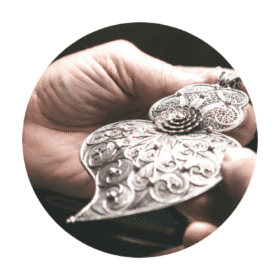
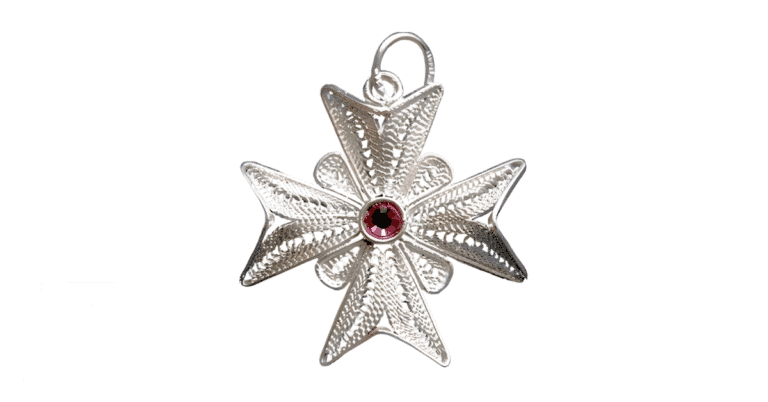
- There’s a growing obsession with old-world romance. Vintage-inspired designs with details like milgrain edges and Filigree patterns are wildly popular. Antique cuts, such as Old European and Old Mine cuts, are also on the rise for those who want a unique, hand-crafted feel that modern technology can’t replicate.
- Thanks to celebrities like Zendaya, setting elongated stones like ovals, emeralds, and marquise cuts horizontally on the band is the new cool. This east-west orientation offers a fresh, contemporary twist on classic shapes.
- While colorless moissanite is still a favorite, 2026 is all about expressing individuality through color. Stones in shades of champagne, mint green, sky blue, and even black are becoming go-to choices for couples who want a ring that tells a personal story.
- Moissanite has a higher refractive index (2.65-2.69) than diamonds (2.42), which means it displays more “fire” or rainbow-like flashes. It’s a disco ball in the best way possible. This sparkle comes at a fraction of the cost—a moissanite stone can be up to 90% cheaper than a diamond of similar size and quality.
- While round cuts still dominate, the marquise shape is having a major renaissance. Its unique, elongated silhouette is not only flattering but also incredibly versatile. It currently makes up 5% of all engagement rings, a figure that has been climbing since 2015.
- Moissanite scores a 9.25 on the Mohs scale of hardness, making it the second-hardest gemstone used in jewelry, right after diamonds, which score a 10. This means it’s highly resistant to scratches and chipping, perfect for a “forever” ring.
8 Top Sustainable Brands for Moissanite Rings
When shopping for a moissanite ring, it is crucial to select one made from the finest materials and sourced from the best and most reputable jewelry brands. These brands offer exceptional designs and prioritize ethical sourcing and sustainable practices.
1. Charles & Colvard
As the original creators of gem-quality moissanite, Charles & Colvard is a trailblazer in the industry. They set the standard with their premium “Forever One” moissanite, which is available in two grades: colorless (D-E-F) and near-colorless (G-H-I). Their stones are known for their exceptional brilliance and fire, making them a top choice for anyone seeking high-quality, ethically sourced jewelry.
The brand offers a massive collection of moissanite jewelry, from solitaire engagement rings to vintage-inspired designs. Every Forever One moissanite comes with a limited lifetime warranty, which ensures that your stone will maintain its brilliance and fire for life. Prices are competitive, offering luxury and durability.
2. Brilliant Earth
Brilliant Earth has built a strong reputation for its commitment to ethical sourcing and sustainable practices. It’s a go-to for the conscious consumer. The brand offers a stunning collection of moissanite rings, including bridal sets that simplify wedding planning. Their focus is on conflict-free, lab-created gems paired with recycled precious metals.
Nearly 350 different moissanite ring styles are available, from solitaires to halo and pavé designs. Brilliant Earth is committed to being as eco-friendly as possible, using recycled packaging and clean energy, and donating to causes like climate action through the Brilliant Earth Foundation. Prices for their moissanite rings typically start at around $1,700.
3. DEDEJILL
DEDEJILL has quickly made a name for itself by offering an innovative and luxurious collection of moissanite diamond rings that blend elegance with affordability. The brand is committed to quality and craftsmanship, positioning itself as a top choice for those seeking beautiful yet budget-friendly options.
Their collection features a stunning range of rings that rival traditional diamonds in brilliance, all while being ethically sourced and sustainable. DEDEJILL stands out by providing cheap moissanite engagement rings without sacrificing style or quality.
4. Gema&Co
For those who value exceptional customer service and customization, Gema&Co is a standout choice. Their rings feature colorless Charles & Colvard Forever One Moissanite or their own lab-grown Resplendent Moissanites, paired with recycled precious metals like reclaimed gold and platinum.
What sets Gema&Co apart is its dedication to the customer experience. They offer a one-month window for returns, a lifetime warranty, and insured delivery on all their made-to-order pieces. If you have a specific vision in mind, they also offer services to source a particular stone or create a custom size, ensuring you get the exact ring you’ve been dreaming of.
5. Kristin Coffin
If you’re in the market for a ring with vintage, heirloom, and truly unique vibes, look no further than Kristin Coffin. This US-based small business focuses on ethically sourced moissanite rings in stunning colors, from white to gray and aqua-teal.
The moissanite center stones are often set alongside conflict-free diamond halos or pavé bands on a recycled metal band. While diamond versions of these rings could cost over $10,000, Kristin Coffin’s moissanite creations start at a fraction of that price. Each piece is made-to-order.
6. MiaDonna
As a certified B Corp, MiaDonna is a brand you can feel good about supporting. They are dedicated to bridging luxury with ethical practices, offering a collection of 20 moissanite ring styles that are both dazzling and different from mainstream designs. Their rings feature colorless lab-grown moissanite and recycled precious metals.
MiaDonna’s commitment to sustainability is impressive. Every purchase includes free shipping and resizing, easy 30-day returns, and helps plant a tree to offset carbon emissions. Furthermore, 10% of the company’s net profits are donated to communities affected by the diamond and gold mining industries, allowing your investment to make a positive impact across the globe.
7. Diamond Nexus
Diamond Nexus is an excellent option for shoppers looking for stunning rings that won’t break the bank. With some moissanite rings starting at under $500, the brand offers a wide variety of traditional and heirloom-inspired styles.
One of the biggest perks of shopping with Diamond Nexus is its Lifetime Stone Guarantee. They promise that should any issue arise with your white or colored moissanite gemstones, they will replace them for free, forever. This commitment provides incredible peace of mind and makes their already affordable rings an even more compelling value.
8. Valerie Madison
Valerie Madison offers high-quality, handcrafted moissanite rings with exceptional attention to detail. This fine jewelry store is renowned for its ethical practices and thoughtful, unique designs that cater to a range of styles, from minimalist to dramatic.
The brand provides a versatile selection, including solitaire, halo, three-stone, and vintage-inspired rings. For those with a specific vision, Valerie Madison specializes in custom moissanite rings made in-house, combining your ideas with their expert craftsmanship. This allows you to personalize everything from the diamond shape and setting style to the metal and unique details like a hidden halo or custom engraving.
Different Moisanites Ring Shapes
Moissanite’s versatility allows it to be cut into a wide variety of shapes, each offering a unique aesthetic and level of sparkle. Here are some of the different shapes you can pick from:
Emerald Cut Moissanite Rings
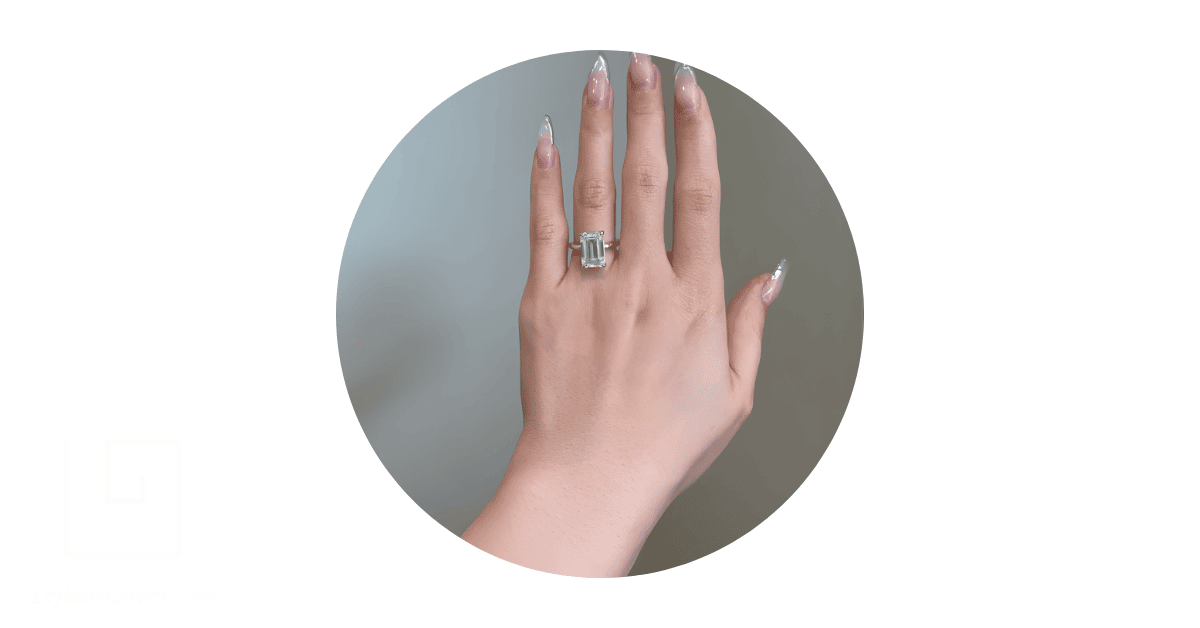
The emerald cut is a timeless vintage shape celebrated for its sophisticated elegance and subtle, mirror-like shine. Its rectangular form features long, step-cut facets that create a captivating “hall of mirrors” effect, emphasizing the stone’s clarity and depth rather than fiery sparkle. This cut emerged in the early 20th century and is perfect for those inspired by the Art Deco era.
The emerald cut’s wide, clear “table” is its defining feature, making it the best style for exhibiting a gemstone’s natural clarity. With 46 facets, it shines rather than sparkles, exuding a luxurious and extravagant vibe. Because it highlights clarity so well, it’s an excellent choice for high-quality moissanite.
Marquise Moissanite Rings
The marquise cut is known for its elegant, elongated silhouette that makes fingers appear longer and more graceful. This fancy shape dates back to the 1700s when King Louis XV of France commissioned a diamond inspired by the shape of his mistress’s lips. The result was a boat-shaped design with 57 facets that creates a dramatic and regal look.
Due to its elongated shape, the marquise cut can also create the illusion of a larger stone, maximizing its visual impact for its carat weight. It’s an incredibly versatile cut that looks stunning in both modern and vintage settings, whether oriented north-south or east-west. Its popularity is on the rise, making it a trendy yet timeless choice.
Other Cuts
The most popular and classic moissanite shape is the Brilliant Round cut. Developed in 1919, this cut features 58 facets and is designed for maximum light reflection, making it the best cut for achieving brilliance, fire, and sparkle. Its timeless, versatile style has made it the top choice for engagement rings for over a century. A similar cut, the Hearts and Arrows, is a super-ideal cut with precisely aligned facets that create a pattern of hearts and arrows when viewed through a special scope.
The Oval cut is another popular choice, offering a modern yet timeless style. With 70 facets, it boasts sensational sparkle and, like the marquise, its elongated shape creates a flattering appearance on the finger and can give the illusion of a larger stone. The Cushion cut, a square shape with rounded corners, blends vintage charm with modern brilliance. Its 82 larger facets are designed to split light into rainbow colors, creating a crushed ice effect.
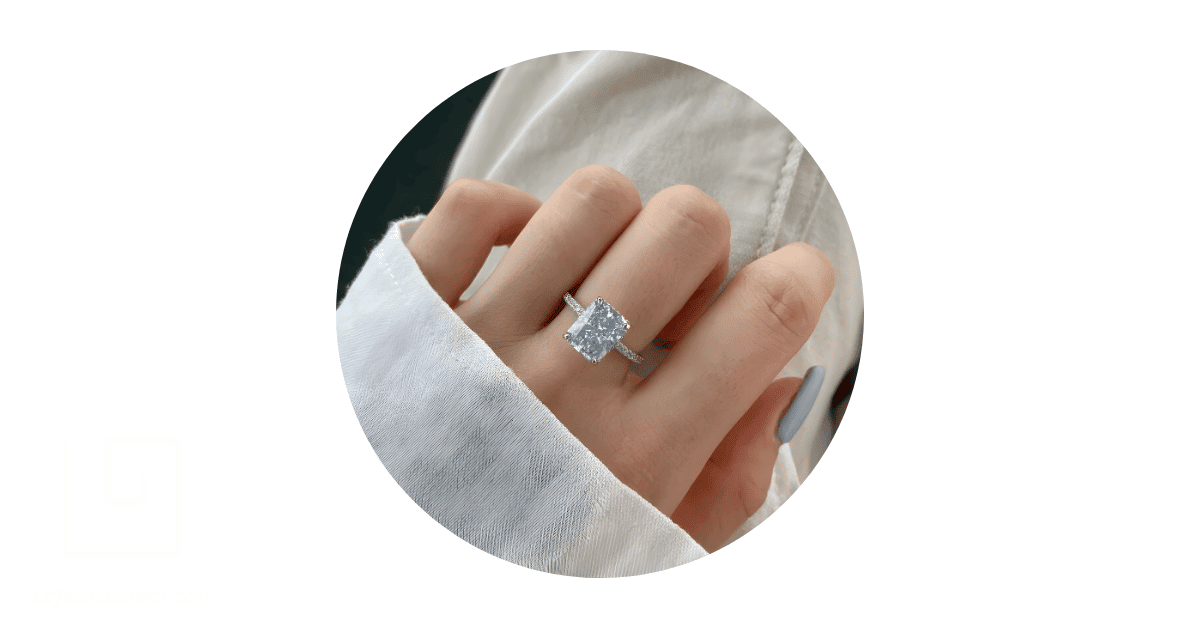
For those who prefer a square shape, the Princess cut is the second most popular choice after the round brilliant. It features 58 facets and a sharp, geometric look that disperses light beautifully from all four corners. The Radiant cut, with its 54 facets, combines the rectangular emerald cut with the brilliance of a round cut, offering a vibrant and eye-catching shine. Finally, the Pear cut, also known as the teardrop, is a unique and elegant shape with 72 facets that combines the best of the round and marquise cuts for an intense glow.
What is the Best Moissanite Shape for Engagement Rings?
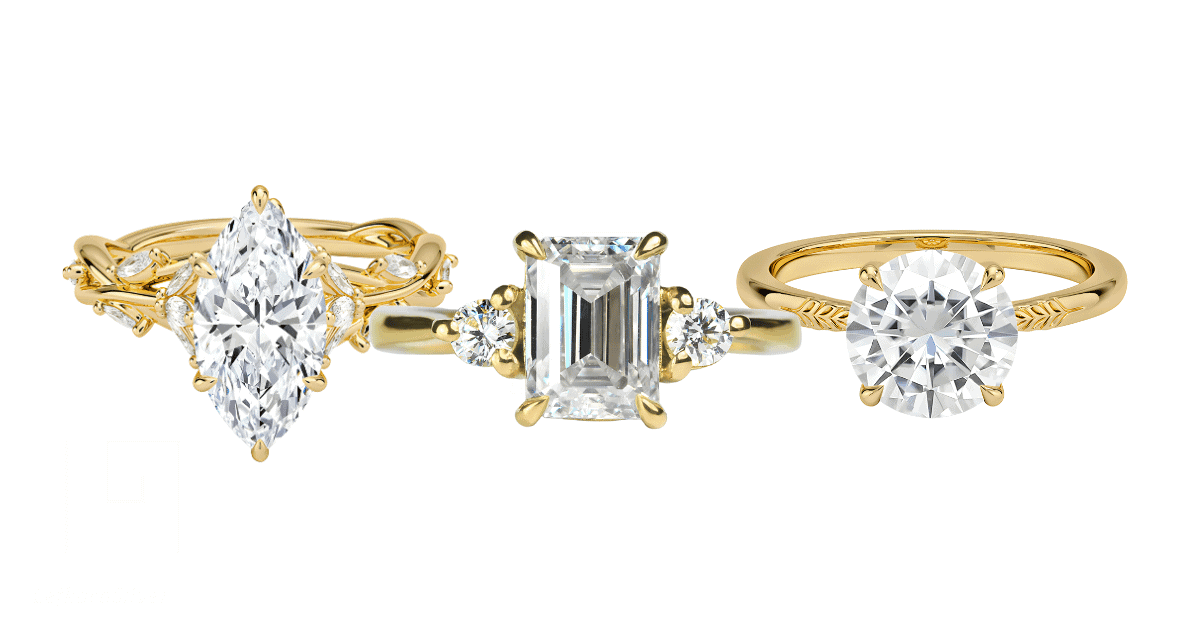
While the best shape for any ring comes down to personal style, the Brilliant Round cut is consistently the most popular and sought-after shape for moissanite engagement rings. Its timeless appeal and unmatched sparkle have made it the reigning champion in the bridal space for over a hundred years. The classic, symmetrical design is versatile, looking just as stunning in a simple solitaire setting as in an elaborate halo or a vintage-inspired design.
The reason for its popularity is purely scientific. The Brilliant Round cut was meticulously designed by Marcel Tolkowsky in 1919 with 58 precisely angled facets to achieve maximum light reflection. This engineering ensures that light entering the stone is reflected through the top, resulting in the highest possible levels of brilliance and fire. No other cut can consistently deliver that iconic sparkle, which is why it remains the gold standard for engagement rings.
This classic shape is not just a safe bet; it’s a style that transcends trends, guaranteeing that the ring will look just as beautiful decades from now as it does today. For couples who want a ring that embodies classic romance and sparkles, the Brilliant Round cut is the best choice.
The Best Retail Stores for Moissanite Wedding Rings
More and more couples are swiping right on moissanite for their wedding rings, and it’s easy to see why. Not only does it sparkle beautifully, but it also comes with impressive durability and a price that won’t leave you penniless until your first anniversary. If you’re ready to join the moissanite movement, here are some top-tier retailers where you can find superior-quality rings.
- Charles & Colvard: As the original creators of gem-quality moissanite, they’ve set the industry standard, and they offer premium quality.
- Brilliant Earth: For the ethically-minded couple, Brilliant Earth is a go-to. They are well-known for their commitment to conflict-free and sustainable practices. They offer a stunning collection of moissanite rings, including over 120 bridal sets.
- Moissanite Co.: This online retailer offers a massive selection of styles.
- Valerie Madison: If you’re looking for something with an artisanal touch, this Seattle-based jeweler is a fantastic choice. Valerie Madison offers unique styles from classic solitaires to bold, asymmetrical designs that truly stand out.
How Are Moissanites Graded?
When you hear about moissanite grades, it’s usually about understanding the stone’s quality, much as with the diamond grading system. The grading is based on the universally recognized 4 C’s: Cut, Color, Clarity, and Carat, but with a few moissanite-specific twists. This system helps you know exactly what you’re getting in terms of sparkle and quality.
Every moissanite gem is carefully examined for these characteristics. Because nearly all moissanite is lab-created, the quality is often more consistent than that of mined gemstones. This means you can typically expect a stone with high clarity and color. For instance, most moissanite has a clarity grade that aligns with the Very Slightly Included (VS) category on the GIA scale, a level of clarity that less than 10% of faceted diamonds achieve.
- Cut: This is arguably the most important “C” for moissanite because a great cut maximizes its incredible fire. Moissanite is hand-faceted by master gem cutters to enhance its brilliance.
- Color: Most moissanite today is graded as either “colorless,” equivalent to D-E-F on the diamond scale, or “near-colorless” (G-H-I). While older, moissanite had noticeable yellow or green tints, modern technology allows labs to create exceptionally white stones.
- Clarity: Since moissanite is grown in a controlled lab environment, it typically has fewer inclusions (internal flaws) than natural diamonds. Most stones are “eye-clean,” meaning you can’t see any imperfections without magnification. Under 10x magnification, a grader might see tiny, needle-like inclusions, which are a natural result of the crystal’s growth process.
- Carat Weight: Moissanite is about 15% lighter than a diamond. Because of this, it’s usually sold by its size in millimeters (mm) rather than its carat weight. To make things easier, retailers often list the “diamond equivalent weight” so you can get a better sense of its size. For example, a 6.5mm round moissanite is visually equivalent to a 1-carat diamond.
What are the Colors of Moissanite Rings for Men?
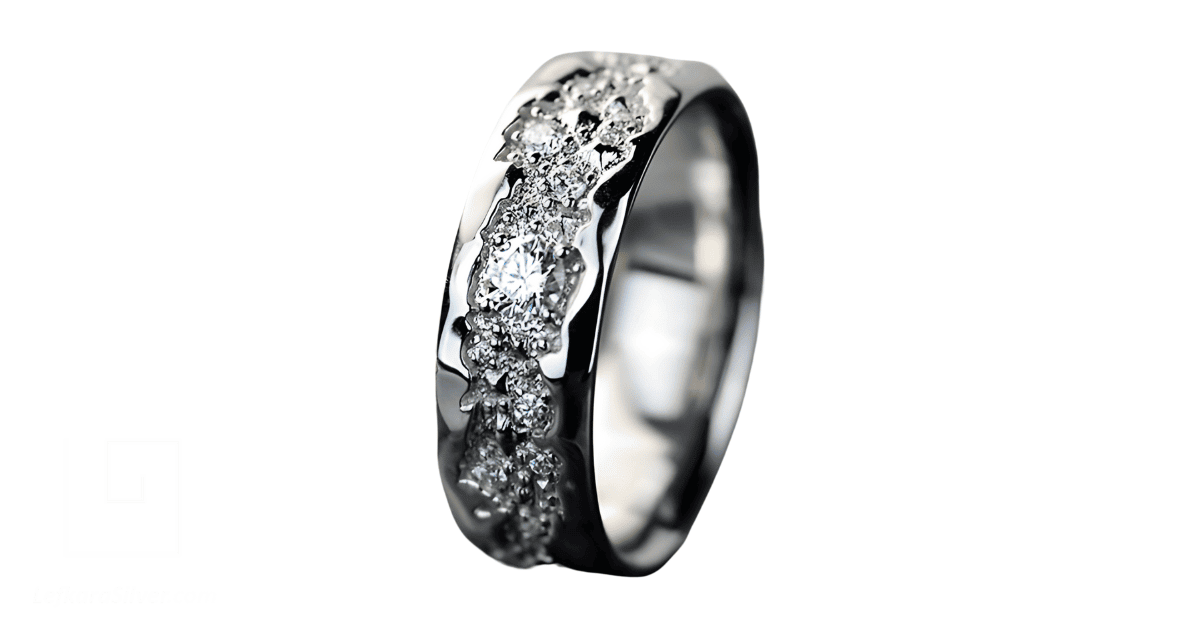
While the classic, icy-white look is a favorite, moissanite also comes in a surprisingly cool color palette. Thanks to the lab creation, you can find them in shades ranging from subtle champagne and gray to blues, greens, yellows, and even a bold, dramatic black. This variety opens up a world of possibilities for personalization, especially for men’s jewelry.
For men’s moissanite rings, the color choice often leans toward sophisticated and modern aesthetics. The classic colorless stone remains a top contender, with a timeless and versatile look that pairs well with any metal, from platinum to yellow gold. However, many are opting for darker, more distinctive hues to make a personal statement.
Gray moissanite is a particularly popular choice for men, providing a sleek, contemporary, and almost smoky appearance. Black moissanite offers a powerful and edgy alternative that stands out for its bold, opaque look. For those who might want a hint of color without being too loud, champagne, dark green, or deep blue stones provide a touch of unique character while maintaining a sense of classic masculinity.
Factors that Influence the Price of Moissanite Rings
Natural moissanite is incredibly rare and found in crystals too small for jewelry; the moissanite you see today is exclusively created in controlled laboratory environments. This efficient, mining-free process is a key reason for its attractive price.
When it comes to cost, moissanite offers jaw-dropping value. On average, a moissanite gemstone is about one-tenth the cost of a mined diamond of equal size and quality. For example, while a one-carat diamond can easily cost between $4,000 and $5,000, a one-carat moissanite typically costs no more than $600.
Like diamonds, the price of a moissanite ring is determined by a familiar set of factors, often called the “4 Cs.”
- Carat Weight: This is a bit different for moissanite. Because moissanite is about 15% lighter than a diamond, it’s typically sold by its size in millimeters (mm) rather than by carat weight.
- Color: Moissanite is graded on a color scale similar to the GIA’s scale for diamonds.
- Clarity: Clarity refers to the presence of internal flaws (inclusions) or surface imperfections (blemishes).
- Cut: A well-cut stone with precise facets and proportions will reflect light beautifully, maximizing its signature fire and brilliance.
Moissanite Rings VS Diamond – What’s the Difference?
A diamond ring features a center stone made of pure carbon, which has formed deep within the Earth over billions of years or has been replicated in a lab. It’s the traditional and most popular choice for engagement rings. A moissanite ring, on the other hand, features a lab-created gemstone made of silicon carbide. It’s a diamond alternative prized for its incredible brilliance, durability, and ethical origins.
At a glance, these two gemstones can look remarkably similar to the untrained eye. Both are typically clear stones that sparkle intensely. Their durability is also comparable for everyday wear. Diamonds are famous for being the hardest known mineral, scoring a perfect 10 on the Mohs scale of hardness. Moissanite comes in a very close second with an impressive rating of 9.25, making it harder than any other gemstone besides a diamond and highly resistant to scratching and chipping.
Both gems also dazzle with brilliance (the return of white light) and fire (the flashes of rainbow color). They can be set in any metal—from platinum to yellow or rose gold—and can be cut into all the same popular shapes, like round, oval, princess, and cushion. This versatility means you can achieve a classic or modern look with either stone. However, despite these similarities, they are fundamentally different gems with unique properties.
| Feature | Moissanite Ring | Diamond Ring |
|---|---|---|
| Composition | Silicon Carbide (SiC) | Pure Carbon (C) |
| Brilliance & Fire | Higher refractive index (2.65-2.69), resulting in more intense rainbow-colored fire, often called a “disco ball” effect. | Refractive index of 2.42, producing a balanced sparkle with both white light (brilliance) and colored light (fire). |
| Hardness | 9.25 on the Mohs scale. Extremely durable and suitable for everyday wear. | 10 on the Mohs scale. The hardest known mineral on Earth. |
| Sourcing | Lab-created, making it an ethical and environmentally friendly choice with a small carbon footprint. | Can be naturally mined (with potential environmental and ethical issues) or lab-grown. |
| Price | Significantly more affordable. Costs can be up to 90% less than a diamond of a similar size and quality. | Much more expensive, with prices determined by the 4 Cs (Cut, Color, Clarity, Carat). |
| Color | Modern moissanite is colorless or near-colorless, but larger or older stones can sometimes show a slight yellow or greenish tint. | Graded from D (colorless) to Z (light yellow/brown). Colorless diamonds are the rarest and most valuable. |
| Clarity | Lab-grown process results in very high clarity with minimal, often microscopic, inclusions. | Natural diamonds often have unique inclusions and blemishes. Finding an “eye-clean” natural diamond can be challenging and costly. |
Moissanite Rings Pros and Cons
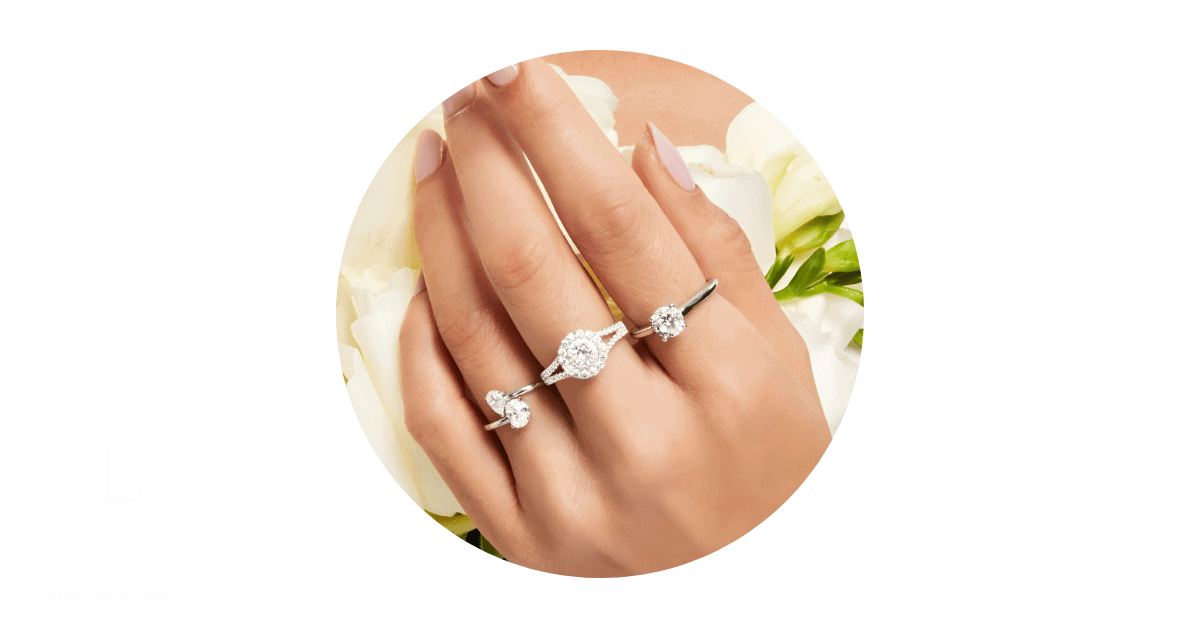
Like any choice you make for a piece of jewelry meant to last a lifetime, moissanite rings come with their own set of fantastic benefits and a few potential drawbacks to consider.
Pros
One of the most celebrated pros of moissanite is its extraordinary brilliance. Thanks to a high refractive index, moissanite has more “fire” than a diamond, meaning it reflects more rainbow-colored flashes of light. This sparkle is a major draw for those who want their ring to be exceptionally eye-catching. Another huge advantage is the price. Moissanite is more affordable than a diamond.
It is an incredibly durable gemstone. Scoring a 9.25 on the Mohs hardness scale, it is highly resistant to scratches and damage, perfectly suited for the daily wear an engagement ring endures. Because all moissanite is lab-created, it is also a guaranteed ethical and sustainable choice. This offers peace of mind, as there are no concerns about conflict mining or environmental damage, giving it a significantly smaller carbon footprint than mined diamonds. Finally, its resistance to dirt and oils means it tends to stay cleaner and more brilliant for longer periods between cleanings.
Cons
On the other hand, the very thing that makes moissanite so brilliant can also be a con for some. The fiery, rainbow sparkle, often described as a “disco ball” effect, is more pronounced than a diamond’s sparkle and can be a tell-tale sign that the stone is not a diamond. Some people prefer the more subtle, balanced mix of white and colored light that a diamond provides. For many, a diamond holds a deep-seated tradition and prestige that moissanite, as a relative newcomer, has yet to achieve.
Another consideration is that moissanite is not a diamond; it is a different gemstone with a different chemical makeup. While it is a beautiful stone in its own right, it doesn’t carry the same financial or heirloom value as a diamond. Some moissanites, particularly in larger sizes or from older production methods, can also exhibit a slight yellow or greenish tint in certain lighting conditions, which can be undesirable for those seeking a purely colorless stone. Lastly, because moissanites are created with such high clarity in a lab, some feel they can look “too perfect” and lack the unique, natural imperfections that give a diamond its character.
The Durability of Moissanite Rings
When you’re investing in a piece of jewelry that you plan to wear forever, one of the most important things to look for is durability. After all, this isn’t just a ring; it’s a symbol you’ll wear through all of life’s adventures, big and small. You need a stone that can keep up, and this is where moissanite truly shines.
Gemstone hardness is measured on the Mohs scale, and diamond, the hardest known mineral, famously scores a perfect 10. So, how does moissanite stack up? It comes in at a remarkable 9.25 on the Mohs scale, making it the second-hardest gemstone used in jewelry. This means it’s incredibly tough and resistant to scratches from everyday encounters. Unless you’re storing it right next to a diamond, it’s highly unlikely to get scratched.
But durability isn’t just about avoiding scratches; it’s also about resisting chips and breaks. Moissanite has an edge here because it doesn’t have cleavage planes. This gives it a structural advantage against certain impacts. Furthermore, moissanite is remarkably resistant to heat. With a melting point of 2730°C, it can easily withstand the heat from a jeweler’s torch during repairs or resizing, a test that not all gems can pass.
A Final Reflection on Moissanite Rings
We’ve looked into everything you should know about moissanite, from moissanite ring trends and top brands to the stunning variety of shapes and grades available for engagement and wedding rings. We’ve compared moissanite rings vs. diamonds, weighed their pros and cons, and confirmed their impressive durability.
Here are a few of the most fascinating takeaways:
- Moissanite was first discovered in 1893 by Nobel Prize-winning scientist Dr. Henri Moissan inside a meteorite crater. The gem was quite literally born from the stars.
- Moissanite has a higher refractive index than a diamond (2.65 vs 2.42), which means it bends light more effectively.
- Moissanite is not a fake diamond or a cheap imitation. It’s a completely distinct gemstone with its own unique chemical composition: silicon carbide (diamonds are pure carbon).
- A moissanite gemstone costs only a fraction of what a diamond of a similar size and quality would. You can often get a moissanite for about 10% of the cost of a diamond, allowing for a larger stone without the hefty price.
- Because moissanite’s chemical makeup includes silicon, it’s less likely to attract dirt and grease compared to a diamond. This means it stays sparkling for longer between cleanings.
- Aince virtually all moissanite on the market is lab-grown, it has a minimal environmental impact and is a conflict-free, sustainable alternative to mined diamonds.
This content was last updated in October 2026.
Ready to find the perfect moissanite ring that tells your unique story? Follow our website, LefkaraSilver.com, to stay informed about new jewelry offers, news, and buying guides!
Moissanite Rings FAQs
Here are answers to some frequently asked questions about moissanite rings in 2026:
Are Moissanite Rings Good?
Absolutely, moissanite rings are an excellent choice for modern jewelry. They are incredibly durable. Moissanite has a higher refractive index than diamond. Plus, since it’s lab-created, it’s a conflict-free and eco-friendly option that costs about 90% less than a diamond of comparable size.
Is Moissanite a Fake Diamond?
Not at all. Moissanite is a real gemstone with its own unique identity, not a “fake” diamond. While diamonds are made of pure carbon, moissanite is composed of silicon carbide, a mineral first discovered in a meteor crater in 1893. Because natural moissanite is incredibly rare, the stones used in jewelry are lab-created, ensuring their quality and ethical sourcing. A key scientific difference is its double refraction, which gives it that signature rainbow sparkle, unlike a diamond’s single refraction.
Is a Moissanite Ring Worth Anything?
A moissanite ring offers incredible value by providing a stunning, durable gemstone for a fraction of the price of a diamond. For instance, a 1-carat moissanite might cost around $500-$600, while a 1-carat diamond of similar visual quality could easily cost $4,000 or more. While it doesn’t carry the same resale value as a diamond, its worth lies in its affordability and longevity. You get a brilliant, heirloom-quality ring without the massive financial investment.
What is the Downside of Moissanite?
The primary downside of moissanite for some is its signature sparkle, which is a fiery, rainbow-like effect. With a dispersion value more than double that of a diamond, this “disco ball” effect can be a clear indicator that it isn’t a diamond. While premium moissanite is now colorless, some lower-quality stones can still show slight yellow or greenish tints, especially under certain lighting conditions. Finally, because it is lab-grown and not rare, it lacks the traditional prestige and high resale value associated with diamonds, which 86% of couples still chose for their engagement ring in 2021.
Will Moissanite Fade or Get Cloudy?
No, moissanite will not fade, change color, or become permanently cloudy. If a moissanite ring appears cloudy, it’s simply due to a buildup of oils and dirt on its surface, which can be easily cleaned to restore its original, brilliant sparkle. Its composition even helps it resist grime better than a diamond.
How Long Will a Moissanite Ring Last?
A moissanite ring will last a lifetime and can be passed down through generations. In fact, moissanite is tougher than a diamond in some ways, as it lacks a cleavage plane, making it less prone to breaking from impact. It’s also remarkably heat-resistant, capable of withstanding temperatures up to 2,000°F, making it able to survive events like a house fire.
Can I Shower With Moissanite Jewelry?
Yes, you can shower with your moissanite jewelry, as the stone itself is incredibly resilient and chemically stable. However, it’s generally a good idea to remove your ring before showering, as the buildup from shampoos, conditioners, and soaps can create a film on the stone’s surface, temporarily dulling its brilliant sparkle. This buildup requires more frequent cleaning to maintain the gem’s optimal fire and shine.
Will Moissanite Pass a Diamond Tester?
Yes, a moissanite will pass a standard diamond tester that relies on thermal conductivity. This is because moissanite is a good thermal conductor, much like a diamond, which often leads to a false positive result. However, more sophisticated testers that check for electrical conductivity can easily tell the difference, as moissanite is electrically conductive while diamonds are not. This is why jewelers use specialized moissanite testers for accurate identification.
Can Someone Tell if My Ring is Moissanite?
For the average person, it is nearly impossible to tell a moissanite from a diamond with the naked eye. The most distinct giveaway, especially to a trained eye, is moissanite’s fiery, rainbow-colored sparkle. A jeweler using a loupe can also identify moissanite by its characteristic double refraction, a property that singly refractive diamonds lack.
Is Moissanite Better Than Cubic Zirconia?
Yes, moissanite is significantly better than cubic zirconia (CZ) in almost every aspect. Over time, CZ is known to absorb oils and become cloudy and dull, whereas moissanite will maintain its brilliance forever. While CZ is cheaper, moissanite provides far greater long-term value and beauty.
Which is Better, Swarovski or Moissanite?
For fine jewelry, moissanite is unequivocally the better choice. Swarovski crystals are a type of lead glass, not a gemstone, and are much softer. Moissanite, on the other hand, is the second-hardest gemstone used in jewelry. Moissanite’s brilliance and fire are also vastly superior and permanent, while a Swarovski crystal’s sparkle can diminish as it gets abraded.
Will Moissanite Scratch Easily?
No, moissanite will not scratch easily at all. Essentially, the only common material that can scratch a moissanite is a diamond.