What You Should Know About Portuguese Filigree Jewelry
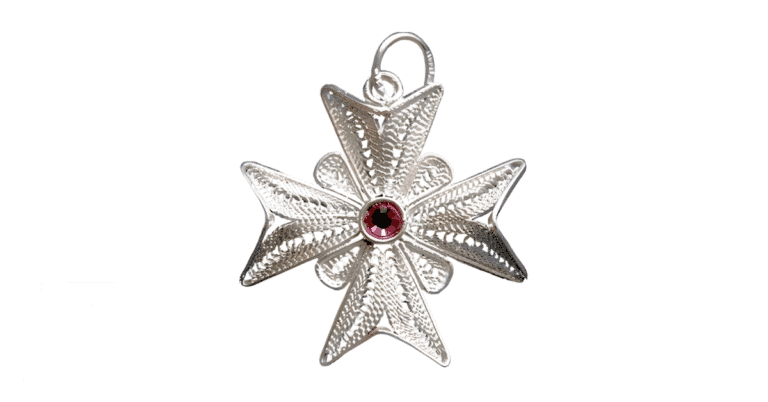
Filigree is one of Portugal’s most popular forms of jewelry. It comes from a long-standing tradition of manual skill that requires immense patience and precision. While the art traces its roots back thousands of years, it has found a home in Portugal, where it remains a central part of the country’s cultural identity.
In this guide, we’ll cover the history and interesting facts behind this form of jewelry, where to find stores that sell authentic Portuguese filigree jewelry, and the differences between gold and silver metals used for these pieces in Portugal. We’ll also look into the common shapes and the symbolic meanings behind Portuguese filigree jewelry, as well as how to style them in a modern way.
Whether you are searching for the perfect souvenir or a meaningful gift from your Portugal trip, this guide has the answers you’re looking for.
Portuguese Filigree Jewelry History & Interesting Facts
The filigree art has origins that stretch back to the third millennium BC. It appeared in early cultures across the Middle East. Over time, these techniques moved to the Mediterranean through trade routes, eventually finding a firm foothold on the Iberian Peninsula. While many regions lost this tradition, Portugal kept it alive, and by the 8th century AD, the influence of Arab cultures began to shape the specific patterns that are recognized today.
During the 17th and 18th centuries, there was a major shift. With an increase in gold availability, the filigree craft moved from the hands of the nobility into the wider population. The northern part of Portugal, specifically the regions of Minho, Gondomar, and Póvoa de Lanhoso, became the heart of filigree jewelry production. Today, these areas still house the artisans who carry on the work.
Here are some more interesting facts about Portuguese filigree jewelry:
- The traditional Portuguese filigree wire is often drawn to a thickness of about 0.22 millimeters, which is thinner than a strand of hair.
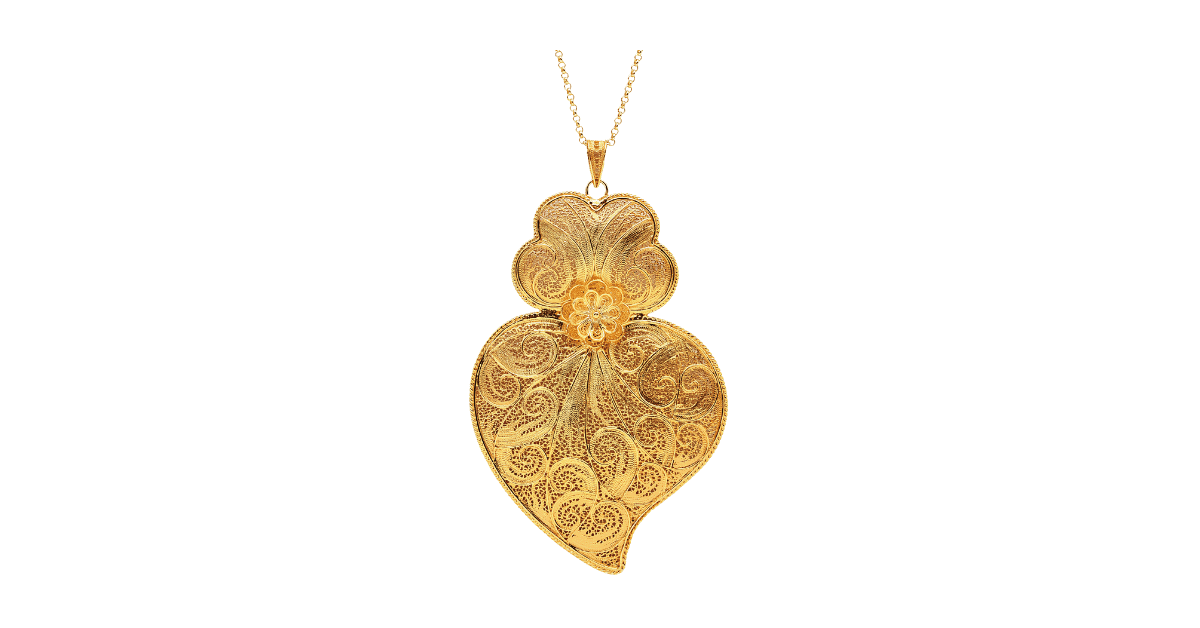
- The Viana Heart, perhaps the most famous motif, was not originally a symbol of romantic love; Queen Maria I commissioned the first one in the late 18th century as a token of religious devotion to the Sacred Heart of Jesus.
- In the city of Gondomar, filigree production is officially recognized as part of Portugal’s intangible cultural heritage.
- A complex piece of Portuguese filigree jewelry can take an entire workday to assemble, as every spiral and curve must be placed and joined by hand using only heat.
Where to Buy Filigree Jewelry in Portugal – 5 Verified Stores
To ensure you get a real piece of filigree jewelry that will last for generations, you should always check for authenticity. Authentic pieces are almost always produced in dedicated workshops in northern regions of Portugal where the craft is treated with the seriousness it deserves.
We found some of the top-rated Portuguese filigree jewelry stores you should consider buying from, rated for their customer service, the quality of their pieces, their durability and we alos checked what their customers say about them.
1. Joalharia do Carmo
This store is located in the heart of Lisbon. It has stood on Rua do Carmo since 1924. Its Art Deco facade and original interior provide a glimpse into the past. What sets this store apart is its strict commitment to quality.
The craftspeople they work with are based in the traditional northern production hubs of the country. You can find everything, including earrings, miniature boats, and the iconic Viana heart in this store.
2. House of Filigree
This is a Porto-based space that serves as a fusion of a workshop, museum, and boutique. It was founded by the descendants of established filigree families; the store focuses on keeping the traditional handmade process visible. By combining a historical collection of tools and jewelry with a live workspace, they show a transparent view of how these patterns are formed.
They focus on high-end, traditional craftsmanship, so a solid silver or gold-plated Viana heart necklace from this store can cost anywhere from 120 to more than 300+ euros.
3. Portugal Jewels
This brand works closely with small, family-run workshops to bring traditional designs to a global audience. They prioritize the preservation of the craft by ensuring goldsmiths are fairly paid and that production remains strictly in Portugal. Their collection bridges the gap between ancient symbols and modern jewelry styles that fit into daily wardrobes.
According to customer reviews, the quality of their work is consistent, and they provide detailed specs on the purity of their silver and gold plating. They also offer secure shipping worldwide.
4. Eleuterio
They specialize in a contemporary take on the craft and are known for pushing the limits of filigree, using materials like ruthenium to create unique finishes you will not find in standard shops.
Their artisans spend days on a single piece, so that the soldering is invisible and the structure is rigid. The prices for filigree items here start well above 700 euros. The reviews say they offer a high level of customer service.
5. Machado Joalheiro
This is one of the oldest jewelry retailers in Porto. The store has a reputation for stocking only the finest items. They maintain a balance between antique pieces and contemporary collections, and their expertise is helpful if you want to compare different filigree styles from various historical periods.
The store is a great place if you want to see a wide variety of designs in a sophisticated setting. They provide a high standard of professional service and ensure you receive care instructions and verification for every gold or silver item you buy.
If you are looking for other authentic handmade filigree jewelry from Cyprus, you must check out Lefkara Silver for the best filigree pieces.
Gold or Silver Portuguese Filigree Jewelry – Which Should You Choose?
Traditionally, the history of filigree production in Portugal was built on the use of high-purity gold, which served as a sign of family wealth and status in northern communities. Gold remains the most prestigious metal, but silver has also become a common choice for everyday wear. Today, you will find both options in the market.
When choosing between these two, consider your budget and how often you plan to wear the jewelry. Gold is chemically inert and will not tarnish, so it is a better choice for longevity and daily use. Silver, on the other hand, is much more affordable and allows you to own larger, more elaborate pieces for less than half the cost of gold. However, silver is prone to oxidation; this means it will darken over time if not stored correctly or cleaned.
If you choose silver, you might spend a little extra time polishing it to keep that bright, lace-like appearance.
Common Shapes and Patterns of Portuguese Filigree
Portuguese filigree is known for its incredible variety, with designs inspired by the natural world and religious devotion, among other things. Filigree artisans create patterns that are both delicate and surprisingly strong by weaving hair-thin gold or silver wires into complex structures.
Some of the most common shapes and patterns include:
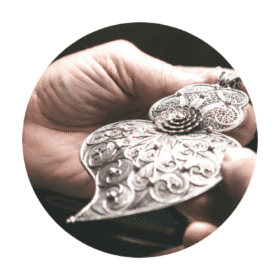
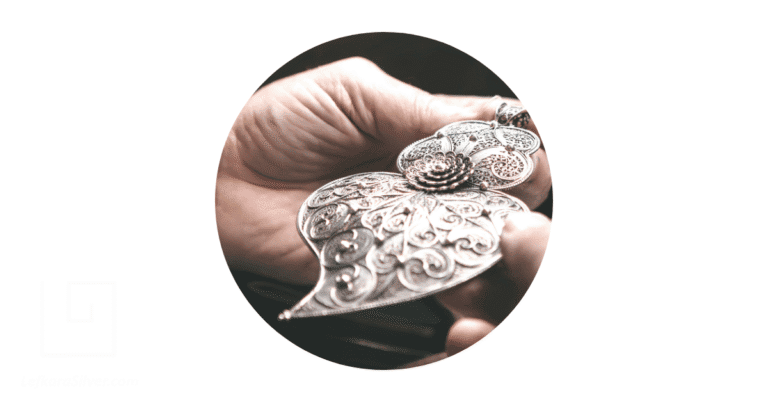
- Viana Heart: This is the most popular piece, with a heart shape topped with a crown-like motif representing flames.
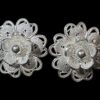
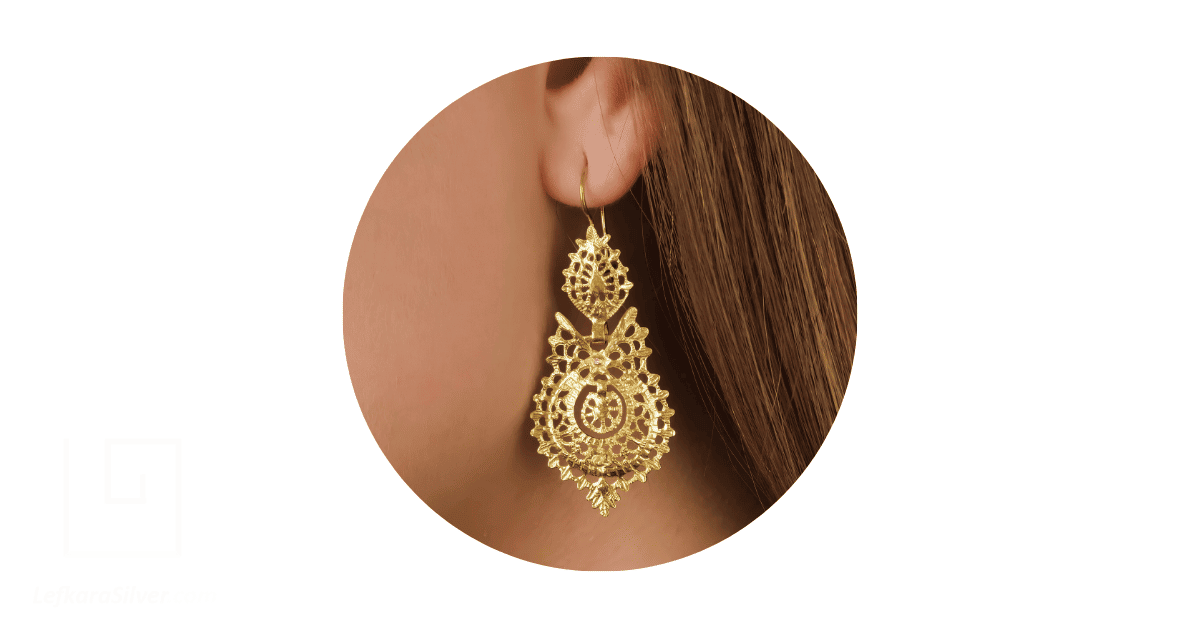
- Queen Earrings: These are elaborate, chandelier-style earrings that often include a central circular element with smaller hanging parts, historically associated with status and wealth.
- Arrecadas: Crescent-shaped earrings that draw their inspiration from ancient styles.
- Viana Beads: They are perfectly spherical, hollow beads made of filigree wire, often strung into necklaces of varying lengths.
- Nature Motifs: Flowers, clovers, leaves, and wreaths are common patterns.
- Marine Symbols: Shapes such as fish, shells, boats, and waves.
These patterns are not just random decorations. Each shape is a visual language that communicates the wearer’s status and faith.
The Symbolic Meaning of Portuguese Filigree Jewelry
The Viana heart is perhaps the most misunderstood piece of jewelry in the country. Many people assume it is purely a romantic symbol, but its roots are deeper than that. It was originally created as a symbol of dedication to the Sacred Heart of Jesus. Over time, the flames at the top of the heart became associated with the intensity of love.
Queen earrings are another style with interesting symbolism of class and tradition. While the name suggests a royal connection, they actually became popular among the common population as a way to display wealth and status. It is said that a 19th-century queen wore a pair during a visit to the north of Portugal, thus solidifying their place as a must-have item for formal attire. Some people say that the hanging parts of these earrings represent the bond between a mother and her child.
Viana beads were originally created because families could not always afford a full gold necklace at once, so women would purchase individual beads over time and then add them to a cord until they had enough for a complete set. This made the jewelry a living record of a family’s growth and ability to build wealth.
Today, these traditions remain a core part of Portuguese identity, frequently passed down from grandmothers to granddaughters to keep family stories alive.
You can learn more about the other places where you can find filigree jewelry and what their own patterns symbolize in this filigree origin article.
How to Style Portuguese Jewelry Today
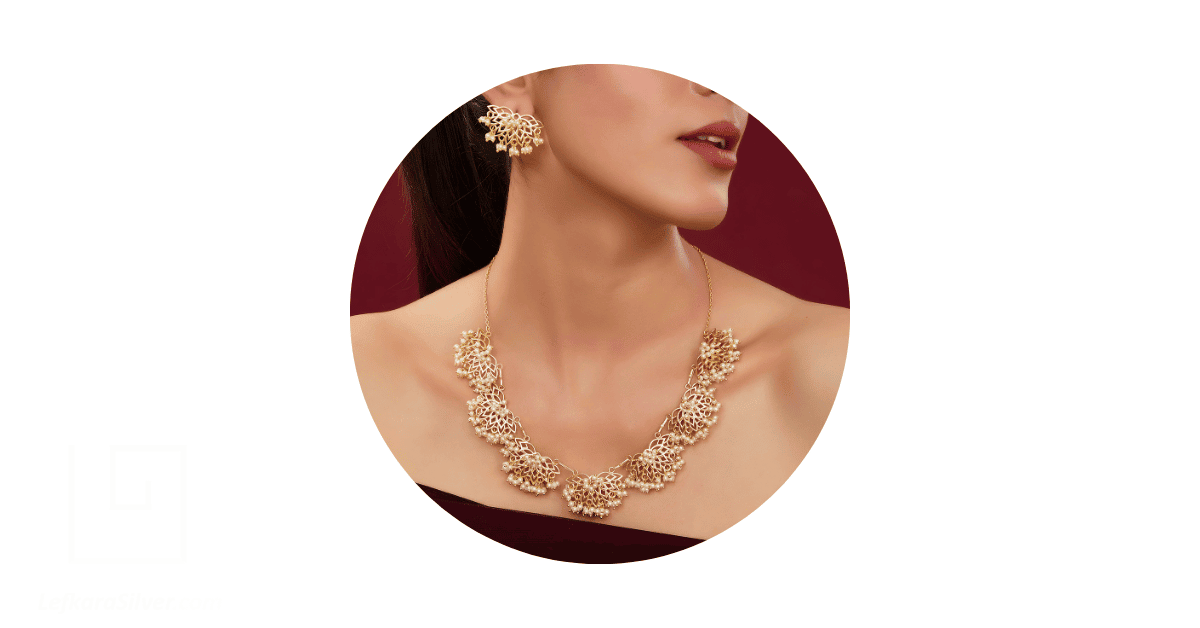
Today, you can wear filigree jewelry with your modern fits as long as it is properly styled. The following styling tips will help you pair your filigree jewelry with your everyday outfits:
Pair Large Statement Pieces with Simple Silhouettes
You can balance the visual weight of large filigree pieces by wearing simple outfits. When you choose a piece like a traditional heart pendant or large earrings, let the filigree be the only star of the show. You can wear these bold pieces with a solid-colored, neutral outfit so the jewelry stands out.
When you wear these filigree jewelry with plain fabrics, the contrast between the matte clothing and the shiny filigree becomes more pronounced. This creates a sharp, deliberate aesthetic that feels intentional.
Layer Chains for a Modern Vibe
You can also use smaller, lighter pieces to create a layered effect. Combine shorter, gold chains with a slightly longer filigree piece, and you will create a sense of depth around your neckline.
When layering them, try to mix different textures. A smooth gold chain should be placed next to a filigree piece. This makes the jewelry feel more adaptable for everyday wear.
Mix Metals and Styles for Contrast
You can mix your gold filigree with silver pieces or even non-traditional materials to create an unexpected, edgy vibe. You can also try wearing silver rings or bangles alongside a gold filigree necklace. This combination softens the formality of the gold and gives it a more relaxed, approachable feel.
Finding Authentic Vintage Filigree Jewelry From Portugal
Vintage filigree pieces are highly valued because they represent a specific moment in time and a level of manual labor that is increasingly difficult to find. Collectors search for these items because they carry a history of regional techniques and stylistic evolution.
However, because demand for this craft is high, it is necessary to be vigilant and inspect every purchase. Not everything that looks like lace-like metalwork follows the traditional, high-quality standards of Portuguese artisans.
When looking to acquire vintage items, these are the signs of authenticity to look out for:
- Inspect the Solder Joints: Authentic filigree is built by hand, and the tiny gold or silver threads are joined with precision. Under a magnifying glass, you should not see messy blobs of solder. Instead, look for clean, seamless connections where the metal threads meet. If the join looks thick or opaque, it was likely mass-produced or machine-welded.
- Evaluate the Weight and Texture: Despite their appearance, authentic filigree pieces are surprisingly light because they are made from hollowed, twisted wires rather than solid blocks of metal. If an item feels too heavy or dense, it may be a cast imitation rather than true filigree. The surface should have a tactile, wire-like texture when touched.
- Examine the Symmetry: While handmade items may have slight, charming variations, they should still exhibit a high degree of structural balance. If the pattern looks “stamped” or perfectly identical across every single loop in a way that suggests a mold was used, it is likely a modern, factory-made piece.
- Look for Natural Wear: Vintage jewelry that has been worn for decades will show subtle signs of use, such as light polishing marks or gentle patina in the recessed areas.
The Process of Making Traditional Portuguese Filigree Jewelry
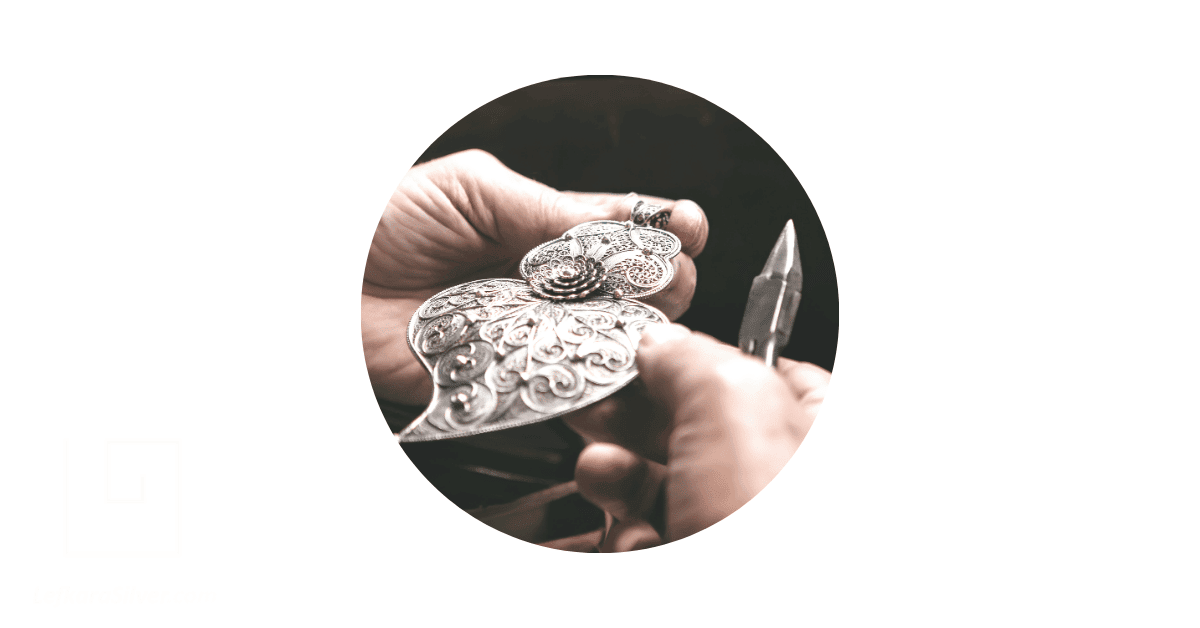
Filigree craft relies on the skill of an artisan who shapes thin gold or silver wires into complex patterns. To master this craft, you’d need years of practice to learn to balance heat control, wire tension, and steady hand movements to create a design that is both strong and incredibly lightweight.
For those curious enough to try a version of this art at home, the process begins with preparation. You will need the following:
- A fine silver or 18-karat gold wire (around 0.22 millimeters in diameter)
- A jeweler’s saw, needle-nose pliers
- A small torch for soldering, and soldering flux.
- Heat-resistant gloves
- Safety goggles to protect your eyes from heat and flying wire clippings.
To get started:
- Anneal your wire, heat it briefly to make it soft and pliable.
- Use your pliers to twist two strands of wire together like a rope, which adds strength and texture.
- Next, take this twisted wire and shape it into small coils or “snails.”
- Arrange these coils on a heat-resistant surface to form a pattern. Make sure every point where the wires touch is tight.
- Apply a small amount of flux to the joints and use your torch to heat the entire piece carefully. The goal is to heat the metal enough that the gold or silver powder you sprinkle over the joints melts and fuses the wires together without collapsing.
What Makes Portuguese Filigree Jewelry the Perfect Souvenir?
A piece of Portuguese filigree is one of the most beautiful things you can take with you from Portugal. It’s like bringing a piece of local history and artistic tradition home with you. These items represent centuries of skill, with designs refined by generations of families in the north of the country.
When picking out a gift, the Heart of Viana is one piece you must tke with you. You can find these as pendants or earrings. For something more subtle, go for queen earrings or Viana beads.
A simple pair of filigree earrings or a small pendant makes a personal, meaningful gift, while larger, more elaborate necklaces can act as statement pieces.
Prices for these pieces vary depending on the weight of the metal and the complexity of the design. You might spend anywhere from 50 to several hundred euros for a high-quality, handcrafted silver piece, while gold items reflect the fluctuating market price of the metal plus the intensive labor costs involved.
Care & Maintenance Tips for Portuguese Filigree Jewelry
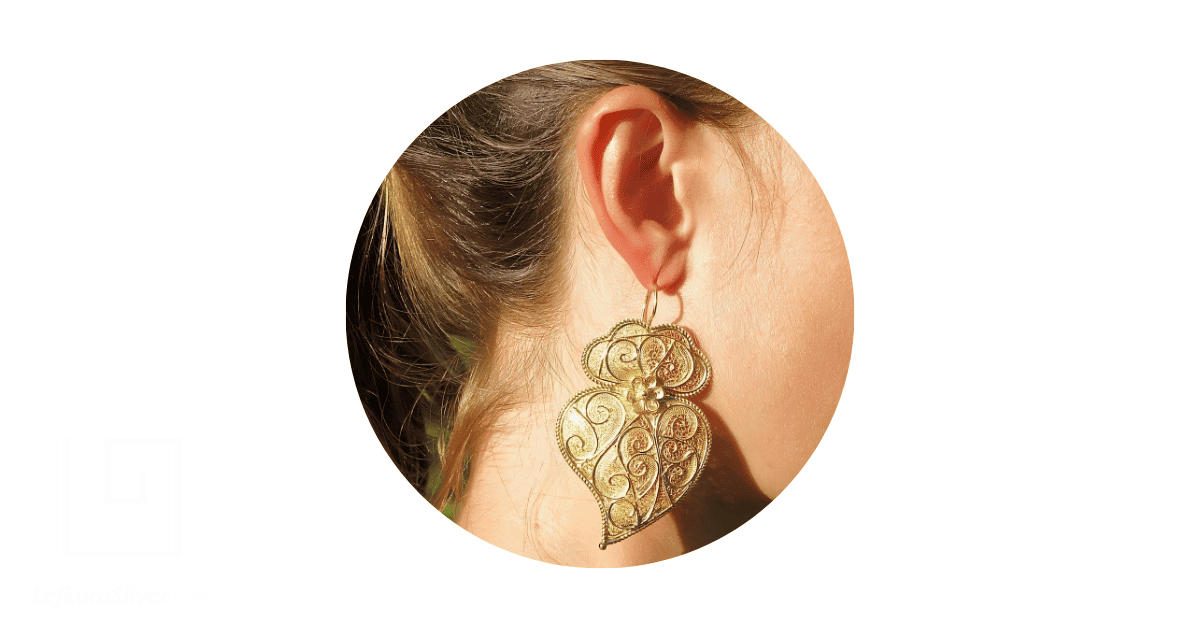
Take off your filigree before you jump in the shower, swim, or apply lotions and perfumes. Chemicals in beauty products are the primary enemy of silver and gold; they trigger rapid tarnishing and leave residue that is incredibly hard to remove from the complex patterns.
Store each item in its own soft pouch or a dedicated box. If you toss multiple necklaces or earrings into a single pile, the thin wires will catch on each other, and you will inevitably snap a delicate loop when you try to pull them apart.
Clean your jewelry using only a soft-bristled brush, warm water, and a drop of gentle dish soap. Dip the piece briefly, scrub the patterns with extreme lightness, rinse, and then pat it dry with a lint-free cloth. Never use harsh abrasive polishes, as these will get stuck in the tiny gaps between the wires and ruin the finish.
Avoid ultrasonic cleaners at all costs. These machines create vibrations that can shatter delicate solder joints or warp your piece. If your filigree looks dark or deeply grimy, take it to a professional jeweler who knows how to handle such complex metalwork without causing damage.
Portuguese Filigree Jewelry – The Bottomline
We have looked at how Portuguese filigree art evolved and how to tell a genuine hand-worked piece from a factory-made imitation. Whether you are weighing the pros of gold vs silver options, picking out a Viana heart for its symbolic weight, or learning how to style these pieces with a modern wardrobe, you now have everything you need.
It is the perfect souvenir because it captures the history, patience, and identity of the artisans who shape it.
Some points to always remember:
- Portuguese gold jewelry typically contains an exceptionally high purity, often reaching 19.2 karats.
- The most complex filigree pieces contain wires that are as thin as 0.22 millimeters.
- Creating a single Viana heart can involve dozens of steps and often requires a full day of labor by a master goldsmith.
- The filigree technique relies entirely on heat and manual skill, as it avoids the use of extra materials or heavy machinery to fuse the wires.
- Filigree was historically tied to the Sacred Heart of Jesus and royal court commissions before it became a popular element of regional folk attire.
- Gondomar and Póvoa de Lanhoso stand as the two primary hubs where this craft has thrived for generations.
This content was last updated in October 2026. Follow our website, LefkaraSilver.com, to stay informed about new jewelry offers, news, and buying guides.