What You Should Know About Gold Filigree
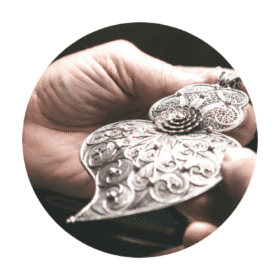
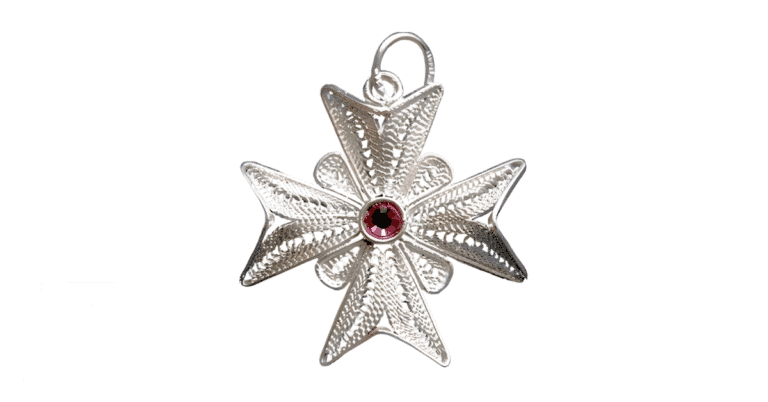
Gold filigree is a traditional metalwork technique that uses fine, twisted threads of precious metal to create delicate, lace-like patterns. Makers bend and curl these thin wires into elaborate shapes, soldering them together to form a self-supporting structure or applying them onto a solid base. This forms a piece that is airy and complex, with a distinct aesthetic that sets them apart from solid metal jewelry.
This article provides the latest insights as of October 2026 to help you navigate this craft. We will look at gold filigree key statistics of October 2026, top-rated gold filigree jewelry makers of the year, the best type of gold for filigree jewelry, how to choose the best gold filigree settings, the process of making gold filigree, unique gold filigree ring styles, versatile gold filigree earring styles, how to style a gold filigree necklace, tips to consider when buying gold filigree, and how to clean your gold filigree.
Whether you are adding to a personal collection or searching for an heirloom-quality piece, these technical details makes all the difference.
Gold Filigree Key Statistics of October 2026
The market for gold filigree remains steady, with key metrics highlighting consumer demand and industry growth in 2026.
- The global jewelry market reached a total valuation of 370 billion dollars by the start of 2026.
- Industry projections indicate a compound annual growth rate of 5.10% for the broader jewelry sector between 2026 and 2032.
- Approximately 67% of jewelry buyers currently prioritize pieces that offer personalization options, a feature often found in custom filigree work.
- Gold continues to dominate the precious metal sector, accounting for 78% of all global sales in this category.
- Among consumers interested in specialized jewelry, 12% specifically seek out vintage-inspired styles where filigree is a prominent design element.
- The gold filigree craft relies on high precision, with some master artisans drawing wire to a diameter of less than 0.5 millimeters before shaping it into a design.
10 Top-Rated Gold Filigree Jewelry Makers of 2026
You will find gold filigree makers scattered across the globe. Our team spent time exploring various workshops and studios to find creators who stand out for their skill, use of high-quality materials, and ability to keep this traditional art form alive.
Here are 10 of the best makers we found who consistently produce top-tier gold filigree.
1. The House of Filigree
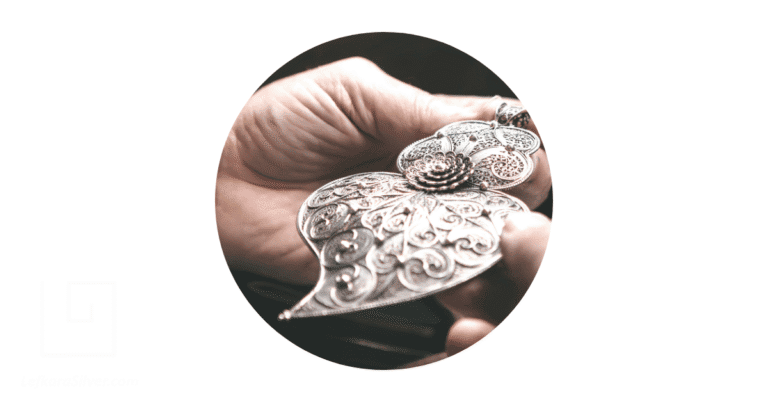
Based in Porto, Portugal, this multi-generational family business operates as both a workshop and a space for visitors to watch the craft happen. They stay true to older, handmade methods and resist the urge to use mass-production shortcuts, meaning every piece is a result of many hours of focused work by a skilled person.
Their items sit at the higher end of the market due to the intensive labor required, and you can expect to pay anywhere from several hundred to several thousand dollars depending on the weight and intricacy of the gold used. They are a go-to for those who want a piece that carries a deep connection to Portuguese heritage.
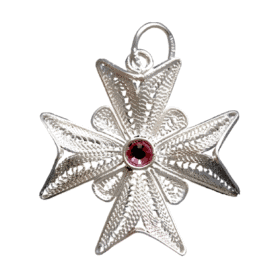
If you prefer silver to gold, you should definitely check out these unique silver filigree jewelry from Lefkara Silver.
2. Amma Jewelry
This brand creates pieces that lean into 18k gold and distinct, modern layouts while keeping the soul of traditional wirework intact. They focus on designs that feel fresh but still show off the sheer precision required to twist and solder gold into airy, lace-like patterns.
Their collection is well-suited for someone looking for everyday luxury that feels high-quality and unique. You will generally find their pricing in the mid-to-high range, reflecting both the high-karat gold content and the time spent hand-crafting each item to ensure it lasts for years.
3. Viana Jewelry
Located in the heart of Viana do Castelo, Portugal, this team works directly with local goldsmiths who have been trained in traditional tools and techniques. They are committed to keeping the “wearable love” of local myths and legends alive through their work, often featuring the classic golden heart symbol.
Their pieces range from small, accessible gifts to larger, more substantial investment items. Because they source and make everything locally, the pricing is honest and reflects the skill of the artisans, usually landing in a moderate-to-high price tier.
4. Filienna
This studio specializes in custom work, focusing on 18k gold to create pieces that feel personal and significant. They take the time to work through the design process, ensuring that the filigree patterns are not just decorative but structurally sound and aesthetically balanced for the wearer.
Since their work is often custom, the cost varies significantly based on the gold weight, the complexity of the pattern, and whether any gemstones are added. They are an ideal choice if you have a specific vision in mind and want a one-of-a-kind piece crafted to your exact specifications.
5. Amami
Focused on preserving Filipino gold smithing traditions, this maker produces work that feels deeply rooted in history. They use high-quality gold to create intricate pieces that honor local techniques which have been passed down through families for generations.
Their price range is accessible for the level of craftsmanship you receive, with smaller pieces starting at lower price points and more ornate, statement items costing more. If you appreciate the history behind the metal, this is a brand worth your time.
6. NOVICA
Operating as a global platform, this group connects you directly with individual master artisans in places like the Andes and Southeast Asia. Because you are buying from the maker, you get a direct look at the specific regional style of filigree being used, whether it is bold or delicate.
Prices here vary widely because the platform hosts many different artists, but you can usually find quality gold filigree at various price points, from affordable earrings to elaborate pendants. NOVICA is a great place to look if you want variety in design and cultural origin.
7. Portugal Jewels
This family-run company operates out of Lisbon and Gondomar, which is famous as the cradle of Portuguese jewelry making. They are very hands-on, with the owners overseeing every step to ensure the final product meets high standards for quality and character.
They offer a broad spectrum of products, from sterling silver to 9k and 19.2k gold, allowing for different budgets. Their pieces are designed to be timeless, meaning they aim to outlast quick fashion trends, and you will find their prices are fair relative to the gold content and handwork involved.
8. Savara Filigrana
Also based in Portugal, this brand blends traditional filigree with contemporary aesthetics that feel stylish for modern wear. They are known for taking the ancient technique and moving it into a space that feels relevant for today’s jewelry lovers who want something distinct.
Their price range is generally competitive, offering pieces that feel like luxury but remain attainable. They are a solid choice if you want the classic Portuguese filigree look but prefer a silhouette that matches a more current, minimalist wardrobe.
9. Antique Jewelry Mall
If you are specifically chasing the look of a bygone era, this retailer focuses on high-quality reproductions of Edwardian and Art Deco designs. They rely on meticulous craftsmanship to capture the historical accuracy of those periods, often using diamonds and colorful gemstones to accent the gold.
Their pricing is often tied to the gold weight and the quality of the gemstones set within the filigree. Because they focus on specific historical styles, they are a reliable source for collectors or those who want the look of an antique piece without the fragility that sometimes comes with something 100 years old.
10. Filigree Jewelers
Based in Minneapolis, this shop specializes in a curated selection of vintage and antique pieces. They are a destination for those who want to own a literal slice of history, as they deal in authentic items from the Victorian, Edwardian, and Art Deco eras.
The prices here are reflective of the market value for antique jewelry, which can be quite high due to scarcity and historical significance. If you value provenance and the specific charm of a piece that has been loved for decades, this is where you should focus your search.
What is the Best Type of Gold for Filigree Jewelry?
Gold filigree jewelry comes in many forms, ranging from solid, high-karat gold pieces to items that use gold plating or vermeil. Because the technique relies on thin, pliable wires that must be bent, twisted, and soldered, the gold used needs to have specific physical characteristics to hold the pattern without breaking.
The most suitable gold for filigree is usually 18k or 22k gold. These options are favored because they provide a perfect balance between malleability and strength. High-karat gold is soft enough that an artisan can pull it into extremely fine, hair-like threads without the metal snapping. This flexibility is essential for creating the tight coils and intricate curves that define the style.
While 24k gold is technically the purest, it is often too soft for jewelry that is meant to be worn regularly, as it can easily deform. On the other end, very low-karat gold contains a higher percentage of other metals, making it harder and more brittle, which makes it much more likely to crack when a jeweler tries to twist it into a filigree pattern. Therefore, 18k and 22k provide the ideal working properties, ensuring the piece is strong enough to maintain its shape while still being workable enough to achieve the necessary level of detail.
Choosing the Best Gold Filigree Settings
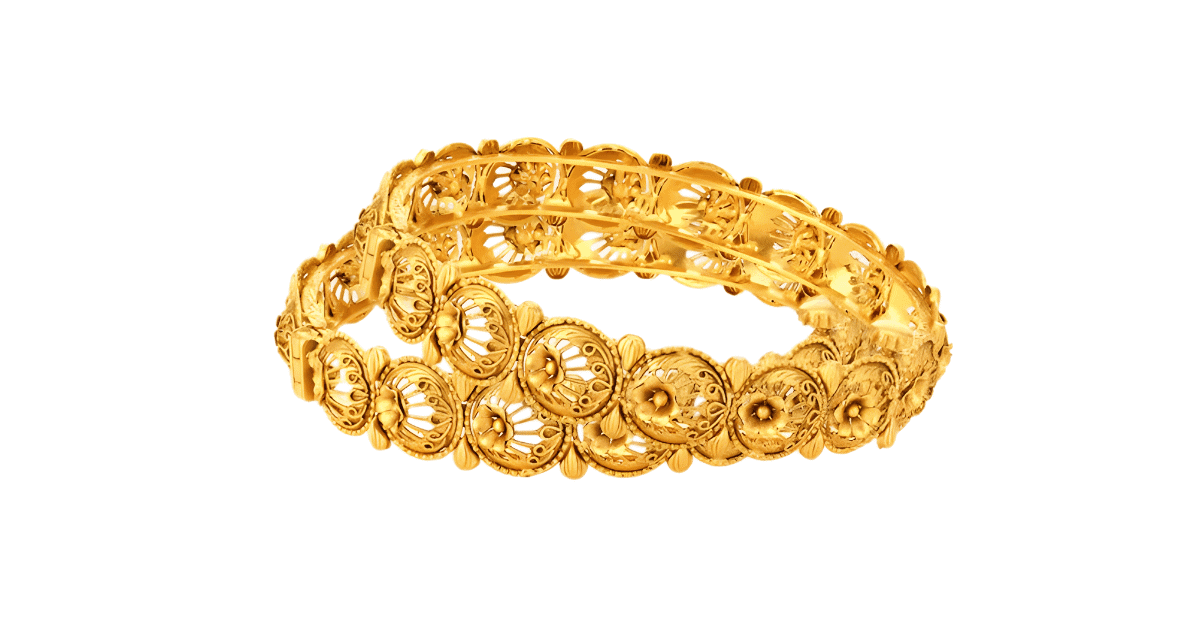
Gold filigree settings rely on fine, twisted metal threads to create open, lace-like structures that house gemstones or stand alone as detailed metalwork. These settings come in two primary forms: openwork and metal-supported. Openwork filigree lacks a solid backing, requiring thicker wires to maintain its shape, resulting in a lighter, more transparent look. Conversely, metal-supported filigree involves soldering wires onto a thin sheet of gold. This base adds significant strength, allowing for much more complex and delicate patterns that would otherwise be too fragile to survive daily wear.
When you pick a setting, think about how often you plan to wear the piece. If you want a daily-wear ring, go for a metal-supported design. The base provides a layer of protection for the fine wirework, making it less likely to bend delicate curls on your clothing. Settings crafted from 18k gold strike the best balance between strength and color, whereas 24k gold is often too soft for complex, everyday filigree rings. For a bolder look, you might choose an openwork setting, but reserve these for earrings or pendants that do not face the same friction as a ring.
Match the setting’s complexity to the event. For formal nights, choose high-karat gold settings with dense, tightly coiled patterns. These designs catch light from multiple angles and look great under low-light conditions. If you prefer a relaxed, everyday vibe, look for settings with larger, open loops or geometric motifs. These tend to have a modern, clean feel that works well with casual outfits. Choosing a setting that balances the size of your center stone with the filigree pattern is vital; a massive gemstone can easily crush the visual impact of fine metalwork.
The Process of Making Gold Filigree
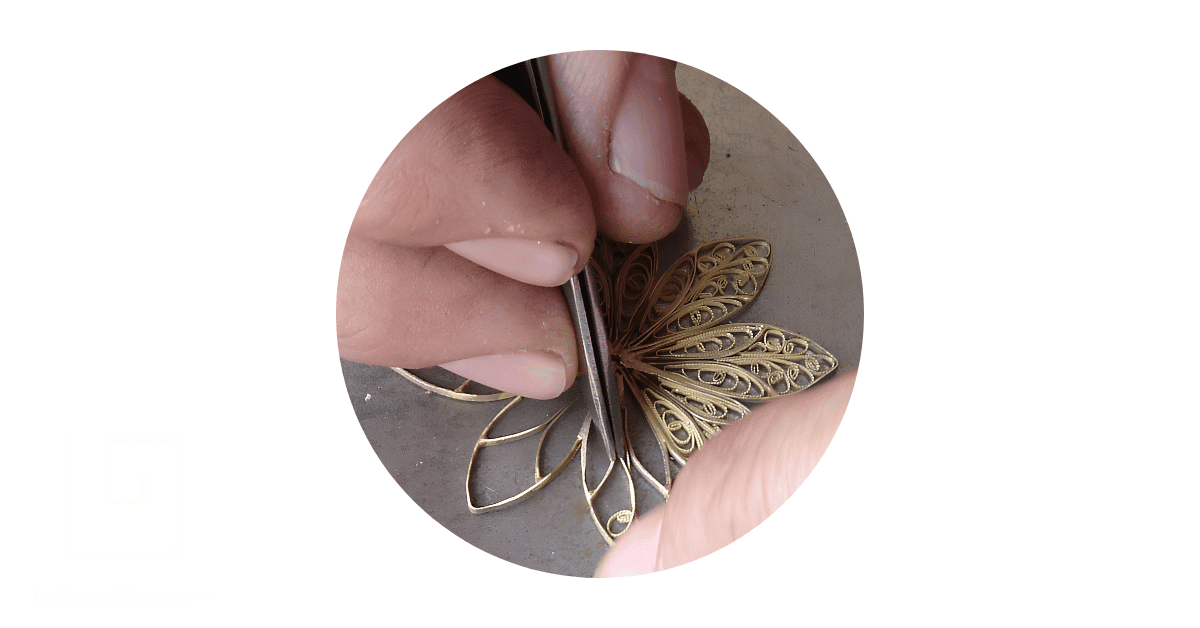
Creating gold filigree is a slow, manual task that demands extreme focus. It starts with drawing out pure gold granules into long, ultra-fine wires. Once the wires are the right thickness, they are often twisted together or flattened through a rolling mill to create texture. The artisan then bends these wires by hand into scrolls, curves, or geometric shapes, holding them in place with fine-tipped tweezers before soldering them together using a tiny, controlled flame.
- Design and Sketching: Map out the pattern on paper to define the structure and wire placement.
- Wire Drawing: Stretch raw gold through metal plates until it reaches the desired diameter, often less than half a millimeter.
- Twisting and Flattening: Pair the wires and twist them, then pass them through a mill to flatten them for increased strength.
- Frame Construction: Shape a slightly thicker wire to form the outer skeleton or frame of the piece.
- Filling the Pattern: Bend the fine threads into the frame, creating the intricate interior design.
- Soldering: Apply heat to bond the wires at every contact point using a specialized gold solder that matches the karat of the piece.
- Cleaning and Polishing: Remove excess solder and oxidation from the heating process to reveal the final, brilliant shine.
- Final Inspection: Check for sharp edges or weak joints to ensure the piece is sturdy enough for wear.
Unique Gold Filigree Ring Styles
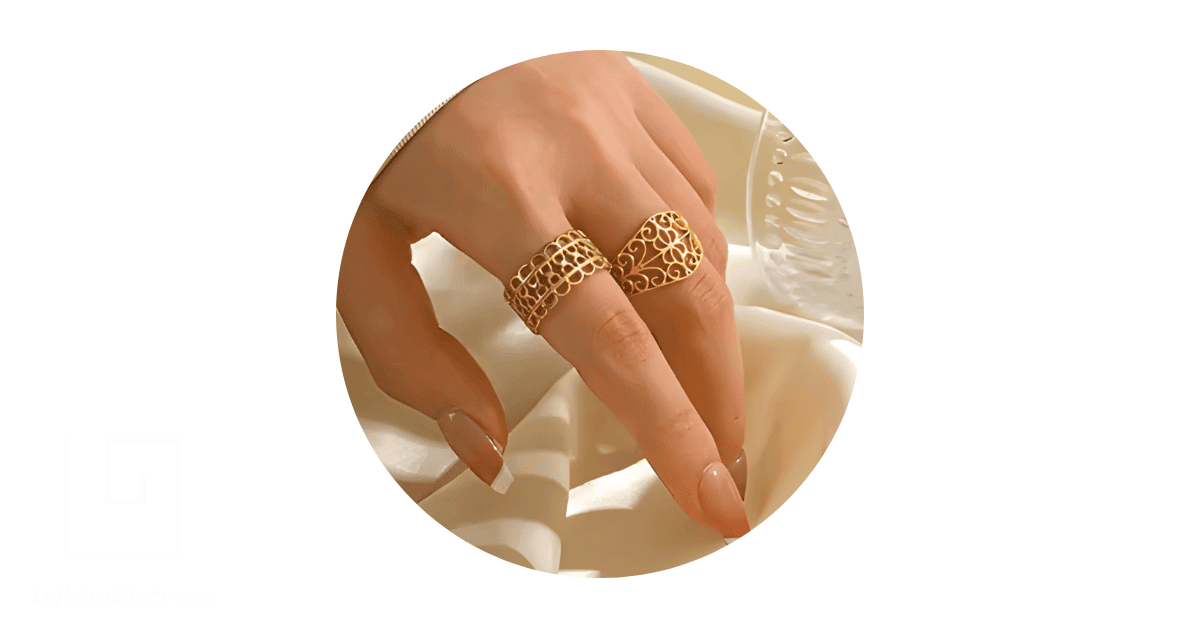
Gold filigree rings are seeing a major surge in interest, particularly among couples seeking a distinctive look for their engagement.
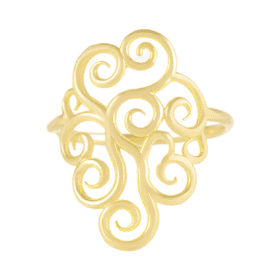
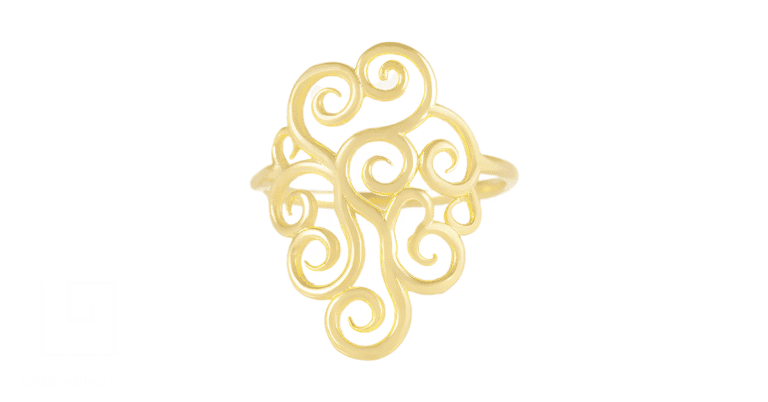
- Scrollwork Rings: These include soft, rounded curves that mimic vines or curled parchment. They offer a classic, vintage feel and are a top pick for those who want their ring to have a sense of motion.
- Celtic Knot Designs: Defined by endless, intertwining loops, these rings represent connection and eternity. They provide a strong, meaningful aesthetic that works well for both men and women.
- Floral and Botanical Motifs: These rings use wire to shape leaves, petals, and stems. They are perfect for anyone who wants a natural, romantic look that feels like a garden in the hand.
- Geometric Patterns: For a more modern edge, these rings rely on sharp angles, triangles, and repeating squares. They gained massive popularity in past decades and continue to be a go-to for those who want a structured, balanced appearance.
- Heart-Shaped Details: Many modern designs sneak heart shapes into the gallery or the shoulders of the ring. It is a subtle way to add personal meaning to a piece of jewelry.
- Animal-Inspired Filigree: Some custom jewelers create shapes like koi fish, birds, or other animals within the metalwork. These are highly personal and often serve as conversation starters.
Nearly 70% of jewelry buyers now seek out items that express their individual personality rather than sticking to generic, mass-produced designs.
Versatile Gold Filigree Earring Styles
There are many versatile styles to look for when you want gold filigree earrings that fit any event and pair well with various outfits.
- Studs: These are small, compact, and fit close to the ear. They work best for daily wear. You can pair them with a basic t-shirt and jeans to add a touch of detail without going overboard.
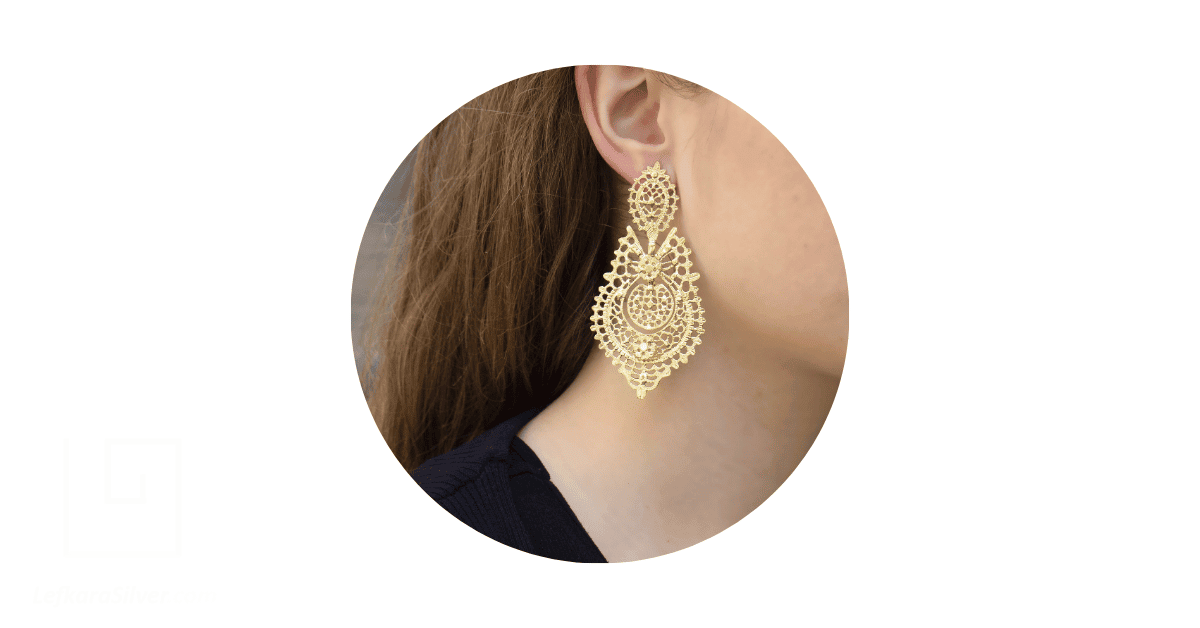
- Drop Earrings: These hang below the earlobe and add movement to your look. They are perfect for evening events. Gold Filigree Earrings look great when paired with a simple dress, as the earrings provide enough detail to serve as the main focal point of your outfit.
- Hoops: Filigree hoops add texture to a traditional shape. These are great for a business-casual look. Since they are hollow and made of fine wire, they feel much lighter than solid gold hoops of the same size, making them comfortable to wear all day long.
- Ear Crawlers: These follow the shape of the earlobe and move upward. They are a bold, modern choice. Because they catch the light from multiple angles, it is best to pull your hair back when wearing them to make sure they are visible.
Because filigree uses fine metal wire instead of solid plates, these earrings often weigh significantly less than other jewelry, which is a key reason many women choose them for long events.
When styling these, consider the weight and the metal tone. Gold filigree catches the light in a way that creates natural shadows and highlights, meaning you do not need to add other bold accessories. A pair of detailed drop earrings is often enough to finish a look. For daytime, stick to smaller, tighter patterns. For nighttime, feel free to pick larger, more open-work designs that create a sense of scale.
How to Style a Gold Filigree Necklace?
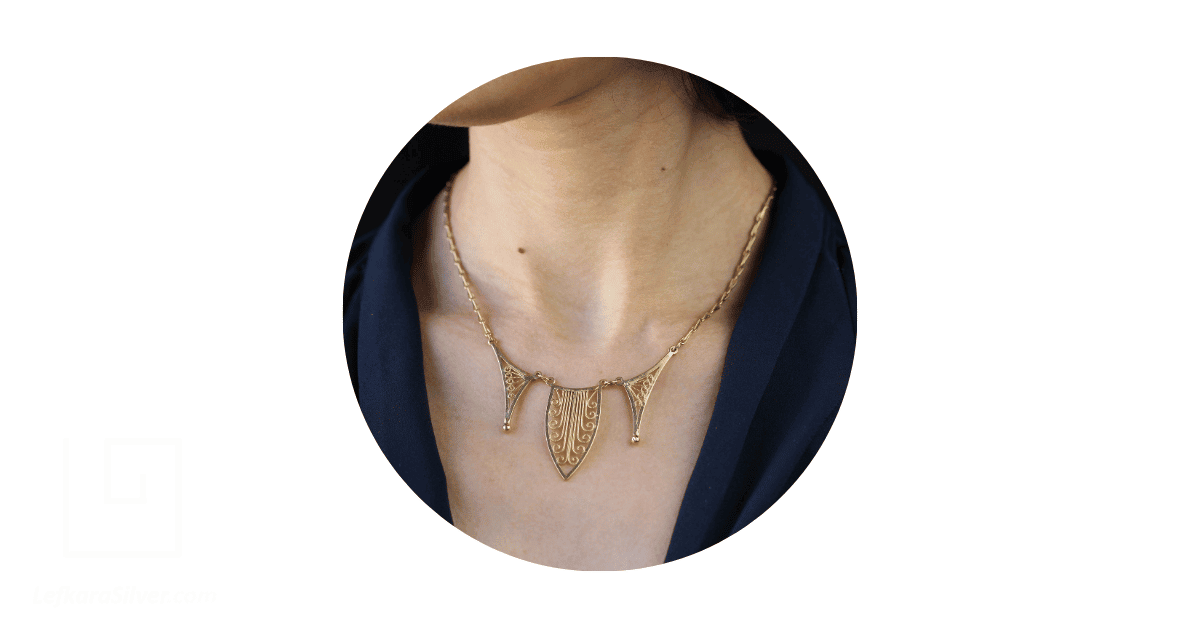
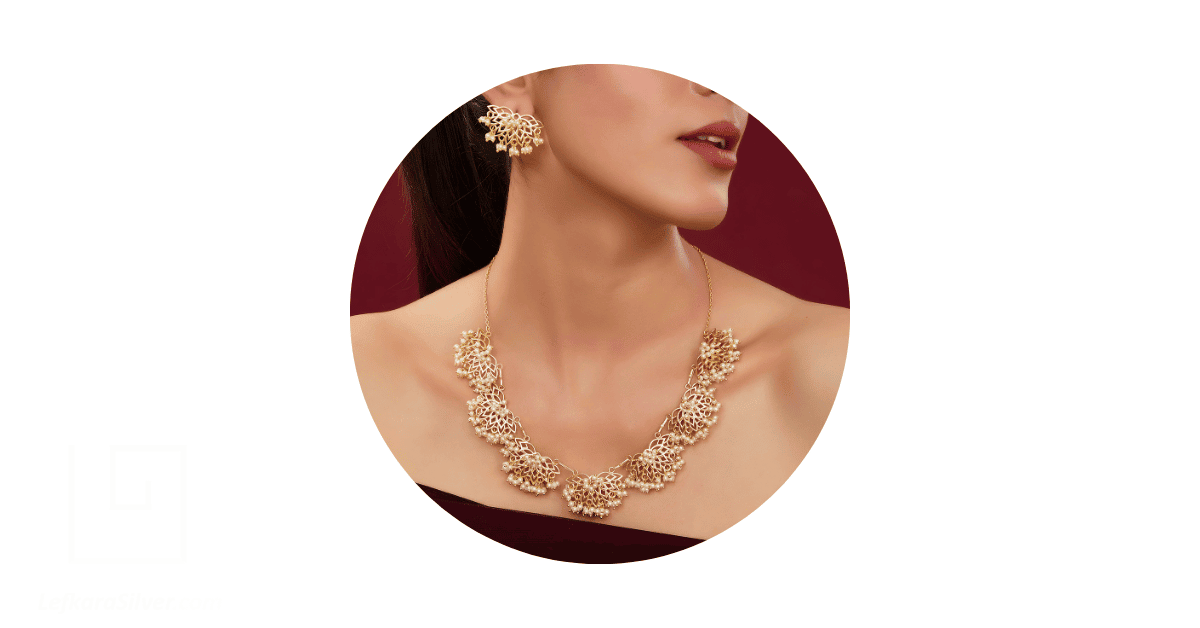
A gold filigree necklace features fine gold wires twisted and curled into elaborate, lace-like patterns. These pieces are airy, lightweight, and carry a distinct handmade quality that sets them apart from solid metal jewelry. Because of their openwork structure, they possess a unique ability to catch light and create shadows, making them a standout addition to any outfit.
For daytime looks, keep things simple. Combine a delicate filigree pendant with a plain white t-shirt or a neutral-toned linen blouse. The openwork design works best against a solid, matte fabric, which ensures the gold pattern remains the focal point. Since these necklaces often have a vintage or romantic feel, they add a touch of personality to basic everyday wear without feeling overdone. If you have a longer chain, layer it with shorter, plain gold chains to create depth while letting the filigree piece act as the center of attention.
When dressing for evening events or more formal occasions, you can afford to lean into the ornate nature of the metalwork. A larger, more complex filigree statement piece works well with a simple cocktail dress, particularly one with a solid neckline that doesn’t compete with the design. Because filigree jewelry often feels more substantial while actually weighing very little, it remains comfortable to wear throughout the night.
If you want to explore filigree design jewelry, look for pieces that match the neckline of your clothing. Dangling or dropping styles often pair well with deeper necklines, while shorter, circular pendants sit nicely against higher collars.
Tips to Consider When Buying Gold Filigree
Picking out gold filigree requires a discerning eye because the quality of the soldering and the thickness of the wire directly impact how long the piece will last. It is always wise to shop with reputable jewelers who stand behind the craftsmanship of their work, as poorly made filigree can snag, bend, or lose its shape under minimal stress.
- Check the karat of the gold: Avoid 24k gold for filigree work because it is too soft and will warp easily. 18k gold is generally the best choice for structural integrity, while 14k gold provides a solid balance of hardness and color.
- Inspect the soldering points: Look closely at where the wires connect. High-quality pieces have neat, invisible solder joints, whereas sloppy or thick blobs of solder indicate poor manufacturing standards.
- Feel the weight and sturdiness: Although filigree is meant to be airy, the frame should feel solid. If the piece bends easily when you press on it with a light touch, the wire is likely too thin to withstand daily wear.
- Test for snags: Run a soft cloth or your fingers over the design. If it catches on the fabric or feels rough, the wires have not been finished properly, which will lead to clothing damage and increased dirt buildup.
- Verify the type of construction: Ask if the piece is handcrafted or machine-cast. Handcrafted filigree typically holds more value and exhibits superior attention to detail, whereas mass-produced versions often lack the depth and precision of the original technique.
- Look for balance: If the piece includes gemstones, ensure they are set securely within the framework. A piece where the stones overpower the delicate wirework is more likely to lose its structural balance and break over time.
How to Clean Your Gold Filigree?
Keeping your gold filigree pieces clean does more than just bring back that original glow. Regular maintenance prevents oils, skin creams, and everyday dust from building up in the tight, intricate gaps between the wires. When you keep these tiny spaces clear, you protect the structural integrity of the piece and ensure that it keeps its light-catching charm for decades.
- Mix a few drops of mild dish soap into a bowl of lukewarm water to create a gentle soak.
- Let your gold filigree sit in the soapy water for about 15 minutes to loosen any trapped debris.
- Use a very soft toothbrush to gently scrub the surfaces, being careful not to push too hard against the delicate wirework.
- Never use hot water if your filigree piece holds precious stones, as the temperature change can cause them to crack.
- Rinse the jewelry thoroughly with clean water to remove all soap residue.
- Pat the piece dry with a soft, lint-free cloth instead of rubbing it, which can catch and bend the fine metal strands.
- Store your pieces in separate compartments or soft pouches to prevent them from tangling with other items.
- Skip ultrasonic cleaners and harsh chemicals, as these can weaken the fine soldered joints that hold your design together.
Gold Filigree – Key Takeaways
We have covered plenty of ground regarding the world of gold filigree, from the complex production process and the best metal types to use, to smart styling tips for your necklaces and rings. We also looked at how to pick the right settings, identified top-rated makers for 2026, and walked through the best ways to care for your collection.
Remember that informed buyers look at the quality of soldering and metal purity before making a purchase. If you want to see some of these designs, you can explore our collection of filigree rings.
Here are some key points to remember:
- Filigree wire is often drawn to less than half a millimeter in diameter, requiring immense focus and steady hands to shape.
- The art of filigree has been practiced for over 5,000 years, making it one of the oldest jewelry techniques in history.
- Gold remains the most popular metal for high-end filigree, accounting for a massive share of precious metal jewelry sales globally.
- Properly crafted filigree is surprisingly strong because the twisted wire patterns create a durable, web-like structure.
- The most reliable gold for filigree is 18k, as it provides enough hardness to hold intricate shapes without being too soft or brittle.
- Handmade filigree often features tiny, intentional variations that prove the piece was crafted by a person rather than a machine.
This content is up-to-date as of October 2026. Follow our website, LefkaraSilver.com, to stay informed about new jewelry offers, news, and buying guides.
Gold Filigree FAQs
Here are answers to some frequently asked questions about gold filigree in 2026:
Is Gold Filigree Worth Anything?
Yes, gold filigree holds significant value based on the purity of the gold used and the weight of the metal. Collectors often pay a premium for pieces featuring intricate hand-wrought designs, which reflect hundreds of hours of skilled labor. Because it uses less metal to achieve a larger look, labor costs often exceed the base material value.
Is Gold Filigree Real Gold?
Gold filigree is indeed made from real gold, typically ranging from 14k to 22k for durability and color. You should always check for a hallmark stamp that confirms the karatage, as authentic pieces will not be gold-plated base metal. High-karat gold is preferred because it remains soft enough to twist into fine threads without snapping.
How Long Does Filigree Last?
Well-made gold filigree can easily last for generations if you store it properly and avoid rough activities. Because the design is a web of soldered wire, it gains structural strength through its shape, making it much tougher than it appears. Regular cleaning to remove debris from the gaps helps prevent the metal from weakening over time.