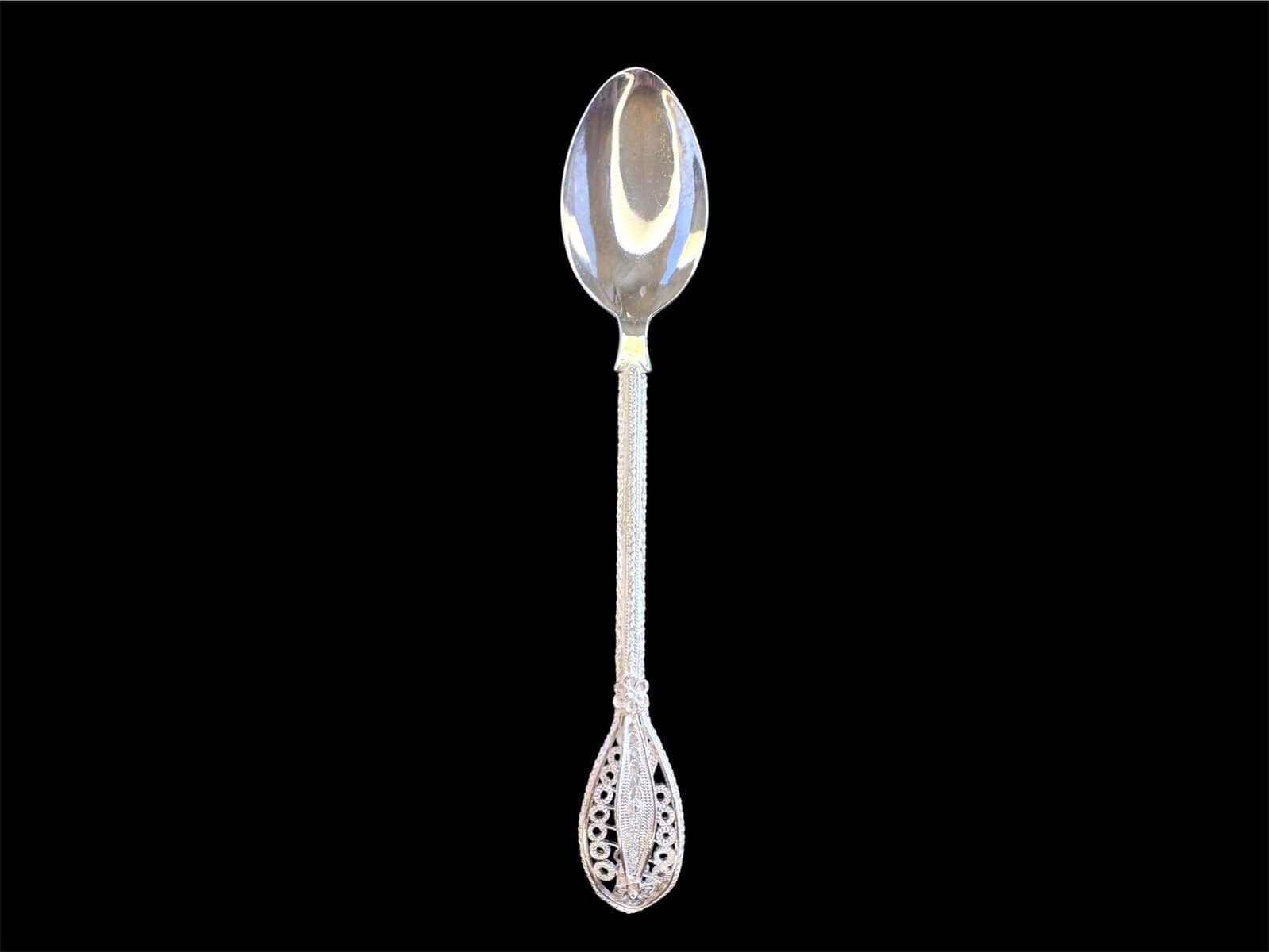
A silver spoon is a spoon made of silver, kept and used for far longer than the ordinary kind, and often given to mark a birth, a christening, a wedding, or an anniversary.
This guide covers everything worth knowing about silver spoons: the different types and their sizes, the meaning the gift tradition of spoons, how to choose one as a gift, how to tell real silver spoons from plated pieces, and how to keep them bright for years. Along the way, we use our own handmade Cypriot pieces as examples, because at Lefkara Silver, a spoon is still hand-made, one thread of silver at a time.
What is a Silver Spoon?
A silver spoon is simply a spoon made from silver, not stainless steel or plastic. Two things are sold under the name, and it’s best to know the difference from the start. A real silver spoon is silver through and through. A silver-plated spoon is a base metal, usually nickel or brass, with a thin layer of silver on the surface.
Both can look alike when new, but they age differently and they are worth very different amounts. A real silver spoon tends to feel heavier and cooler in the hand, and it keeps its value in a way a plated one does not. If you want to know which one you are holding, our guide on how to spot real silver walks through the marks and simple checks.
You may also have met the phrase “born with a silver spoon”, which is about wealth rather than cutlery. That saying, and the gift tradition behind it, are covered in the story of the silver spoon.
The Main Types of Silver Spoons
Silver spoons come in a handful of shapes, each sized for a particular job. Here are the ones you are most likely to meet, with a rough length for each. Sizes vary between makers, so treat these as a guide, not a rigid rule.
| Type | Typical length | Best for |
|---|---|---|
| Coffee or demitasse spoon | 10 to 13 cm | Espresso, Cypriot and Greek coffee, small cups |
| Teaspoon | 13 to 15 cm | Tea, everyday use, a keepsake, or christening gift |
| Dessert spoon | 17 to 19 cm | Puddings and cereals, or a table place setting |
| Serving spoon | 20 to 22 cm | Serving at the table or a decorative gift |
| Baby feeding spoon | 11 to 13 cm | A baby’s first spoon, and a lasting keepsake |
For a fuller breakdown, including how the bowl and stem change from one type to the next, see our full guide to the types of silver spoons. Lefkara makes each of the types above by hand.
Coffee and Demitasse Spoons
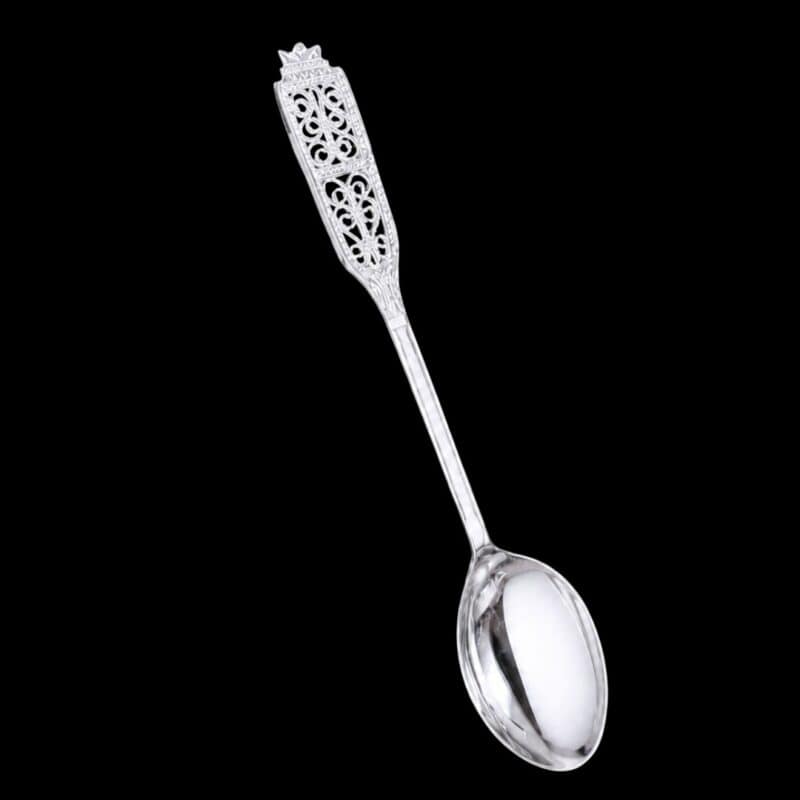
This is the smallest of the everyday spoons, made for espresso and for the strong, unfiltered coffee served across Cyprus and Greece in small cups. A demitasse spoon is usually around 10 to 13 centimetres long, with a small bowl that suits a small cup and a little serving of sugar. Our Lattice coffee spoon is a good example, with filigree worked into the handle.
Teaspoons and Dessert Spoons
The teaspoon is the one most of us reach for daily, and in silver, it also makes a natural christening or naming-day keepsake. Our Acanthus teaspoon is shaped in the classic size. The dessert spoon is a little larger, at home with puddings and cereals and as part of a place setting.
Serving Spoons
Longer and larger in the bowl, serving spoons sit on the table and make handsome gifts. The Acanthus serving spoon is one of ours, alongside longer decorative pieces such as Willow, Cypress, and Meander.
Baby Feeding Spoons
Small, softly rounded, and light, a silver feeding spoon is both a baby’s first spoon and a keepsake to keep long after it is outgrown. Our Lattice and Medallion feeding spoons are made for exactly this.
The Meaning of Silver Spoons
To be “born with a silver spoon in your mouth” means to be born into wealth and comfort that you did not work for. This is an old saying. It appeared in print in English by 1719, in Peter Anthony Motteux’s translation of Cervantes’ Don Quixote, and it grew from a time when only well-off families owned silver, so a silver spoon was a natural symbol of that comfort. It is where the everyday link between silver spoons and privilege comes from.
The saying grew up alongside a warmer, living custom: giving a baby a real silver spoon as a gift to wish it a secure and comfortable life. That is why silver spoons still turn up at christenings and new-baby celebrations today. If you enjoy the history, we tell it properly in the story of the silver spoon.
Silver Spoons as Gifts
More than almost any other piece of cutlery, the silver spoon is a gift. It is given at births and christenings, at weddings and silver anniversaries, at name days and milestone birthdays, and as a keepsake to be kept and passed on. The reason is simple: a well-made silver spoon lasts, so it carries a memory forward in a way a card or flowers cannot. Add an engraved name or date, and it becomes something a family keeps for decades.
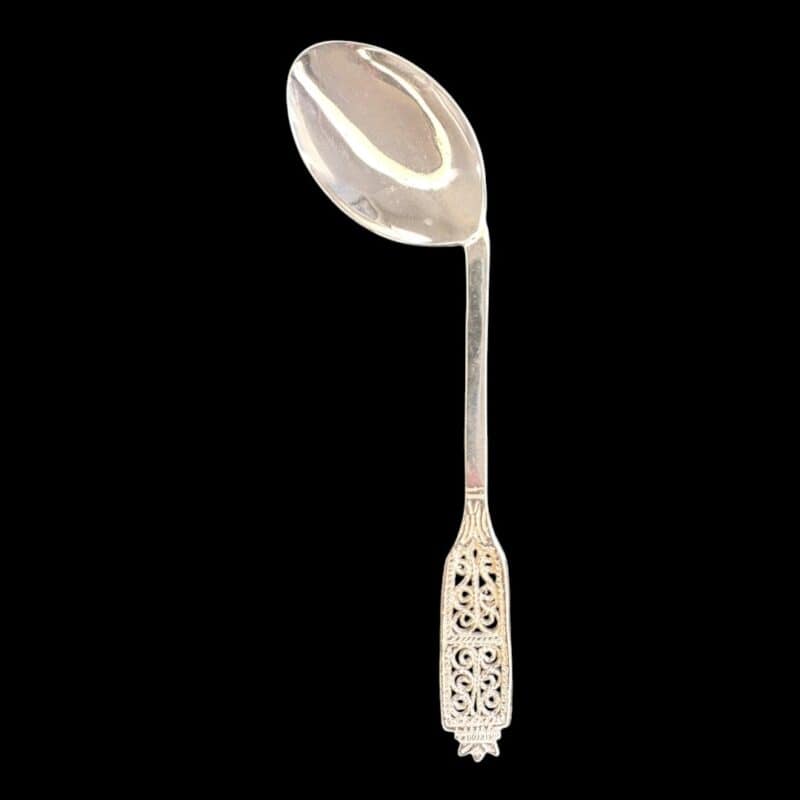
For a new baby, a silver spoon is the classic gift, and you can read our guide to choosing a silver spoon for a baby. For weddings and anniversaries, a longer decorative spoon makes an elegant gift: our Willow, Cypress and Meander pieces are made with this in mind. The silver wedding anniversary marks twenty-five years, so a silver spoon carries a built-in meaning for that occasion. You can see the complete range in our handmade silver spoon collection.
How to Tell if a Silver Spoon is Real
If you are buying, or you have inherited a spoon and want to know what it is, begin with the marks. Real silver is usually stamped with small marks, and in some countries, those marks tell you the metal, the maker, and the year it was made.
Plated spoons carry different marks: the letters EPNS, which stand for electro-plated nickel silver, are the most common sign that a spoon is plated, so a spoon marked EPNS is not real silver all the way through. Sterling silver, where you see it, means the metal is 92.5 percent silver.
There are also simple checks you can do at home, such as the magnet test, since silver is not magnetic. None of them is proof on its own. We set the whole process out plainly, in how to tell if a silver spoon is real.
How to Care for a Silver spoon
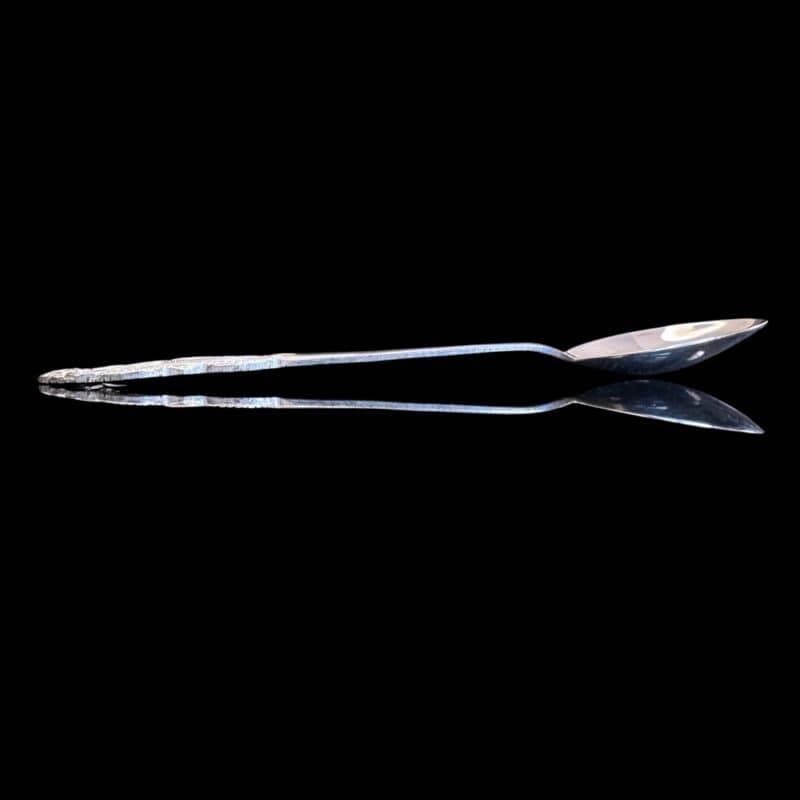
Caring for a silver spoon is easier than most people expect. For everyday care, wash it by hand in warm water with a little mild washing-up liquid, rinse it, and dry it straight away with a soft cloth. That alone keeps a spoon in good order. Never put silver in the dishwasher, and keep it away from abrasive scourers, which scratch the surface and dull fine detail.
Silver naturally darkens over time, a change called tarnish. It forms when silver reacts with sulphur in the air, turning the surface to a thin layer of silver sulphide. It is normal, and it lifts with a gentle silver polish or a soft polishing cloth.
Openwork filigree needs a lighter touch, using a soft brush to reach into the pattern rather than hard rubbing. For the full method, including how to remove heavier tarnish safely and what to avoid, see how to clean silver spoons.
Handmade Versus Mass-produced Silver Spoons
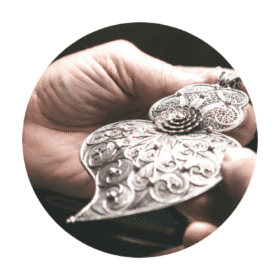
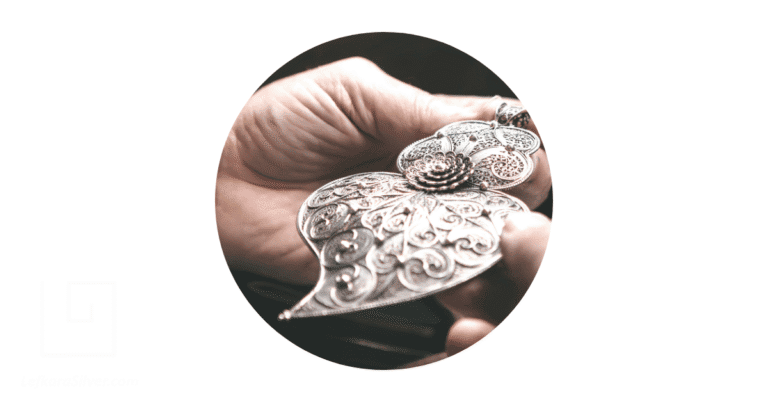
Most silver spoons on sale today are made by machine, stamped and finished in a factory, turned out identical by the thousand. A handmade spoon is a different thing. At Lefkara Silver, each spoon is handmade in filigree, the craft of twisting and soldering fine silver threads into open, lace-like patterns. It is slow, skilled work, measured in hours, and it is why no two pieces are quite identical and why the detail rewards a closer look.
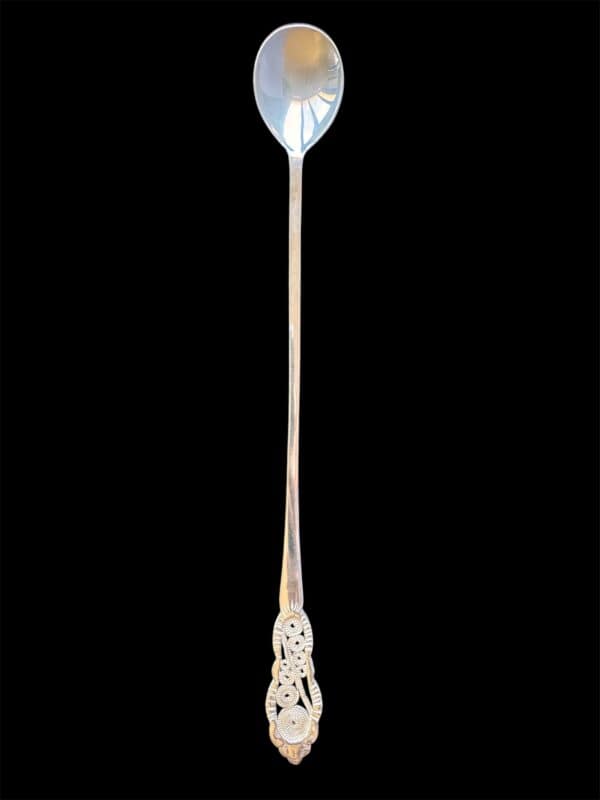
The craft belongs to Lefkara, a village in Cyprus known for centuries for its silver and its lace. The village’s lacework, known as Lefkaritika, was inscribed on the UNESCO Representative List of the Intangible Cultural Heritage of Humanity in 2009, and the silver filigree tradition sits alongside it.
When you choose a handmade Lefkara spoon, you are buying that craft, not just the metal, which is also why a handmade piece holds its value differently from factory flatware. You can see the current pieces in our collection of Cypriot silver spoons.
Frequently Asked Questions
Are Silver Spoons Worth Anything?
Yes, though how much varies widely. A plated spoon is worth little beyond its usefulness, while a real silver spoon has value in its metal and, if it is handmade or by a known maker, in its craft and rarity. Age, weight, and condition all matter. Our guide on telling real silver from plate explains what to look for.
What Do You Use a Silver Spoon for?
The same things as any spoon, chosen by size: a coffee or demitasse spoon for espresso and Cypriot coffee, a teaspoon for tea and everyday use, larger spoons for dessert and serving, and a small feeding spoon for a baby. Many silver spoons are also kept as keepsakes rather than used daily.
Are Silver Spoons Still Made by Hand?
Yes. Most are machine-made, but workshops like ours in Lefkara still make silver spoons by hand in filigree, working fine silver threads into openwork patterns one at a time.
See the collection
If a handmade silver spoon feels like the right gift, or the right treat, you can browse the current pieces in our handmade Cypriot silver spoon collection. Each one is made by hand in Lefkara, and many can be engraved.
For more on the craft behind these pieces, the technique of filigree is described in detail on Wikipedia’s article on filigree.